糟糕的客户体验导致 2024 年全球销售额 3.7 万亿美元面临风险
This analysis by the XM Institute highlights the profound impact of poor customer experiences on global sales, projecting a risk of $3.7 trillion in 2024. Through a comprehensive study across 26 countries involving over 28,000 respondents, it unveils that bad customer interactions predominantly in sectors like government, fast food, and automotive can lead to significant financial losses. The report further delineates how consumer spending patterns shift post negative experiences, emphasizing the critical need for companies to prioritize customer satisfaction to safeguard their revenues.
作为我们最新的全球消费者研究的一部分,Qualtrics XM Institute 询问了 26 个国家/地区的 28,000 多人对最近的不良经历的反应。然后我们计算了他们改变的消费行为如何影响不同的行业。我们的分析表明:
最令人失望的是政府。消费者表示,最常在政府机构(26%)遇到糟糕的客户体验,而在超市(6%)则最不常遇到。
快餐的销量损失最大。在经历了一次糟糕的经历后,消费者最有可能停止或减少在快餐店的支出,并且最不可能减少与公共事业的互动(64%)。
汽车经销商流失的客户最多。在经历了一次糟糕的经历后,消费者最有可能完全停止与汽车经销商 (22%) 开展业务,最不可能停止与公用事业 (6%) 和超市 (6%) 开展业务。
25 个国家的糟糕体验的代价
根据本研究和世界银行的数据,我们估计所研究的 25 个国家/地区的公司正将高达 28 亿美元的销售额置于风险之中1。为了估计这个数字,我们测量了:
不良经历的频率。14% 的消费者表示与他们交往的公司有不好的经历。在各个国家,这一比例从日本的 6% 到印度的 26% 不等。
一次糟糕的经历后,支出会发生变化。38% 的不良体验后,消费者会减少支出,而另外 13% 的负面体验后,消费者会完全停止在公司的支出。在各个国家,减少或停止在公司支出的比例从新西兰的 37% 到法国的 63% 不等。
面临风险的销售(百分比)。当我们将不良体验的百分比与削减或停止支出的消费者的百分比相乘时,我们最终得到“面临风险的销售”的总体水平为 7%。在各个国家,“风险销售”的比例从日本的 2% 到印度和泰国的 11% 不等。
销售面临风险(货币)。为了将百分比转换为货币,我们将每个国家/地区的风险销售额百分比乘以世界银行的家庭消费数据(以美元为单位)。在 25 个国家/地区,我们发现总计 2.8 万亿美元的销售额因不良体验而面临风险,其中芬兰的 50 亿美元到美国的 8460 亿美元不等
全球影响:3.7 万亿美元面临风险
在我们估算了 25 个国家/地区面临风险的销售后,我们研究了全球范围内不良体验的影响。为此,我们再次查阅了世界银行的数据。事实证明,我们 25 个国家的家庭消费占全球的 78%。如果我们假设世界其他地区的风险销售数据与我们 25 个国家/地区的数据相当,那么我们会发现 2024 年有 3.7 万亿美元的销售面临不良经历的风险。总计:
消费者将停止在提供极差客户体验的公司上花费 1 万亿美元。
消费者将减少 2.7 万亿美元在提供极差客户体验的公司上的支出。
那么发生了什么变化?
一年多前,我们估计全球有 3.1 万亿美元因不良体验而面临风险。 2024 年有什么不同?我们发现消费者是:
花费更多。自我们之前的分析发布以来,全球家庭消费支出总额跃升超过 7.7 万亿美元 — — 这意味着更多的收入可能面临风险。
报告较少的不良经历。与去年相比,消费者报告遇到不良客户体验的频率减少了 2.2 个百分点。航空公司(-10 个百分点)、财产保险公司(-8 个百分点)和大学(-8 个百分点)的不良体验下降幅度最大。
对糟糕的经历做出更严重的反应。在这两年接受调查的 20 个行业中,因互动不良而导致消费者停止或减少支出的比例增加了 1.6 个百分点。增幅最大的是快餐(+5 个百分点),其次是包裹递送服务、汽车经销商和航空公司(+4 个百分点)。
底线:糟糕的体验伴随着(不断增长的)成本。
Talia Quaadgras是 XM Institute 的研究项目经理
Bruce Temkin,XMP,CCXP,Qualtrics XM 研究所负责人
我们在 2023 年全球消费者研究中减去了 5 个国家,并添加了两个不同的国家,其中包括 26 个国家,全球共有 28,400 名受访者。由于样本量较小,我们今年的分析中没有包括香港。
资讯
2024年02月01日
资讯
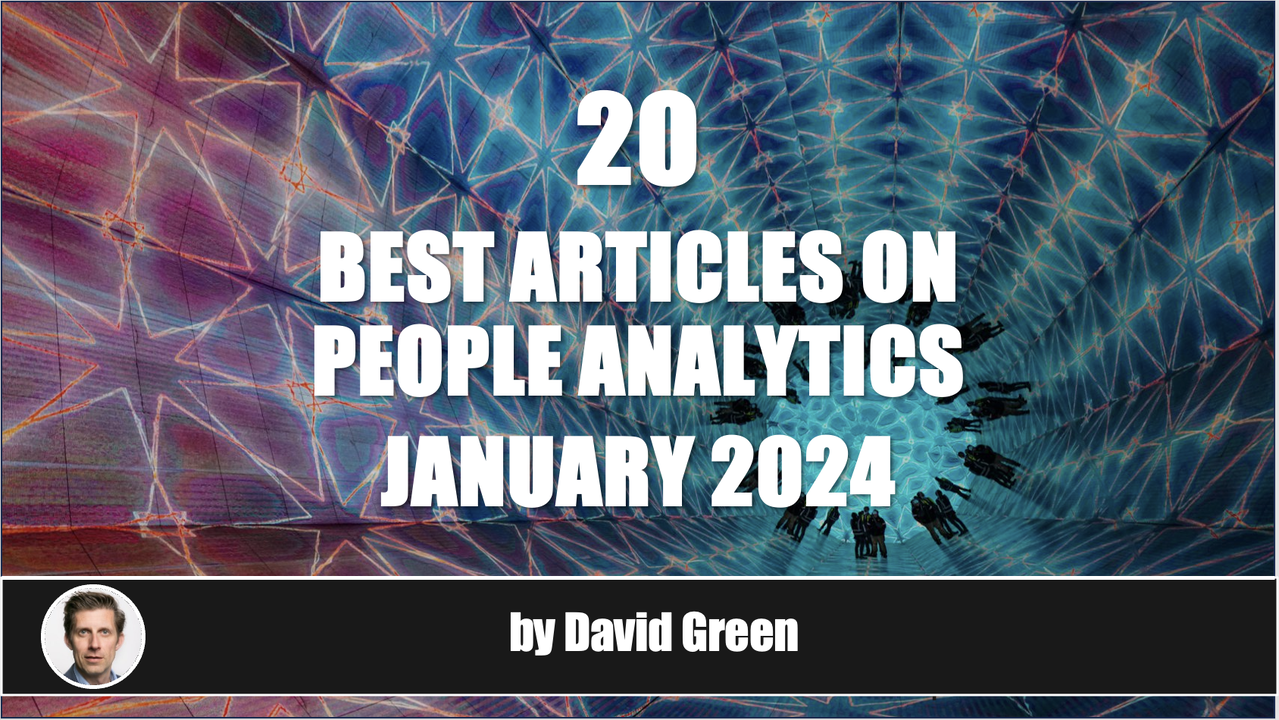
The best HR & People Analytics articles of January 2024
2024 is set to be a momentous year. With economic uncertainty, rising geopolitical conflict, and rapid advances in technology, it is also set to be a stormy 12 months for the world, for organisations, and for HR professionals too.
Perhaps this explains the slew of insightful resources in January, which has made compiling this month’s collection as challenging as it has been enjoyable. One of the key focuses has been on ‘productivity’, and I’ve brought together a number of resources on this topic. There are also new studies from the likes of PwC, McKinsey, Glassdoor, Accenture, and Deloitte as well as articles featuring practitioners from companies including Spotify, Microsoft, Ericsson, Lloyds Banking Group, and Standard Chartered. There’s lots to enjoy and learn from.
Join me for a webinar on February 21 to discover how Leading Companies shift People Analytics from insight to impact
Are you an HR or People Analytics Leader seeking to transform your organisation’s People Analytics from mere insights to impactful business outcomes? If so, I invite you to join me for a webinar that Insight222 is hosting on February 21. Naomi Verghese and I will walk through the findings from the Insight222 People Analytics Trends research, unveiling the distinctive characteristics of ABCD Teams that propel organisations to new heights. Naomi and I will be joined by Alan Susi, VP and Global Head of Organisational Analytics and People Insights at S&P Global. Alan will share insights into how S&P Global successfully elevated their approach to people analytics, turning data into tangible business outcomes. You can register for the webinar here – or by clicking the image below.
Jürgen Klopp – a study in leadership, culture, and analytics
As a fervent supporter, I’m still processing the totally unexpected news that Jürgen Klopp will be leaving his post as the manager of Liverpool at the end of the current football season. In his press conference on taking the reins at Anfield in October 2015, Klopp stated his goal was to turn Liverpool from “doubters to believers.” He has done this with some aplomb amassing a haul of seven trophies (to date) including the Champions League in 2019 and then, the following year, the Holy Grail of Liverpool’s first league title in 30 years.
But Klopp is more than a brilliant football manager. He is the epitome of an empathetic leader. His emotional intelligence and natural humility not only endears Klopp to his players, but to supporters too for whom he is adored. The reaction to the news reduced many Liverpool supporters to tears. I’m still hoping – probably forlornly - that like Alex Ferguson in 2002, Klopp will change his mind and stay.
In the likely event that he does depart, I’m sure that multiple studies will be made on Klopp’s time at Anfield, and that his leadership skills, use of data and analytics, and ability to build an inclusive winning culture will be deservedly celebrated. YNWA.
Looking for a new role in people analytics or HR tech?
Before we get to this month’s collection of resources, I’d like to highlight once again the wonderful resource created by Richard Rosenow and the One Model team of open roles in people analytics and HR technology, which now numbers over 500 roles.
Looking for a people analytics event to attend in 2024?
Richard Rosenow has also been busy compiling a study of People Analytics Conferences to attend in 2024 with the data collected from practitioners themselves. Society for Industrial and Organizational Psychology (SIOP), People Analytics World and the Wharton People Analytics Conference all come out well as does the Insight222 Global Executive Retreat. Thanks to Richard for putting this together.
Share the love!
Enjoy reading the collection of resources for January and, if you do, please share some data driven HR love with your colleagues and networks. Thanks to the many of you who liked, shared and/or commented on December’s compendium (including those in the Comments below).
If you enjoy a weekly dose of curated learning (and the Digital HR Leaders podcast), the Insight222 newsletter: Digital HR Leaders newsletter is published every Tuesday – subscribe here.
THE QUEST FOR PRODUCTIVITY
MCKINSEY - 2024 and beyond: Will it be economic stagnation or the advent of productivity-driven abundance? | PwC - 27th Annual Global CEO Survey: Thriving in an age of continuous reinvention | JOSH BERSIN - HR Predictions for 2024: The Global Search For Productivity | ERIK BRYNJOLFSSON - How AI Will Transform Productivity | BEN WABER AND NATHANAEL J. FAST - Is GenAI’s Impact on Productivity Overblown?
When I talk with CHROs and People Analytics Leaders at the companies we work with at Insight222, one of the words I’m hearing most at the moment is ‘productivity’. Continuing economic and geopolitical uncertainty, the promise of AI, and challenging talent demographics are all fuelling the demand for productivity from CEOs. Here are five resources that can be filed under the ‘productivity’ umbrella: (1) McKinsey’s Ezra Greenberg, Asutosh Padhi, and Sven Smit present a model for businesses to capture the three-sided productivity opportunity (see FIG 1). (2) Amongst a ton of takeaways, the standout theme from the annual PwC CEO survey is that the vast majority of participating companies are already taking some steps towards reinvention, while CEOs believe that 40% of their work is wasted productivity (see FIG 2). (3) Josh Bersin draws from the PwC survey in his 2024 predictions, where he outlines The Productivity Advantage where “If you can help your company move faster (productivity implies speed, not only profit), you can reinvent faster than your competition.” (4) Stanford professor Erik Brynjolfsson offers leaders an overview of how AI will transform productivity. (5) Finally, Ben Waber and Nathanael Fast’s absorbing essay in Harvard Business Review cautions leaders on leaning into the hype on GAI’s supposed positive impact on productivity too heavily. The authors break down two of the key challenges with LLMs: a) their persistent ability to produce convincing falsities and b) the likely long-term negative effects of using LLMs on employees and internal processes.
FIG 1: The three-side productivity opportunity (Source: McKinsey)
FIG 2: CEOs estimate administrative inefficiency at 40% (Source: PwC)
GERGELY OROSZ AND ABI NODA - Measuring Developer Productivity: Real-World Examples
Continuing the productivity theme, this is an invaluable resource by Gergely Orosz and Abi Noda in The Pragmatic Engineer newsletter. It provides detail on developer productivity metrics at 17 tech companies including Google, Microsoft, Spotify, and Uber (see summary in FIG 3).
FIG 3: Developer productivity metrics at 17 tech companies (Source: Pragmatic Engineer)
2024 HR TRENDS AND PREDICTIONS
JASMINE PANAYIDES - Nine Ways to Put HR Trends and Predictions into Practice in 2024
There has been a flood of articles advising what the key HR trends, predictions, and opportunities for 2024 are, but how are HR professionals supposed to make sense of these? In her article for the myHRfuture blog, Jasmine Panayides provides actionable tips on how HR professionals can apply the trends, predictions and opportunities to their work, and their organisations so they can deliver value to the company and the workforce. Jasmine also helpfully summarises the trends/predictions from a variety of sources into one table (see FIG 4), including from: Visier Inc., Gartner, Bernard Marr, UNLEASH, Mercer, and Culture Amp as well as my own 12 Opportunities for HR in 2024 article.
FIG 4: Analysis of HR Trends and Predictions for 2024 (Source: myHRfuture)
KATARINA BERG - HR Trends for 2024 | GARTNER - 9 Future of Work Trends for 2024 | GLASSDOOR – 2024 Workforce Trends | HUNG LEE - Forecasting 2024 in Recruitment Part 1, Part 2, Part 3, and Part 4 | KEVIN WHEELER - What Does 2024 Hold in Store for Us? | STACIA GARR AND DANI JOHNSON – 2024 Mega Trends and how people leaders should respond (Webinar)
The deluge of commentators offering their HR trends and opportunities continued in January. As such, it is a challenge to sort the wheat from the chaff but in addition to those I highlighted in this compendium in December, and in Jasmine’s article above, I recommend diving into the following: (1) Spotify’s chief people officer, Katarina Berg, highlights ten trends with the common theme being each trend is a bridge, connecting the past with the future, and HR professionals are the architects crafting these vital links – including “Staying Human in the Age of AI – The Humanity Bridge”. (2) Gartner’s Jordan Turner and Emily Rose McRae highlight nine future of work trends for the year ahead (see FIG 5). (3) Aaron Terrazas and Daniel Zhao identify eight workforce trends based on Glassdoor’s data on workplace satisfaction, culture, and conversations. (4) Hung Lee is at the cutting edge of recruiting and HR tech, so his four-part series on recruiting in 2024 is definitely worth checking out – two examples include: “Multi-generational replaces neurodiversity as DEIB hot topic” and “Capital Allocation Shifts from Sourcing & Engagement to Assessment & Verification Tech”. (5) Futurist Kevin Wheeler offers seven insights and predictions together with his self-assessed certainty rating including “Generative AI will dominate, and every product will attempt to incorporate AI. 90% certainty” and “More firms will embrace a four-day workweek 50% certainty”. (6) Finally, I strongly recommend viewing the 2024 Mega Trends webinar hosted by Stacia Sherman Garr and Dani Johnson for RedThread Research, which breaks down the key macro factors impacting the world of work and how HR can respond.
FIG 5: 9 Future of Work Trends for 2024 (Source: Gartner)
GREG NEWMAN - 10 important topics that HR will likely ignore in 2024
Greg Newman takes an alternative, wry and contrarian approach by focusing his list of “predictions” on ten things most HR teams will continue to ignore in 2024. My favourite three are: (1) speaking the language of the business, (2) focusing AI conversations on ethics before technology, and (3) learning that good data is required to realise the dreams of AI and analytics.
By aligning HR language with business terminology, we can more effectively demonstrate the value of our initiatives in a way that resonates with business stakeholders.
GENERATIVE AI AND THE FUTURE OF WORK
ELLYN SHOOK AND PAUL DAUGHERTY - Work, workforce, workers: Reinvented in the age of generative AI
A new study from Accenture, co-authored by Ellyn Shook and Paul Daugherty, on how generative AI is impacting work, provides guidance on how leaders can: “Set and guide a vision to reinvent work, reshape the workforce and prepare workers for a generative AI world, while building a resilient culture to navigate continuous waves of change.” The report reveals a trust gap between workers and leaders on key elements related to GAI’s impact on work, the workforce, and workers. The authors also highlight four accelerators for leaders to navigate the journey ahead: (1) Lead and learn in new ways, (2) Reinvent work, (3) Reshape the workforce (see example in FIG 6), and (4) Prepare workers.
FIG 6: Illustrative example of how work and roles can be reallocated in a GAI future (Source: Accenture)
ROGER W. HOERL AND THOMAS C. REDMAN - What Managers Should Ask About AI Models and Data Sets
The decision on whether to deploy AI models within an organisation ultimately lies with business leaders who may not be qualified to identify risks and weaknesses related to AI models and data sets. In their article, Roger Hoerl and Tom Redman provide (1) A framework (see FIG 7) designed to equip leaders with context and based on their concept of the right data. (2) A set of six questions for leaders to ask their AI model developers before and during modelling work and deployment. (3) Guidance for leaders on how to assess AI model developers’ answers to those six questions.
FIG 7: The Right Data Framework (Source: Roger W. Hoerl and Thomas C. Redman)
PEOPLE ANALYTICS
STEVE HATFIELD, SUE CANTRELL, AND BRAD KREIT - Beyond the quick fix: How workforce data can drive deeper organizational problem-solving
The premise of this thoughtful article by Steve Hatfield, Susan Cantrell, and Brad Kreit is that without the right context, even simple measurements can undermine efforts to convert people data into value. They then explore several examples – in the workforce, in the workplace, and in the work – where organisations might be limiting their analysis to the surface level and how deeper analysis can reveal systemic issues that lead to opportunities for transformation. Guidance on three actions leaders can take to help ensure they are not missing important context in their data analysis are provided: (1) Bring data from different domains and sources together for analysis. (2) Make sure you’re measuring what you should—not just what you can. (3) Identify potential biases in data collection algorithms.
If organizations want to move beyond quick fixes and use work and workforce data to drive deeper—and often more challenging—problem-solving, it is important that they look at the data in context.
NAOMI VERGHESE - How to Measure the Value of People Analytics
My Insight222 colleague Naomi Verghese digs how to measure the commercial value of people analytics, highlighting a powerful case study from Jaesun HA and LG Electronics. Naomi provides detail on four key areas where people analytics adds value (business performance, workforce experiences, driving an analytics culture and societal benefit) as well as providing data on the characteristics of companies that ARE creating commercial value from people analytics (see FIG 8).
FIG 8: Characteristics of people analytics that disclosed and measured commercial value of people analytics solutions (Source: Insight222 People Analytics Trends, 2023)
ANDRÉS GARCIA AYALA - 5 Change Drivers Impacting People Analytics & How To Thrive In Them | WILLIS JENSEN - Attrition versus Retention: Which Should I Use? | KEITH McNULTY – Regression Modeling in People Analytics: Survival Analysis | LYDIA WU - The Market Sucks and You are Looking for a Job, Now What? | SEBASTIAN SZACHNOWSKI - 16 HR Metrics for IT | ERIN FLEMING AND NICK JESTEADT - People Analytics Perspectives from the Fringe: Current Priorities and a View on Optimized Teams in 2024
January saw a slew of articles from current and recent people analytics leaders, which typically act as a spur and inspiration for the field. Six are highlighted here: (1) Andrés García Ayala highlights some of the key change drivers impacting people analytics and ways to incorporate them into our work. (2) Willis Jensen builds on the recent primer on attrition metrics by Ben Teusch that I highlighted in December’s edition. He explains why we should be using attrition and retention as separate terms that lead to distinct metrics with different objectives (see also FIG 9). (3) Keith McNulty provides another indispensable practical guide for people analysts with a step-by-step tutorial to conducting survival analysis in R. (4) The prolific Lydia Wu turns her attention to providing some handy guidance for those looking for their next people analytics / HR tech role. (5) Sebastian Szachnowski provides a useful breakdown of 16 HR metrics for technology companies. (6) Last but definitely not least, Erin Fleming and Nick Jesteadt provide insights from their survey of fellow people analytics practitioners. Insights include a) 41% of respondents (n=49) operate as a one-person people analytics team, and ii) the main current focus areas of work include employee turnover, cultural engagement, return to office, and restructuring.
FIG 9: When to use Attrition and Retention (Source: Willis Jensen)
MAX BLUMBERG - The Big List of GPTs to Revolutionize Your People Processes | JOHANNES SUNDLO - GenAI for People Analytics
Two articles addressing the opportunity for generative AI in the people space. (1) Max Blumberg (JA) ?? sets out 93 potential ways to upgrade your People Processes with AI and GPTs across four categories – workforce planning and strategy, recruitment, learning and development, and employee wellbeing. (2) Johannes Sundlo provides examples of companies using GAI in their people analytics work to support analyses on engagement data, skills, and tailoring training recommendations.
GPTs are an amazing tool for scenario planning, forecasting future workforce needs, identifying talent gaps, and developing integrated talent strategies.
THE EVOLUTION OF HR AND DATA DRIVEN CULTURE
DAVE ULRICH, NORM SMALLWOOD, AND JOE GROCHOWSKI - Why and How to Move HR to an Outside-In Approach
When asked the question, “What is the biggest challenge in your job today?” HR professionals will typically provide answers such as: “Build a skills-based organisation” or “Help our employees have a better experience”. As Dave Ulrich, Norm Smallwood, and Joe Grochowski write, these answers would be far more powerful when a “so that” is applied e.g. “Help employees have a better experience so that customer experience improves.” The article demonstrates that greater value is created with an outside-in approach that starts with the needs of external stakeholders (customers, investors, community) and then figuring out the implications inside the company for meeting those needs. Dave, Norm, and Joe also present their Human Capability Framework and a tool that provides an assessment of an organisation’s outside-in performance (see FIG 10).
FIG 10: Human capability from the outside-in - diagnostic questions (Source: Dave Ulrich et al)
WORKFORCE PLANNING, ORG DESIGN, AND SKILLS-BASED ORGANISATIONS
AMY WEBB - Bringing True Strategic Foresight Back to Business
In her article for Harvard Business Review, Amy Webb defines strategic foresight as “a disciplined and systematic approach to identify where to play, how to win in the future, and how to ensure organizational resiliency in the face of unforeseen disruption.” Her article also advocates for the integration of strategic foresight as a core competency in every organisation, regardless of size. Moreover, Amy provides guidance on how to operationalise strategic foresight by unveiling a ten-step process. Read alongside another article authored by Amy for HBR: How to Do Strategic Planning Like a Futurist, which includes Amy’s Futurist’s Framework for Strategic Planning (see FIG 11).
FIG 11: A Futurist’s Framework for Strategic Planning (Source: Amy Webb)
WORLD ECONOMIC FORUM AND PwC - Putting Skills First: Opportunities for Building Efficient and Equitable Labour Markets
As the introduction to this compelling collaboration between the World Economic Forum and PwC begins: “Skills and talent shortages are critical challenges facing societies and economies today. The absence of relevant skills impedes business growth, hinders economic prosperity, and inhibits individuals from realizing their full potential.” The report identifies five specific opportunities for intervention where the gains from skills-first solutions are most likely for employers and workers alike (see ‘Skills-first Framework’ in FIG 12). Additionally, the report also showcases 13 Skills First “Lighthouses”, including IBM, Siemens, Standard Chartered and Sanofi. It concludes by offering key takeaways regarding six success factors in implementing skills-first approaches including (1) Sponsorship from leadership, (2) Alignment with business needs, and (3) Data and evaluation for iteration. (Authors: Genesis Elhussein, Mark Rayner, Aarushi Singhania, Saadia Zahidi, Peter Brown MBE, Miral Mir, and Bhushan Sethi).
A cultural shift to skills-first approaches needs both sponsorship from executives and governance from human-resources professionals
FIG 12: Skills-first Framework (Source: World Economic Forum
PETER SHEPPARD - Learning from our Skills Journey | BEN AUTY - What are the new skills people will need for the future of work? | TANUJ KAPILASHRAMI - How Standard Chartered is Unlocking the Power of Skills in the Workplace
Many of the organisations we work with at Insight222 have embarked on the road to becoming a skills-based organisation. It is not an easy journey, so it is helpful to learn from other companies who are treading this path. Three of these are Ericsson, Lloyds Banking Group, and Standard Chartered. (1) In his article, Peter Sheppard shares learnings from Ericsson’s skills journey including a) it’s not jobs or skills; it’s skills and jobs, b) it’s a whole organisation activity, c) Less is more with skills, and d) Data drives value. (2) Ben Auty shares insights as to why Lloyds Banking Group is developing a learning culture to build the workforce of the future at the bank, the main skills they are focusing on, and the central role the recently established Reskilling Team is playing. (3) Tanuj Kapilashrami shares how Standard Chartered catalysed their work on skills by identifying adjacencies between ‘sunset’ and ‘sunrise’ roles.
We looked at skills adjacencies between ‘sunset’ jobs and ‘sunrise’ jobs: so, what are the jobs that are going to go away? What are the skills that help employees get reskilled into some of these sunrise jobs? We ran five proofs of concept, we showed some real redeployment opportunities and started making the skills narrative real.
EMPLOYEE LISTENING, EMPLOYEE EXPERIENCE, AND EMPLOYEE WELLBEING
JENNIFER E. SIGLER WITH STEPHANIE DENINO - So Many Stakeholders, So Little Time: State of EX 2023-2024
The fifth annual State of EX study authored by Jennifer E. Sigler, PhD on behalf of The EXchange, Inc, TI PEOPLE and FOUNT Global, Inc. is a treasure chest of insights on the fast-evolving practice of employee experience. It highlights the top four priorities for EX as: (1) Redesigning experiences, (2) Getting broader buy-in for EX work across the organisation, (3) Building an EX roadmap for the organisation, and (4) Getting more / better data. One other standout finding from the study suggests that senior leaders are increasingly focused on EX with a majority of respondents (63%) saying their organisation’s senior leaders view EX as equal to or even more important than other corporate priorities. This bodes well for the future of EX. Thanks to Stephanie Denino and Volker Jacobs for highlighting the study.
FIG 13: EX Team Priorities YOY Change (Source: The EXchange, TI People and FOUNT Global, Inc)
LEADERSHIP AND CULTURE
NADJIA YOUSIF, ASHLEY DARTNELL, GRETCHEN MAY, AND ELIZABETH KNARR - Psychological Safety Levels the Playing Field for Employees | PETER CAPPELLI AND LIAT ELDOR - Can Workplaces Have Too Much Psychological Safety?
Two perspectives on psychological safety in the workplace. In the first article, Nadjia Yousif, Ashley Dartnell, Gretchen May, and Elizabeth Knarr present the findings of Boston Consulting Group (BCG) research, which finds how psychological safety benefits inclusion, reduces attrition in diverse groups and effectively acts as an equaliser - enabling diverse and disadvantaged employee groups to achieve the same levels of workplace satisfaction as their more advantaged colleagues. The study also highlights the direct relationship between empathetic leadership and feelings of psychological safety in the workforce, giving leaders a clear directive to be empathetic and thereby engender psychological safety. The second article by Peter Cappelli and Liat Eldor presents research that found that when you move from average to high levels of psychological safety, performance in routine jobs actually declined.
FIG 14: Psychological safety has an outsize impact on retention for diversity groups (Source: BCG)
RASMUS HOUGAARD, JACQUELINE CARTER, AND ROB STEMBRIDGE - The Best Leaders Can’t Be Replaced by AI
While there are some areas where AI is already surpassing or will surpass human capabilities, there are several it cannot replace. Based on their research into employees’ comfort with AI in management, as well as their decades of research on the qualities of effective leadership, Rasmus Hougaard, Jacqueline Carter, and Robert Stembridge identify the promise (and perils) of AI-enabled management (see FIG 15), as well as the three uniquely human capabilities leaders need to focus on honing, especially as AI begins to figure more in management: (1) awareness, (2) compassion, and (3) wisdom. For more from Rasmus, I recommend listening to his podcast discussion with me: How To Be a More Compassionate Leader.
Leaders who deepen their ability to lead with humanity will win at attracting, retaining, developing, and motivating top talent.
FIG 15: AI versus Human: A matric of leadership activities (Source: Potential Project)
DIVERSITY, EQUITY, INCLUSION, AND BELONGING
JULIE COFFMAN, ALEX NOETHER, BIANCA BAX, CASSY REICHERT, AND KRYSTLE JIANG - The Business of Belonging: Why making everyone feel included is smart strategy
Revealing data from a Bain survey of 6,000+ employees across four countries, which finds employees who have seen their companies intentionally invest in inclusion since 2020 are three times more likely to feel fully included than employees who have not seen such investment from their employers. Other findings include (1) Combining diversity and inclusion maximises a company’s capacity (by 4x) to innovate, and (2) Employees with inclusive leadership are 9x more likely to feel fully included at work (see FIG 16). (Authors: Julie Coffman, Alex Noether, Bianca Bax, Cassy Reichert, and Krystle Jiang).
FIG 16: Employees with inclusive leadership are 9x more likely to feel fully included at work (Source: Bain)
SHUJAAT AHMAD - DEIB Is At A Crossroads—It’s Time for Bold Action and Clear Metrics
Given recent developments it’s reasonable to say that Diversity, Equity, Inclusion, and Belonging (DEIB) is at an existential crossroads. As Shujaat Ahmad writes in his excellent article for Round: “Boards, leadership teams, and investors hold the power to set the tone, shape the policies, and allocate the resources to support DEIB initiatives: for DEIB to work effectively, they must shift from well-intentioned wordsmiths to committed drivers that hold the organization accountable for outcomes and positive change.” Shujaat then unveils his blueprint to help leaders assess progress and drive meaningful change, clarifying the ‘why’ before diving into the ‘how’ covering measuring what matters and interventions (see FIG 17). For more from Shujaat, I recommend visiting Belong and Lead.
FIG 17: Source – Shujaat Ahmad
HR TECH VOICES
Much of the innovation in the field continues to be driven by the vendor community, and I’ve picked out a few resources from January that I recommend readers delve into:
ERNEST NG - If the Pitch is Too Smooth, It Probably Is: Why AI in HR is Difficult – Part 2 of an insightful essay from Ernest Ng, PhD of HiredScore (see also Part 1 on disclosures here) where he cuts through the hype to assess how we should be implementing AI in HR.
LOUJAINA ABDELWAHED - A Tale of Two Cultures - In One Company - Loujaina Abdelwahed, PhD from Revelio Labs highlights the growing disparity between junior and senior employees (see FIG 18) and identifies the factors causing this malaise. Thanks to Ben Zweig for highlighting.
FIG 18: The growing disparity in sentiment between junior and senior employees (Source: Revelio Labs)
JEREMIE BRECHEISEN - Where Employees Think Companies’ DEIB Efforts Are Failing – Jeremie K Brecheisen presents findings from Gallup that reveals a disconnect between how well employees and HR leaders believe their organisations are doing when it comes to diversity, equity, inclusion, and belonging: 84% of CHROs say their organisations are increasing investment in DEIB, while only 31% of employees say their organisation is committed to improving racial justice or equity in their workplace (see FIG 19). The article then outlines ten needs employees say are not being met and then offers strategies to help organisations address the disconnect.
FIG 19: How employees and HR leaders differ on perceptions of DEIB progress (Source: Gallup)
FRANCISCO MARIN - Navigating the ONA Landscape: Trends and Challenges for 2024 - Another good read from Cognitive Talent Solutions, as Francisco Marin explores the key trends and challenges shaping the ONA space in 2024.
IAN WHITE - The three C’s of effective performance management – Ian White, CEO at ChartHop, presents the three C’s of performance management — continuous, contextual and cultural — designed to help companies understand their employees more holistically.
CHRISTINA JANZER - The surprising connection between after-hours work and decreased productivity – Christina Janzer presents findings from Slack’s Workforce Index, which identifies findings on how to structure the workday to maximise employee productivity, well-being and satisfaction – including the connection between after hours work and decreased productivity.
FIG 20: Source – Slack
PODCASTS OF THE MONTH
In another month of high-quality podcasts, I’ve selected five gems for your aural pleasure: (you can also check out the latest episodes of the Digital HR Leaders Podcast – see ‘From My Desk’ below):
AMY EDMONDSON AND LAURIE RUETTIMANN – Right Kind of Failure – Amy Edmondson joins Laurie Ruettimann on the brilliantly named Punk Rock HR to explore the essential role of failure in our professional and personal growth.
STACIA GARR, COLE NAPPER, AND SCOTT HINES - People Analytics & HR Tech Research by Industry Analysts – Stacia Sherman Garr, one of the industry’s top analysts, joins Cole Napper and Scott Hines, PhD on the Directionally Correct podcast to discuss the research Stacia and her team at RedThread Research do in the people analytics and HR technology space.
RICHARD ROSENOW, MADDIE GRANT, AND SANJA LICINA - How to Build an Integrated Framework for Workforce Listening – In an episode of the Empowering Workplaces podcast, Richard Rosenow joins hosts Maddie Grant and Sanja Licina, Ph.D. to talk about The Three Channels of Workforce Information: conversations (“what people say”), surveys (“what people say they do”) and systems (“what people do”) as a way to build a comprehensive understanding of your workforce.
McKINSEY - The shape of talent in 2023 and 2024 - In this episode of McKinsey Talks Talent, Bryan Hancock, Brooke Weddle and host Lucia Rahilly highlight the trends that shaped last year’s talent landscape—and those poised to ‘redefine its contours’ yet again in 2024.
MATTHEW BIDWELL AND DAN LONEY – Forecasting 2024 Workplace Trends – Wharton Professor and convenor of the Wharton People Analytics Conference, Matthew Bidwell, joins host of the Wharton Business Daily Dan Loney to look at the year ahead in the workplace.
VIDEO OF THE MONTH
CHRIS LOUIE, TOMAS CHAMORRO-PREMUZIC, TERRI HORTON, AND LINDSEY SHINTANI - Power a dynamic workforce by embracing AI
An enlightening panel discussion from the recent LinkedIn Talent Connect where Chris Louie, Dr Tomas Chamorro-Premuzic, Terri Horton, EdD, MBA, MA, SHRM-CP, PHR, and Lindsey Shintani discuss how AI is changing learning and career paths. They provide guidance on how to overcome AI anxiety and empower impactful futures.
BOOK OF THE MONTH
KEVIN WHEELER AND BAS VAN DE HATERD – Talent Acquisition Excellence
An excellent new book published by Kogan Page and authored by Kevin Wheeler and Bas van de Haterd (He/His/Him). It provides an insightful and detailed analysis of how technologies such as artificial intelligence and machine learning in combination with analytics can improve talent acquisition and recruitment.
RESEARCH REPORT OF THE MONTH
YUYE DING AND MARK (SHUAI) MA - Return-to-Office Mandates
A huge thank you to Nick Bloom for bringing my attention to this paper from Yuye Ding and Mark Ma, which studied the impact of 137 Return to Office mandates on the performance of S&P500 firms from 2020-2023. The key findings, as summarised by Nick, are illuminating: (1) RTO mandates are more likely in firms with poor recent stock performance, and in those with powerful male CEOs. (2) Glassdoor data finds RTO mandates significantly reduce employee ratings for job satisfaction, work-life balance, and senior management. (3) There is no significant impact of RTO mandates on either firm profitability or firm stock-returns.
FIG 21: Distribution of firms’ RTO mandates (Source: Yuye Ding and Mark Ma)
FROM MY DESK
January saw the first three episodes of Series 36 of the Digital HR Leaders podcast, sponsored by our friends at ScreenCloud. Thank you to Luke Farrugia.
DAVID GREEN - The best 60 HR & People Analytics articles of 2023 Part 1 | Part 2 – My tenth annual collection of HR and people analytics resources is spread across two articles and ten themes. Part 1 covers i) the future of work and people strategy, ii) workplace design and strategy, iii) AI and the world of work, iv) people analytics, and v) employee experience, listening and wellbeing. Part 2 covers: vi) the evolution of HR, HR operating models and the CHRO, vii) building a data driven culture in HR, viii) workforce planning, skills, and talent marketplace, ix) leadership and culture, and x) diversity, equity, inclusion and belonging.
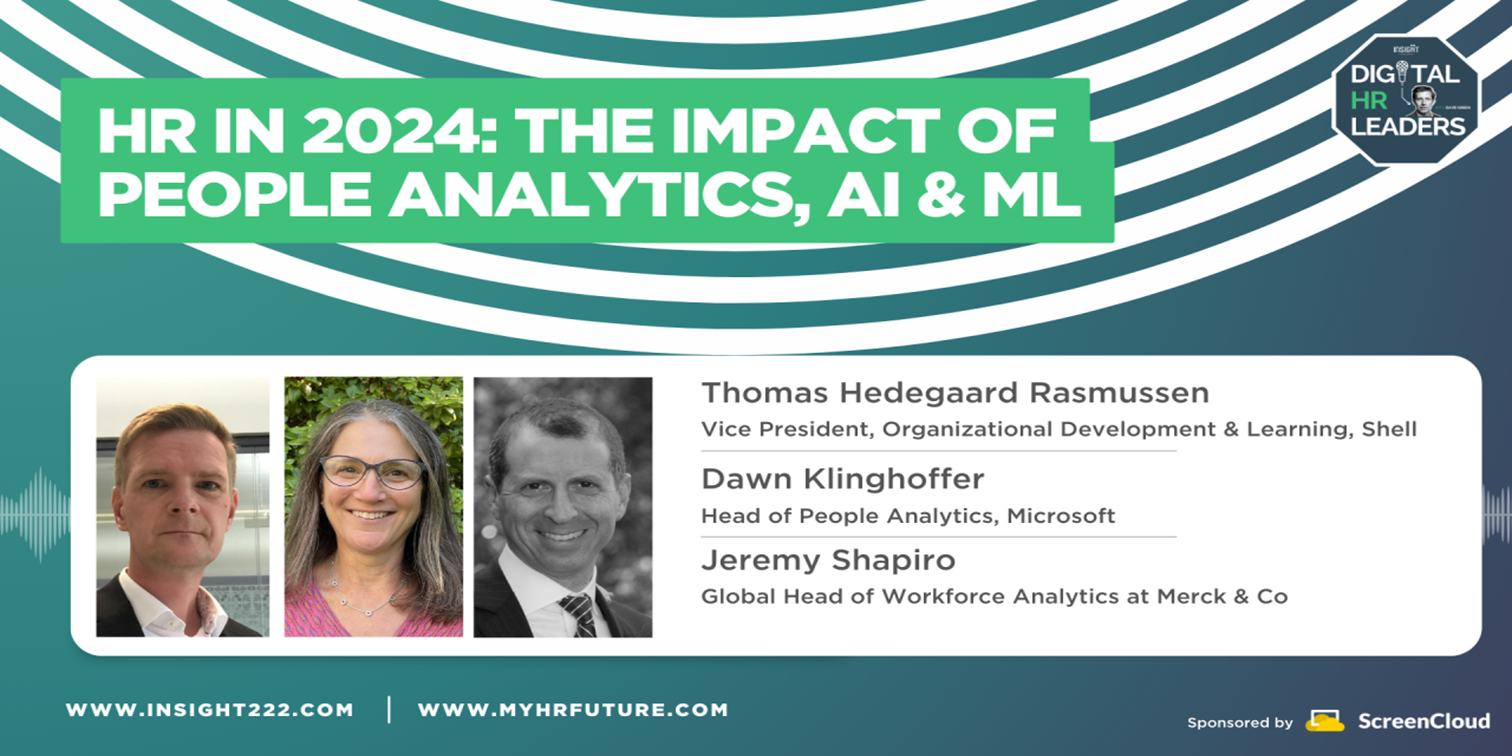
THOMAS RASMUSSEN, DAWN KLINGHOFFER, AND JEREMY SHAPIRO - HR in 2024: The Impact of People Analytics, AI & ML – In a special episode of the Digital HR Leaders podcast to kick off 2024, I was joined by Thomas Rasmussen, Dawn Klinghoffer, and Jeremy Shapiro to discuss the outlook for HR and people analytics in the coming 12 months.
SERENA HUANG - How to Enhance Your Career in People Analytics - Serena H. Huang, Ph.D., who has led people analytics functions at companies including GE, PayPal and Kraft Heinz, joins me to discuss the common career paths observed in the people analytics field and how they have evolved over the years.
KAZ HASSAN AND LUKE FARUGGIA - How to Bridge the Gap Between Customer and Employee Experience - What can HR learn from marketing's journey in using data, analytics and technology to understand and personalise the customer experience? How can we leverage these insights in HR to boost our employee experience initiatives? Kaz Hassan and Luke Faruggia join me to discuss these topics and more.
THANK YOU
Finally, this month I’d like to thank:
Recruit CRM for nominating me as ‘The People Analytics Pioneer’ in their list of 50 Recruitment Influencers to Follow in 2024
Likewise, a huge thank you to 365Talents for including me as one of the Top 50 HR Influencers to Follow in 2024
Similarly, thanks to HRCap, Inc. for including me in their list of 10 HR Influencers who Provide Remarkable Insights
The Social Craft (here) and The Talent Games (here) for also including me in their lists of HR and HR Tech leaders to follow.
HRDConnect for quoting me in their article Data Literacy: A must-have for HR professionals in 2024.
Gianni Giacomelli for including the Data Driven HR monthly in his list of seven must-read newsletters.
HR Geckos for including Excellence in People Analytics as a book recommendation in their HR Bytes Newsletter for January 2024.
Sebastian Szachnowski for including Excellence in People Analytics in his list of books to get better at people analytics.
Leapsome for including the Digital HR Leaders podcast as one of its Top 10 HR Podcasts for 2024.
Similarly, Alexandre Darbois for also including the Digital HR Leaders podcast as one of his 5 HR Podcasts.
Melissa Meredith for using my 12 Opportunities for HR in 2024 article to highlight the importance of the HR-Finance partnership in building a thriving company.
Bill Brown for also highlighting my 12 Opportunities for HR in 2024 article in his Eleven Trends Transforming the Future of Work in 2024.
Mirro.io for including me as a contributor in their list of 15 HR Trends for 2024.
Dhanesh K for including as one of his 10 Top HR Leaders to Follow.
Lanteria HR for recommending me as one of their HR Experts to Follow in 2024.
Semos Cloud for including my 12 Opportunities for HR in 2024 as part of their round-up of HR insights.
Thomas Kohler for including my Best HR and People Analytics Articles of 2023 in their collection of HR resources to read.
Thinkers360 for including me in their Top Voices EMEA 2023.
ABOUT THE AUTHOR
David Green ?? is a globally respected author, speaker, conference chair, and executive consultant on people analytics, data-driven HR and the future of work. As Managing Partner and Executive Director at Insight222, he has overall responsibility for the delivery of the Insight222 People Analytics Program, which supports the advancement of people analytics in over 90 global organisations. Prior to co-founding Insight222, David accumulated over 20 years experience in the human resources and people analytics fields, including as Global Director of People Analytics Solutions at IBM. As such, David has extensive experience in helping organisations increase value, impact and focus from the wise and ethical use of people analytics. David also hosts the Digital HR Leaders Podcast and is an instructor for Insight222's myHRfuture Academy. His book, co-authored with Jonathan Ferrar, Excellence in People Analytics: How to use Workforce Data to Create Business Value was published in the summer of 2021.
SEE ME AT THESE EVENTS
I'll be speaking about people analytics, the future of work, and data driven HR at a number of upcoming events in 2024:
Feb 21 - Discover how Leading Companies shift People Analytics from insight to impact (Webinar)
Feb 28 - People Analytics World 2024: Exploring the Potential of Analytics and AI in Employee Experience (Zurich)
March 4-6 - Gloat Live! (New York)
March 14-15 - Wharton People Analytics Conference (Philadelphia)
April 24-25 - People Analytics World (London)
May 7-9 - UNLEASH America (Las Vegas)
September 24-26 - Insight222 Global Executive Retreat (Colorado, US) - exclusively for member organisations of the Insight222 People Analytics Program
October 16-17 - UNLEASH World (Paris)
More events will be added as they are confirmed.
资讯
2024年02月01日
资讯
How Will AI Impact People Analytics in 2024 and Beyond(Podcast)2024年,人员分析将面临一个转折点。这个转折点集中在AIML上,以及它如何为组织创造优势,以及 HR 中的大量活动和工作,HR内部的数据科学分析团队有一个独特的位置可以研究。
将人员分析从洞察转变为影响需要什么?人员分析和人力资源专业人员如何影响企业领导者?人工智能和机器学习对现在和未来的人员分析有何影响?
这些只是我们本周在数字人力资源领导者播客从寒假回归时讨论的三个主题。与我一起参加会议的还有三位嘉宾,他们都亲自启发了我,还有无数其他人,他们在人员分析领域拥有超过40年的经验:
Dawn Klinghoffer,Microsoft人员分析全球主管和 Insight222 的董事会顾问,他在过去20年中一直在 Microsoft 建立和领导人员分析功能。
杰里米·夏皮罗(Jeremy Shapiro),默克公司(Merck & Co)劳动力分析全球主管,纽约战略人力资源分析会议小组的联合召集人。
Thomas Hedegaard Rasmussen,壳牌组织发展和学习副总裁,曾在澳大利亚国民银行、壳牌和马士基建立并领导人员分析职能。
您可以通过单击下面的图片或访问播客网站来收听。
在对话中,我们探讨了如何通过人员分析来推动业务价值,重点介绍了 Thomas 最近与 Mike Ulrich 和 Dave Ulrich 合著的论文(将人员分析从洞察力转移到影响力)中的发现,以及 Insight222的2023 年人员分析趋势报告中确定的领先公司的八个特征。
如果您能够访问企业中的战略对话,则更容易受到它们的影响。而且,如果你有高层领导的支持,以试图一次做太多事情为代价来追求那些相对较少的高价值项目,那么确定优先级也更容易。
Dawn、Jeremy、Thomas 和我还讨论了:
人员分析的三个“I”:洞察力、影响力和影响力
确定人员分析工作的优先级并将其与业务需求保持一致的技术
如何在人员分析和财务之
间建立成功的关系
人工智能和机器学习如何支持人员分析工作
人工智能将如何在未来12个月和几年内改变工作世界。
我希望人工智能能够真正帮助人力资源部门充满活力,并有能力去做有意义的工作,消除今天人力资源部门发生的许多任务的苦差事。
资源
以下是本集讨论的一些材料的链接:
托马斯与迈克·乌尔里希(Mike Ulrich)和戴夫·乌尔里希(Dave Ulrich)共同发表的论文:将人员分析从洞察力转移到影响
Insight222 的 2023 年人员分析趋势研究:投资交付——人员分析的新模型
Dawn 关于蓬勃发展的文章:为什么 Microsoft 衡量员工的发展,而不是敬业度
杰里米与汤姆·达文波特(Tom Davenport)和珍妮·哈里斯(Jeanne Harris)合著的开创性文章《哈佛商业评论》:在人才分析上竞争
Source Linkedin
资讯
2024年01月31日
资讯
Post Your Form 300A, Summary of Work-Related Injuries and Illnesses与每年这个时候一样,加州雇主必须从2024年2月1日开始发布他们的 300A 表格,即与工作有关的伤害和疾病年度摘要,并一直发布到2024年4月30日。此外,联邦职业健康与安全管理局(OSHA)有一项新的报告要求,适用于某些加州雇主。
加州特定发布
加州职业安全与健康部(Cal/OSHA)提醒雇主,即使没有发生工伤伤害,也要在每个工作场所的可见且易于接近的区域发布这份2023日历年发生的工伤和疾病年度摘要,包括与COVID-19相关的伤害和疾病。
上一日历年记录在表格300A“工伤和疾病日志”上的所有与工作有关的伤害和疾病必须在表格 300A 中汇总。要记录疾病,疾病必须与工作有关,并导致以下情况之一:
死亡;
请假天数;
限制工作或调到其他工作;
急救以外的医疗;
意识丧失;或
由医生或其他有执照的医疗保健专业人员诊断的重大伤害或疾病。
如果工作场所发生的COVID-19导致与任何其他职业病相同的情况,则必须将其记录在表格 300、300a 和 301上。
雇主必须保留并维护 表格300、表格300A和表格301五年,无论其规模大小。
向联邦职业安全与健康管理局报告
除了实际发布外,Cal/OSHA 还要求某些加州雇主在2024年3月2日之前以电子方式向联邦 OSHA 提交其 2023 年 300A 表格,前提是他们:
雇用250名或更多工人,除非加州法规第8篇第14300.2 节特别豁免;或
在 Cal/OSHA 相关法规附录 H 中列出的行业中雇用20至249名工人。
自2024年1月1日起,某些加州雇主有一项新的报告义务:联邦 OSHA 要求在某些指定的高风险行业拥有100名或更多员工的企业在2024年3月2日之前以电子方式提交涵盖2023年事件的Cal/OSHA表格300和表格301。这些高风险行业列在最终规则的附录 B 中,包括但不限于某些类型的农业和食品生产、食品和饮料制造、杂货店和各种类型的运输。雇主还可以查看OSHA关于新要求的情况说明书。
Source HRWatchdog
What Issues are Top of the Mind for HR Leaders Heading into 2024?根据康奈尔大学工业劳动关系学院高级人力资源研究中心的一份调查报告,“转型和演变”这一广泛而重要的话题最近受到人力资源领导者的关注,该问题被确定为2024年企业的最紧迫问题。
“考虑到公司一直面临的所有颠覆,无论是在业务方面,还是在地缘政治问题的更广泛环境中,看到转型成为今年的首要目标,我并不感到惊讶,”康奈尔大学战略人力资源教授兼该中心主任布拉德贝尔说。
根据上周发布的调查,超过三分之二(67%)的人力资源领导者认为转型和演变(包括人力资源转型、文化演变和混合工作演变)是首要问题。而2023年,转型与演进排名第三,只有大约45%的受访者认为是首要问题。
调查显示,由于地缘政治力量和劳动力变化导致的业务中断正在加剧人们对转型和演变的担忧。Bell 说,人力资源领导者特别关注人力资源内部的转型,例如保持公司的敏捷性、提高效率和优化运营。他指出,中东的冲突和乌克兰的持续战争限制了这些地区的员工流动,另外,总体上减缓了一些人力资源转型工作。他补充说,对组织治理问题的高度关注,包括股东对高管薪酬的发言权,也在缓和人力资源转型,因为这种努力可能会限制招聘工作。
此外,Bell 表示,调查参与者报告说,快速的组织文化变化使员工难以建立联系并发展共同的目标,尤其是在当今分散的工作环境中。作为回应,人力资源领导者经常更新他们的混合工作模式,这可能会损害包容性或其他相关目标,从而阻碍文化发展。
HR 优先事项如何变化
排名前五的问题分别是人才管理、技术、员工体验以及领导力和继任计划。
Bell说,技术是今年进入前五名的新事物,这主要是由于人力资源部门对人工智能的兴趣。在前几年,该主题被嵌入到其他类别中,例如数字员工体验。去年排名第四的总奖励从榜单上掉了下来。
“每年,似乎都会有一个新话题出现在前 5 名名单上,”贝尔说。他说,2023 年,在高通胀和寻求为员工提供经济救济的组织推动下,总薪酬是增加的。但今年,通胀正在放缓,对经济衰退的担忧正在缓解,这可能会减少雇主对这一领域的担忧。
DEI 和福祉仍然是人力资源的优先事项吗?
Bell 说,尽管他们没有进入前五名,但 DEI 和福祉仍然是人力资源领导者最关心的问题之一。与去年一样,他们在 2024 年分别排名第六和第七。
Bell 说:“人力资源主管谈到希望保持他们迄今为止在 DEI 方面取得的进展,甚至希望将这些努力提升到一个新的水平。“例如,他们不仅考虑多样性和包容性,还考虑我们如何推动公平和各种人才实践。”
然而,他指出,一些公司正在撤回他们的 DEI 努力。这些行动反映在最高法院去年对平权行动作出裁决后,削减 DEI 预算和裁员 DEI 官员。
他说,同样,雇主对幸福感的关注也在减弱。
“大流行后,人们对员工的健康和福祉非常关注,”贝尔说。“我认为它已经有所消退。我不认为它像我们在调查中看到的其他一些主题那样受到同等程度的关注。
Source Human Resource Executive
资讯
2024年01月31日
资讯
两个H1B Final Rules最全解读|一人一抽落地,申请费真的涨了!一人一抽必然是打击滥用抽签的最好手段,但是基于移民局拖拖拉拉的性格,政策能否今年落地大家都在关注。终于!就在今天!(美国华盛顿1月30日)国土安全部公布了一份叫做Improving the H-1B Registration Selection Process and Program Integrity的文件,正式确认:
从今年2月2日起公告30天后,今年3月3日起,H-1B将采用“一人一抽”制度!Official response: DHS agrees with the need for prompt implementation of this rule. This rule will be effective in time for the FY 2025 H-1B cap season (the H-1B registration period and related selection process beginning in March 2024).国土安全部卡着最后时间节点走到这一步,想必有今年必须实行的决心,而且这一维护抽签公平的制度要想找个理由,在公示期内提出有效异议也比较困难。Final Rule说,今年H-1B怎么抽?必须用Passport/Travel Document来注册。往年没有护照也可以参与抽签,但是今年开始,受益人与护照信息绑定,防止一人多抽现象发生。How does it work? 今年之前的H-1B注册抽签都是基于雇主而非受益人,所以同一个受益人可以有多个抽签机会。但是改革之后是基于受益人来抽签,纵使您有上百个雇主注册抽签,也只能占用一个抽签名额。3月6日开始注册!之前不是还说要自动延长Cap-Gap时间到次年4月1日,还有要支持H-1B自主创业么?
不好意思,这两个政策Final Rule都没说,今年可能来不及落地。
如果我有多个offer怎么办?
所有的公司正常注册抽签,一人一抽不排斥多个公司sponsor同一个受益人。您可以中签后选择最心仪的公司递交H-1B申请。
中签后我可以递交多份H-1B申请提高批准率吗?可以,这一点移民局不禁止。今年H-1B申请费怎么涨?首先我们来明确涨价前H-1B申请费的组成部分:注册抽签费 + 基本申请费 + 反诈骗费 + 美国工人培训费 (+ 加急费,自选),我们来一个一个说明。今年的H-1B申请费怎么涨?
注册抽签费:移民局已经确认,不涨价!还是10刀!
基本申请费:根据最新的Final Rule,要对申请人(雇主)进行区分了!如果您的雇主是小公司/non-profit,那么基本申请费还保持在$460。如果您的雇主不属于前面两类,则基本申请费会涨价到$780,涨价幅度是70%!*小公司:雇佣25个或以下全职员工的公司。
反诈骗费:Final Rule里没说要涨价,所以维持在500刀。
美国工人培训费:没有涨价,还是25个全职员工以下的小公司及无需抽签的雇主缴纳750刀,其他雇主缴纳1500刀。
加急费:Final Rule没说涨价,但是2023年12月27日,移民局公告说:从2024年2月26日起,H-1B加急费将从原本的$2,500涨到$2,805,所以加急费不是不涨是刚涨过。
庇护费:USCIS说,要限制H-1B申请人交庇护费的频率。所以坏消息是,600刀庇护费要交了(小公司的庇护费减半,一共是300刀),好消息是仅应针对H-1B首次申请,后续的transfer、extension、renewals、change of status都不需要重新交。庇护费于今年4月1日生效。如果今年抽签H-1B,涨价是躲不掉的,但是如果您申请H-1B transfer、extension之类的,或者不用抽签,只要您能在4月1日前递交H-1B申请,涨价的镰刀就割不到!
USCIS: The Asylum Program Fee should only be assessed for the initial petition filed by an employer, like the Fraud Prevention and Detection and Public Law 114-113 fees, and not subsequent transfers, extensions, renewals, and changes of status.
Source 小敏话移民WeChat official account

 资讯
资讯
 资讯
资讯
 资讯
资讯
 资讯
资讯
 资讯
资讯
 资讯
资讯
 资讯
资讯
 资讯
资讯
 资讯
资讯
 资讯
资讯




 扫一扫
添加客服
扫一扫
添加客服


