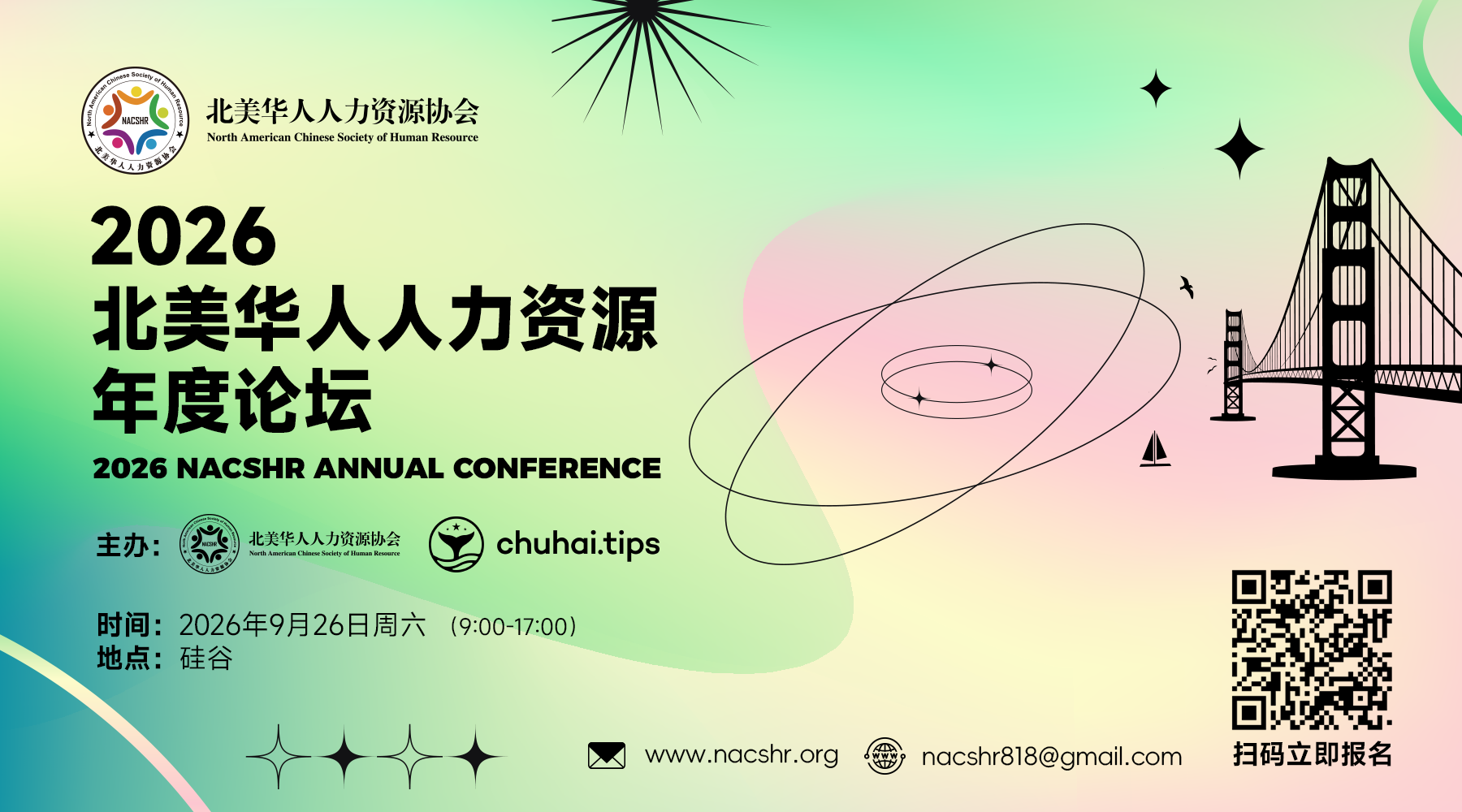
2026北美华人人力资源年度论坛9月26日周六在硅谷举办,欢迎参加2026 北美华人人力资源年度论坛 2026 NACSHR Annual Conference
时间:2026 年 9 月 26 日(周六)Saturday, September 26, 2026地点:美国加州 · 硅谷 Silicon Valley, California报名链接:https://nacshr.org/Survey/EB107E0C-A678-9D12-06C3-2B5D860689B7
北美华人 HR 的年度相聚,一场关于专业、信任与长期同行的论坛
2026 北美华人人力资源年度论坛,将于 9 月 26 日(周六)在加州硅谷举办。这是北美华人 HR 社群一年一度最重要的线下相聚,也是 NACSHR 持续十年深耕华人 HR 专业连接的核心年度活动。
北美华人人力资源协会(NACSHR)自 2016 年成立以来,始终专注于一个清晰而长期的目标:为北美一线工作的华人 HR、People Leader 与企业管理者,打造一个值得信任、可以反复回来的专业共同体。过去几年,NACSHR 年度论坛已发展成为北美地区最具影响力的华人 HR 盛会之一,持续吸引来自硅谷、湾区、北美各地及跨境企业的 HR 管理者、业务负责人和行业专家参与。
2026:更克制的规模,更深入的对话
在快速变化的用工环境下,华人 HR 面临的已不只是工具选择或政策更新,而是跨文化管理、合规复杂性、业务与人才的长期协同。2026 年,NACSHR 年度论坛将延续“高质量专业连接”这一核心原则,在会议规模、议题设计与互动方式上持续优化:
论坛将围绕 招聘与用工合规、组织与薪酬、跨州与跨文化管理、HR 数字化与 AI、企业落地与人才稳定 等真实议题展开,通过 主题演讲、深度对话、小型讨论与实务分享 等形式,确保每一位参会者都能获得可落地的信息与真正有价值的同行交流。
我们相信,比“听更多”更重要的,是被理解、被回应,以及建立长期的专业关系。
面向谁而来
2026 NACSHR 年度论坛面向所有正在或即将参与北美人力资源与组织管理实践的专业人士,包括但不限于:
·北美企业 In-house HR / People / Talent / Operations
·北美与跨境企业 HR 管理层与业务负责人
·正在北美落地或扩张业务的企业创始人与管理者
·人力资源服务机构、顾问与 HR 科技从业者
·关注北美职场与组织发展的华人专业人士
无论你身处企业一线、管理岗位,还是正处于职业转型或能力升级阶段,这场论坛都将为你提供专业视角、现实经验与值得延续的连接。
不只是会议,而是一个可以持续回来的地方
NACSHR 年度论坛不仅是一场信息密集的行业活动,更是一个为华人 HR 提供安全感、认同感与成长空间的线下节点。在这里,你可以:
·听到来自真实一线的经验,而非空洞趋势
·与同行建立信任,而非短暂寒暄
·在复杂环境中找到方向感,而非焦虑感
Stay Together · Stay Powerful这是 NACSHR 长期坚持的价值观,也是这场论坛存在的意义。
2026 北美华人人力资源年度论坛 2026 NACSHR Annual Conference
时间:2026 年 9 月 26 日(周六)Saturday, September 26, 2026地点:美国加州 · 硅谷 Silicon Valley, California报名链接:https://nacshr.org/Survey/EB107E0C-A678-9D12-06C3-2B5D860689B7
名额有限,注册将分阶段审核。更多会议议程、嘉宾与合作信息,将通过 NACSHR 官网及社交媒体持续发布。
门票分为:HR Pass 仅限InhouseHR和HR学生 和 General Pass 如HR服务机构、顾问等非InhouseHR均适合此类门票)
HR Pass 仅限InhouseHR和HR学生等企业内部相关岗位同仁 General Pass 如HR服务机构、顾问、创始人、创业者等其他非InhouseHR的均适合此类门票
论坛超级早鸟票价格:
· HR Pass早鸟票: 200美元/人 仅限7月15日前或名额用完 (原价400美元)
· General Pass优惠票:400美元/人 仅限7月15日前或名额用完(原价600美元)且对外名额有限 额满为止
· HR Pass门票三人同行,享受8.5折优惠
· 周六晚宴门票(不单独销售)150美元/人 (原价200美元) 对外名额有限 额满为止
· Pitch Show 含现场资料发放和10分钟展示机会,含会议通票一张 仅限3个名额 现在仅需2500美元(7月15日前),原价3000美元
· 论坛赞助(演讲、展位、Panel 、晚宴赞助等诸多形式),具体请联系工作人员,多种模式对论坛支持!
(会议期间提供咖啡和茶等 注:但午餐需自理,因酒店午餐成本非常高,所以不含会议午餐)为了确保所有参会者的最佳体验,NACSHR论坛管理团队将定期审核注册名单,并可能根据需要调整注册类别。如果您的注册类型被调整,您需补缴相应的费用差额。本政策旨在维护公平性,并提升所有与会者的参会体验。优惠门票价格以付费为准 付费指南:https://www.nacshr.org/3016/
NACSHR年度论坛日程纲要(详细信息不断更新
08:30 – 09:00 会议签到和会前交流
09:00 – 12:00 上午高密度全体会议
12:00 – 13:30 午间休息与集体合影留念
13:30 – 17:30 下午高密度全体会议
18:30 – 20:30 特邀嘉宾及 VIP 深度交流晚宴
同时为增加更多交流机会和个性化需求,特别设立了可选的非正式交流的时间和安排
会前交流:(周五)19:00 – 21:00 为方便提前抵达硅谷的参会者 地点:酒店 Bar
会后交流:周日,可以自行安排深度交流、硅谷探索、Hiking等活动,不设官方统一活动,方便大家自由安排。
会议参展及赞助演讲合作
联系人:Annie(nacshr818@gmail.com)或 点击申请 : https://www.nacshr.org/Survey/CDBE9324-6291-EB0E-3E50-91532A2A70BB
如何可以参与NACSHR论坛的合作?
我们欢迎各界同仁一起共襄盛会,各种合作形式可以参与其中:
· 作为人力资源服务机构,有多种方式可以参与共襄盛举。
你可以选择各种赞助形式,如钻石赞助、演讲赞助、展位、Demo展示,对话合作、年度合作、晚宴赞助等多种方式,具体可以联系我们。
名额有限,机会难得。
赞助合作详情:https://nacshr.org/3792.html
今年赞助一定级别以上,将获得类似(供参考)
2026 北美华人人力资源论坛|独家合作猎头与人才服务机构
2026 北美华人人力资源论坛|指定合作移民与签证法律事务所
你为什么不能错过NACSHR峰会:
聆听行业大咖的精心分享:
演讲嘉宾包括成功的企业家、重量级的行业内大咖、优秀的人才战略专家。
他们精通中国以及北美的人力资源市场,乐于分享他们的观点和经验。
确保您能听到行业内最专业成功人士的分享。
学习新知识,掌握新动态:
不论您是职场老将还是新兵,更新知识库是一个永恒的课题。
峰会设置了多种会议形式,各种方式获取行业动态和职场经验。
有行业内大咖的独家分享,帮助您打开新视野,更具竞争力。
职业发展新机遇,更广泛的选择:
NACSHR设置了北美地区HR岗位需求,现场更有机会面对面沟通交流。
非正式的会议交流,更有益深入交流,为您的职场铺就成功之路。
北美地区最大的华人HR行业盛会:
聚焦北美华人人力资源行业精英,汇聚北美职场华人力量。
汇集首屈一指的企业家、创业家和行业先锋,打造北美唯一、最大的华人HR盛会。
交流新资讯,结交新伙伴:
探讨行业热点话题,激发创新思维,共同推动HR行业的发展。
利用大会机会结识北美地区的华人HR同仁,拓展个人交际圈。
启发职场新思维,实现职业新突破:
探讨华人管理者如何实现职场发展目标。
设有职场人讨论环节,与嘉宾、行业专家和同行伙伴一起探讨如何在美国职场实现自我价值。
A Flagship Annual Gathering for Chinese HR Professionals in North America
The 2026 North American Chinese HR Annual Conference will take place on Saturday, September 26, 2026, in Silicon Valley, California. This annual event is the most important in-person gathering of the NACSHR community and a key moment each year for Chinese HR professionals, People Leaders, and business operators working across North America.
Founded in 2016, the North American Chinese Society of Human Resources (NACSHR) has long been committed to building a trusted, high-quality professional community for Chinese HR practitioners in North America. Over the past decade, the NACSHR Annual Conference has grown into one of the most influential Chinese HR events in the region, bringing together in-house HR leaders, executives, founders, and industry experts from Silicon Valley and beyond.
2026 Focus: Depth Over Scale, Connection Over Noise
As the North American employment landscape becomes more complex — spanning multi-state compliance, cross-cultural management, AI-driven transformation, and long-term talent retention — Chinese HR professionals increasingly need practical insight, peer trust, and sustained professional dialogue, not just more information.
In 2026, the NACSHR Annual Conference will continue to prioritize intentional scale, meaningful conversations, and real-world experience sharing. The program will focus on topics including:
Hiring and employment compliance in North America
Organizational design, compensation, and workforce planning
Cross-cultural leadership and distributed teams
HR technology, AI, and operational efficiency
Talent strategy aligned with business execution
Through keynote sessions, moderated discussions, and small-group exchanges, the conference is designed to ensure every participant leaves with actionable insights and valuable professional connections.
Who Should Attend
The 2026 NACSHR Annual Conference welcomes:
In-house HR, People, Talent, and Operations leaders
HR leaders and managers at North American and cross-border companies
Founders and business executives building teams in North America
HR service providers, consultants, and HR technology professionals
Chinese professionals interested in HR, organizational growth, and workforce trends
Whether you are an experienced HR leader, a business operator, or a professional navigating career transitions, this conference offers a space for learning, reflection, and long-term connection.
More Than a Conference — A Community You Can Return To
The NACSHR Annual Conference is not just an industry event. It is a place where Chinese HR professionals find shared context, mutual trust, and professional confidence. In an environment often defined by rapid change and uncertainty, NACSHR provides a steady platform for thoughtful exchange and long-term growth.
Stay Together · Stay Powerful
We look forward to welcoming you to Silicon Valley this September and continuing the conversation that defines the NACSHR community.
头条
2026年01月30日
头条
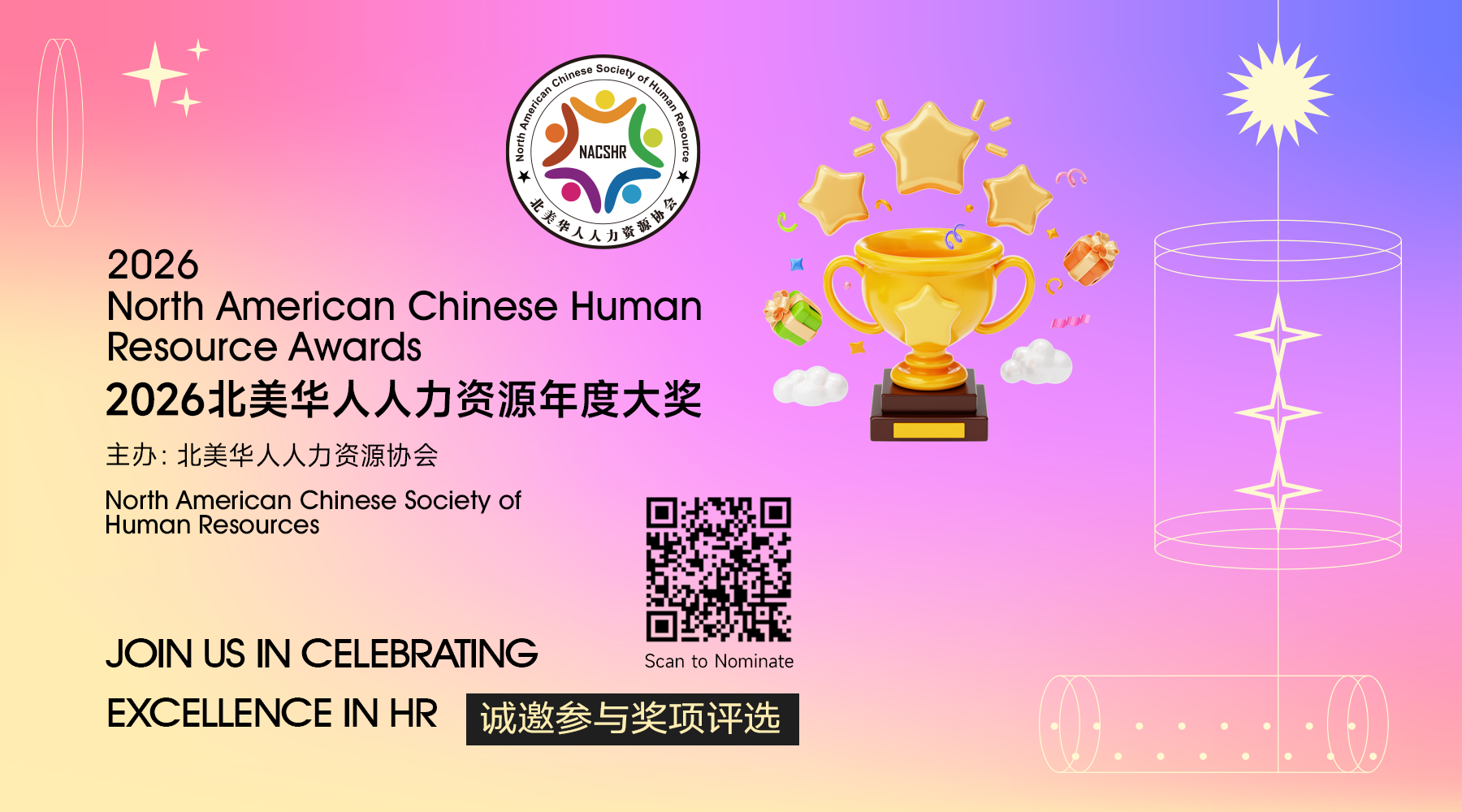
2026北美华人人力资源年度大奖提名启动|2026 North American Chinese Human Resource Awards北美华人人力资源协会(North American Chinese Society of Human Resource,简称 NACSHR)正式启动2026北美华人人力资源年度大奖(2026 North American Chinese Human Resource Awards)评选。我们的使命是发掘和表彰华人HR在人力资源管理领域的卓越实践,认可在专业领域表现杰出的华人HR经理人、HR管理团队和HR服务机构。通过这一享有盛誉的评选活动,我们致力于展示华人HR的专业能力和贡献,提升华人人力资源品牌及其在职场的影响力,促进行业的交流、发展和进步。
The North American Chinese Society of Human Resource Management (NACSHR) officially launches the2026 North American Chinese Human Resource Awards
Our mission is to identify and recognize outstanding practices in the field of human resource management by Chinese HR professionals. These prestigious awards honor exceptional HR leaders, high-performing HR teams, and innovative HR service providers who have demonstrated excellence in their respective domains.
Through this influential awards program, NACSHR aims to showcase the professional capabilities and meaningful contributions of Chinese HR professionals, elevate the reputation of Chinese HR talent in the workplace, and foster industry-wide learning, collaboration, and advancement.
NACSHR2016年发起成立,一直致力于搭建华人HR专业交流和发展的平台,更好的帮助和团结在北美的华人人力资源工作者以及在北美职场的华人。我们相信通过本次评选活动将发掘更多优秀的华人HR专业人士和管理人员、服务机构,可以树立良好的典范,激励同行,推动所在行业持续发展!
2026北美华人人力资源年度大奖是卓越和成就的象征,为组织和个人提供了在全球范围内获得认可的平台。赢得这一奖项不仅代表着在行业内的卓越表现、创新和成功,还能激励其他人追求卓越,设定新的基准。
通过2026北美华人人力资源年度大奖,NACSHR致力于表彰和鼓励在职场上展现出色的华人HR专业人士和机构,促进华人在北美职场的交流、合作与发展。
Founded in 2016, NACSHR has been committed to building a platform for professional exchange and growth among Chinese HR practitioners. Our goal is to better support and connect Chinese HR professionals and workplace contributors across North America. Through this annual awards initiative, we hope to uncover and celebrate exemplary individuals, teams, and service organizations that can inspire peers and help drive progress across the HR industry.
The 2026 North American Chinese Human Resource Awards symbolize excellence and achievement. The program provides a platform for individuals and organizations to gain recognition not only within the HR community, but also on a global stage. Winning this award reflects a commitment to innovation, success, and leadership in the field—and serves to set new benchmarks that inspire others to strive for excellence.
Through this initiative, NACSHR is dedicated to celebrating and encouraging Chinese HR professionals and service institutions that demonstrate outstanding performance, while promoting broader exchange, collaboration, and development for the Chinese professional community in North America.
We sincerely invite you to participate in the nomination process for the 2026 North American Chinese Human Resource Awards.
诚挚邀请参与2026北美华人人力资源年度大奖的提名
2026北美华人人力资源年度大奖奖项设置
▶面向华人优秀的HR和HR团队
Best HR Practice Award
Best HR Leader Award
Best HR Team Award
▶面向华人HR服务机构及其创业者
Best HR Entrepreneur Award
Best HR Service Provider Award
Innovative HR Service Provider Award
评选对象
2026年北美华人人力资源年度大奖面向华人HR、HR团队、华人人力资源科技或服务群体设置不同的细分奖项,参评的主体更加丰富和多元化,并提升更广泛的行业和职场影响力;
·北美地区华人HR专业人士或者HR管理团队
·为北美华人HR同仁提供人力资源产品或服务的华人人力资源机构或创业者
评选流程
评选启动:2月1日
报名阶段:2月1日至9月1日
颁奖:5月16日和 9月26日硅谷
参与提名链接:https://www.nacshr.org/Survey/F618BF01-8AC0-8CC8-E821-4A59C7763DE3
具体流程:
1.提名参与评选,HR及HR团队免费提名参与和评选
2.收到提名后内部初步审查,预计3-5个工作日
3.内部审查通过后,需要提交参评案例,机构和产品奖需支付入围评审费用*
4.专家评审和工作人员回访
5.大众评审和综合评审
6.颁奖论坛,现场表彰
HR服务机构和产品奖项入围费用:
· 500美元 评审服务及公示,包含颁奖论坛门票1张 价值500美元,实物证书 5月1日前
· 1000美元 评审服务及公示,包含颁奖论坛门票2张 ,价值1000美元,实物证书 9月1日前
注意
1.参评申请一经提交,可在截止日期前撤回。
2.提交评选申请的主体需在北美地区有团队或公司;如果您意向为您的客户提交评选,我们建议您客户自行提交申请信息。
3.初审通过后需根据申请的奖项提供实践案例(企业实践、机构实践、个人实践)作为佐证信息。
参与奖项评选的收益
参与北美华人人力资源协会年度评选为个人和机构带来了诸多收益。以下是一些关键优势:
1. 荣誉与声望:赢得北美华人人力资源协会奖项是一项极具声望的荣誉,能够提升您的行业声誉和信誉。它将您与竞争对手区分开来,突显您的领导力和创新精神。
2. 曝光与可见性:该评选计划为您的品牌、产品或服务提供了宝贵的曝光机会,能够吸引行业专业人士和潜在客户的关注,开启新的机遇、合作和伙伴关系。
3. 卓越的验证:北美华人人力资源协会奖项是对您辛勤工作、奉献和成功的外部认可,证明您在您的领域中表现卓越并产生了积极影响。
4. 交流机会:参与评选可以让您与多元化的行业专业人士、思想领袖和影响者建立联系和互动,创造有助于新业务联系、合作和伙伴关系的网络机会。
5. 学习与对标:北美华人人力资源协会奖项为您提供了向行业内最佳实践学习的平台。通过研究和对标其他优秀的参赛作品,您可以获得洞察、启发和最佳实践,从而推动组织内部的持续改进和创新。
6. 员工士气与动力:通过北美华人人力资源协会的认可可以提升员工士气和动力。这种认可能激发员工的自豪感和成就感,进而提高员工满意度、留存率和忠诚度。
7. 营销与推广:作为北美华人人力资源协会评选的参与者或获奖者,您可以利用这一认可来增强您的营销活动、网站、社交媒体、新闻稿和其他沟通渠道,吸引更多的客户和利益相关者。
参与北美华人人力资源协会年度评选能够为您的专业声誉、业务增长和行业地位带来积极影响,是展示您成就并获得应有认可的宝贵机会。
奖项评选的影响力与影响
赢得北美华人人力资源协会奖项对个人或组织的成功有着重要的影响力和影响。以下是一些关键方式:
1. 行业认可:赢得北美华人人力资源协会奖项将您定位为行业内公认的领导者和创新者,建立信誉并增强您的声誉,使您更容易吸引新客户、合作伙伴、投资者和其他利益相关者。
2. 品牌可见性提升:获奖所带来的认可和宣传能显著提升您的品牌可见性,打开媒体报道、演讲机会和行业活动的大门,使您能够接触更广泛的受众并获得宝贵的曝光。
3. 竞争优势:赢得北美华人人力资源协会奖项赋予您相对于竞争对手的竞争优势,证明您的卓越表现、产品或服务的优越性,有助于在竞争激烈的市场中吸引和留住客户。
4. 客户信任与忠诚:北美华人人力资源协会奖项是卓越和质量的象征,通过获奖,您能够获得现有客户的信任和忠诚,并吸引新客户。客户更倾向于选择获得认可的企业。
5. 员工动力与参与:赢得北美华人人力资源协会奖项可以提升员工士气和动力,认可他们的辛勤工作和奉献,激发自豪感和成就感,从而提高员工参与度、生产力和留存率。
6. 商业机会与合作伙伴关系:与北美华人人力资源协会奖项相关的认可和声誉可以为新商业机会和合作伙伴关系打开大门,吸引潜在的投资者、合作伙伴和战略伙伴,他们希望与成功和创新的组织结盟。
7. 持续改进与创新:赢得北美华人人力资源协会奖项证明您对卓越的承诺,鼓励组织内部的持续改进和创新。这种认可可以成为进一步增长的催化剂,激励您不断突破界限,追求更大的成就。
赢得北美华人人力资源协会奖项的影响力和影响不仅限于即时的认可,它可以塑造您的职业或业务轨迹,对您的声誉、品牌和行业成功产生持久的积极影响。
附录其他常见问题和如何赢得大奖
*北美地区包含加拿大、美国、墨西哥、危地马拉、萨尔瓦多、伯利兹、 洪都拉斯、尼加拉瓜、哥斯达黎加、巴拿马、巴哈马、古巴、牙买加、海地、多米尼加共和国、安提瓜和巴布达、多米尼加联邦、圣卢西亚、圣文森特和格林纳丁斯、巴巴多斯、格林纳达、特立尼达和多巴哥、圣克里斯托弗和尼维斯联邦等23个独立的国家。
如何赢得北美华人人力资源年度大奖
赢得北美华人人力资源年度大奖需要在各自的类别中展示卓越和创新。
以下是一些可能增加您获奖机会的步骤:
了解奖项类别和评选标准
熟悉奖项类别:了解各奖项类别,如最佳人力资源实践奖、最佳人力资源经理人奖、最佳HR团队奖、最佳人力资源创业者奖、最佳人力资源服务机构奖和创新人力资源服务机构奖。
评选标准:确保您的公司、产品、个人或团队成就符合奖项的评选标准和目标。
突出您的成就
清晰展示成就:明确且有效地传达您的成就和成果,展示其如何满足或超越奖项的评选标准。每个类别只需提名一项关键成就。
突出影响力:强调您的成就对组织、行业或社区产生的积极影响。
收集支持性证据
提供证据:为您的成就提供支持性证据,如客户推荐信、统计数据、案例研究和媒体报道,以证明您的卓越表现。
真实可信:确保所有提供的证据真实可信,能够客观支持您的申报内容。
提交强有力的申请
结构合理:提交一个结构清晰、专业的申请材料,有效展示您的成就并证明您符合奖项评选标准。
突出重点:在申请中突出您的关键成就和其独特性,确保评审委员能够一目了然。
合理的展示:你可以提交案例的文本版本,也可以是PPT版本,也可以是视频解说
寻求推荐
行业推荐:寻求行业专家、客户、合作伙伴和其他利益相关者的推荐,以增强您的申请力度。
多方支持:获得多方位的支持和认可,进一步证明您的卓越表现和行业影响力。
2026 North American Chinese Human Resource Awards
评选规则说明(Official Rules & Process)
一、奖项宗旨与评选原则
北美华人人力资源年度大奖(North American Chinese Human Resource Awards)旨在表彰在北美职场环境中,推动人力资源专业发展、组织实践创新与华人 HR 影响力建设方面具有代表性的个人、团队与机构。
评选坚持以下基本原则:
专业导向:以真实实践、可验证成果和专业影响为核心
公开透明:评选流程、时间节点与收费性质清晰披露
结果导向:强调对组织、员工或行业产生的实际价值
非商业买奖:评选结果不与费用直接挂钩
二、参评资格说明(Eligibility)
1. 个人与团队类奖项
参评对象需满足以下至少一项条件:
在北美(美国 / 加拿大)企业中从事 HR 或 People 相关工作
参评人或核心成员为华人背景 HR 专业人士
参评案例发生在北美组织或服务北美员工群体
适用于奖项包括(但不限于):
Best HR Leader Award
Best HR Practice Award
Best HR Team Award
Best HR Entrepreneur Award
2. 服务机构与产品类奖项
参评对象需满足:
为北美华人 HR 群体或北美企业提供 HR 产品或专业服务
机构或创始团队中有明确的华人 HR 服务定位或长期服务实践
案例或客户可被验证(不要求披露敏感商业信息)
适用于奖项包括:
Best HR Service Provider Award
Innovative HR Service Provider Award
三、奖项类别与评选关注重点
不同奖项将重点关注不同维度,评审将综合考虑以下因素:
实践背景:组织规模、行业环境、业务复杂度
关键行动:HR 在其中承担的角色与实际推动动作
成果与影响:对业务、员工体验或组织能力的改善
可持续性:是否具备长期价值或可复制意义
专业判断:体现 HR 专业能力,而非单点宣传
说明:评选并非单纯比较规模或预算大小,而是强调“在自身条件下做到的专业程度”。
四、评选流程(Evaluation Process)
评选将分为四个阶段进行:
第一阶段:资格与材料审核
核实参评资格是否符合基本要求
确认案例材料完整性与真实性
第二阶段:专家评审
由 NACSHR 邀请的 HR 领域资深从业者、行业顾问或专业人士参与
重点评估案例的专业性、逻辑完整度与实际价值
第三阶段:社群展示与参考反馈
入围案例将在 NACSHR 平台进行展示
社群反馈作为参考维度之一,不作为唯一决定因素
第四阶段:综合评审与结果确认
综合专家评审意见与案例整体表现
最终评选结果由评审委员会确认
五、关于评审费用的说明(Important Notice on Fees)
为保障评选工作的专业性与可持续运作,评选设置评审与公示服务费用,主要用于:
评审组织与协调成本
案例整理、内容编辑与平台公示
颁奖活动及相关组织成本
重要说明:
费用仅用于评审与公示服务
是否获奖 不以费用高低或是否付费作为决定条件
所有参评案例均按照统一标准评审
如包含论坛门票,仅作为参评服务的一部分,不构成获奖承诺。
六、评选时间安排(2026)
提名与材料提交期:2026 年 2 月 1 日 – 9 月 1 日
结果公布与颁奖:
线下颁奖活动:2026 年 5 月 16 日(NACSHR 夏季论坛)和9月26日 年度论坛
(不同奖项可能在不同阶段公布,具体以官方通知为准)
七、其他说明
每个奖项可能根据当年参评情况,出现空缺或多人入选
NACSHR 保留对评选规则的最终解释权
所有信息仅用于评选与公示,不作商业用途
头条
2026年01月30日
头条
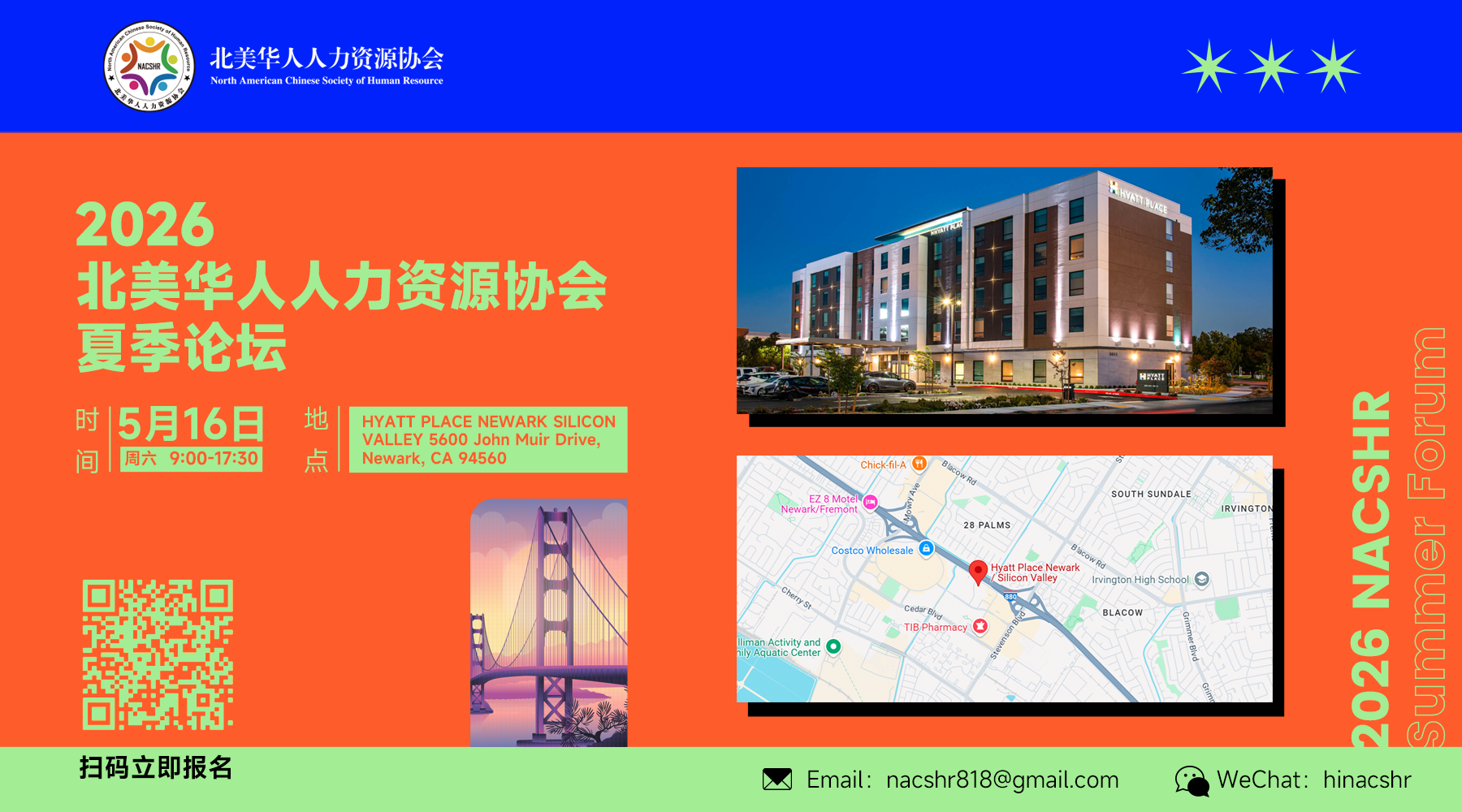
【重磅】2026北美华人人力资源夏季论坛5月16日在硅谷举办,诚邀参加
在快速变化的环境中,很多 HR 并不缺信息, 真正稀缺的,是判断、位置感,以及可以继续对话的高质量同行关系。
2026 NACSHR 北美华人人力资源夏季论坛 将于 5 月 16 日(周六)在硅谷举办。 这是一次刻意回归“高密度、深讨论、强链接”的专业聚会,也是 NACSHR 在多年实践基础上的一次重要升级。
自 2016 年成立以来,北美华人人力资源协会(NACSHR)持续构建一个面向华人 HR 及相关从业者的专业交流平台。随着行业与环境的变化,我们也不断反思: 什么样的会议,才真正值得你相聚在NACSHR?
2026 年,我们给出的答案是: 用一天时间,完成最重要的讨论; 用一个场域,连接真正值得继续对话的人。
这不只是一场用来学习的会议,而是一个让专业关系自然发生的场域。
与传统以内容输出为核心的会议不同,2026 NACSHR 夏季论坛更关注:
你是否在一天之内,校准了几个关键判断
你是否更清楚自己所处的位置与下一步方向
你是否遇见了未来可以继续对话的同行
这里没有标准答案,也不追求共识。我们相信,真正有价值的收获,往往发生在讨论之间、对照之中,以及会后持续的交流里。
一天高密度主场,留白延展思考
2026 年夏季论坛采用 1 天高密度核心论坛 + 会前会后非正式延展交流 的结构设计。
所有核心讨论、分享与互动,均集中在 5 月 16 日(周六) 完成,确保内容与参与的专注度。同时,也为提前抵达或愿意多停留的参会者,保留自由交流与个性化延展的空间。
这不是把会议“缩短”, 而是把真正重要的事情放在最清晰的位置上。
聚焦硅谷语境,也连接更广阔的华人 HR 世界
2026 NACSHR 夏季论坛将立足硅谷,围绕企业 HR 一号位、组织与人才战略、华人 HR 的职业路径、AI 时代的判断与选择等核心议题展开讨论。这里既高度贴合硅谷的专业深度与前沿语境,也足够吸引来自北美各地、甚至海外的华人 HR 与相关从业者参与。
一个可以被记住的专业场域
我们希望,每一位离开会场的参会者,都能带走一些属于自己的东西——可能是一个尚未成形但重要的想法,可能是一次关键的对话,也可能是对自己下一阶段更清晰的判断。
这不是一场把时间填满的会议,而是一场为未来关系与思考预留空间的专业聚会。
Stay Together · Stay Powerful
诚挚邀请北美及全球华人 HR、企业管理者及相关从业者共同参与 2026 NACSHR 北美华人人力资源夏季论坛,在硅谷,完成一次值得回看的专业相聚。
为确保会议质量与讨论深度,2026 NACSHR 北美华人人力资源夏季论坛 参考之前参会嘉宾的建议,采用 1 天高密度核心论坛 + 会前会后非正式延展交流 的结构设计。
NACSHR 2026 · 北美华人HR夏季论坛
2026 North American Chinese HR Summer Forum
时间:5月16日 周六全天 Saturday, May 16, 2026(9:00-17:00)VIP及特邀晚宴18:30-20:30 对外名额有限
地点:HYATT PLACE NEWARK SILICON VALLEY (5600 John Muir Drive, Newark, CA 94560 )
报名:https://nacshr.org/Survey/204F7A10-CA16-BD5E-57CE-0B95C3C2B760
门票分为:HR Pass 仅限InhouseHR和HR学生 和 General Pass 如HR服务机构、顾问等非InhouseHR均适合此类门票)
HR Pass 仅限InhouseHR和HR学生等企业内部相关岗位同仁 General Pass 如HR服务机构、顾问、创始人、创业者等其他非InhouseHR的均适合此类门票
夏季论坛超级早鸟票价格:
· HR Pass早鸟票: 250美元/人 仅限5月1日前或名额用完 (原价400美元)
· General Pass优惠票:450美元/人 仅限5月1日前或名额用完(原价600美元)且对外名额有限 额满为止
· HR Pass门票三人同行,享受8.5折优惠
· 周六晚宴门票(不单独销售)150美元/人 (原价200美元) 对外名额有限 额满为止
· Pitch Show 含现场资料发放和10分钟展示机会,含会议通票一张 3000美元 仅剩一个名额
· 论坛赞助(演讲、展位、Panel 、晚宴赞助等诸多形式),具体请联系工作人员,多种模式对论坛支持!
· 同时预定9月26日 年度论坛超级早鸟票(参考目前价格)
HP 早鸟票 250美元 5月1日前 300 美元 5月15日前 门票原价400美元
GP 早鸟票 500美元 5月1日前 550 美元 5月15日前 门票原价 600美元
(会议期间提供咖啡和茶等 注:但午餐需自理,因酒店午餐成本非常高,所以不含会议午餐)为了确保所有参会者的最佳体验,NACSHR论坛管理团队将定期审核注册名单,并可能根据需要调整注册类别。如果您的注册类型被调整,您需补缴相应的费用差额。本政策旨在维护公平性,并提升所有与会者的参会体验。优惠门票价格以付费为准 付费指南:https://www.nacshr.org/3016/
NACSHR夏季论坛日程纲要(详细信息不断更新)
08:30 – 09:00 会议签到和会前交流
09:00 – 12:00 上午高密度全体会议
12:00 – 13:30 午间休息与集体合影留念
13:30 – 17:30 下午高密度全体会议
18:30 – 20:30 特邀嘉宾及 VIP 深度交流晚宴
同时为增加更多交流机会和个性化需求,特别设立了可选的非正式交流的时间和安排
会前交流:5月15日(周五)19:00 – 21:00 为方便提前抵达硅谷的参会者 地点:酒店 Bar
会后交流:5月17日周日,可以自行安排深度交流、硅谷探索、Hiking等活动,不设官方统一活动,方便大家自由安排。
更多会议相关内容,我们会不断更新,并通过NACSHR官网和社交媒体发布。
会议参展及赞助演讲合作
联系人:Annie(nacshr818@gmail.com)或 点击申请 : https://www.nacshr.org/Survey/CDBE9324-6291-EB0E-3E50-91532A2A70BB
如何可以参与NACSHR论坛的合作?
我们欢迎各界同仁一起共襄盛会,各种合作形式可以参与其中:
· 作为人力资源服务机构,有多种方式可以参与共襄盛举。
你可以选择各种赞助形式,如钻石赞助、演讲赞助、展位、Demo展示,对话合作、年度合作、晚宴赞助等多种方式,具体可以联系我们。
名额有限,机会难得。
赞助合作详情:https://nacshr.org/3792.html
今年赞助一定级别以上,将获得类似(供参考)
2026 北美华人人力资源夏季论坛|独家合作猎头与人才服务机构
2026 北美华人人力资源夏季论坛|指定合作移民与签证法律事务所
。。。。
2026 NACSHR 夏季论坛 · 私享交流晚宴
作为 2026 NACSHR 北美华人人力资源夏季论坛 的重要组成部分,私享交流晚宴将于 2026 年 5 月 16 日(周六)18:30-20:30,在加州硅谷 · NACSHR 夏季论坛会场举行。
本次晚宴将汇聚论坛分享嘉宾与VIP 特邀 HR 专业人士,在更加轻松、私密的环境中,延续白天的专业讨论,围绕职业发展、组织管理与行业趋势展开深入交流。
这是一次刻意控制规模的高质量聚会,不以人数取胜,而以真实对话、深度连接与长期信任为核心。
晚宴还有少量席位仅面向论坛参会者开放,马上预定吧优先面向希望建立高质量人脉、参与长期专业对话的 HR 同行与合作伙伴。
A limited number of seats are available by invitation only.
你为什么不能错过NACSHR峰会:
聆听行业大咖的精心分享:
演讲嘉宾包括成功的企业家、重量级的行业内大咖、优秀的人才战略专家。
他们精通中国以及北美的人力资源市场,乐于分享他们的观点和经验。
确保您能听到行业内最专业成功人士的分享。
学习新知识,掌握新动态:
不论您是职场老将还是新兵,更新知识库是一个永恒的课题。
峰会设置了多种会议形式,各种方式获取行业动态和职场经验。
有行业内大咖的独家分享,帮助您打开新视野,更具竞争力。
职业发展新机遇,更广泛的选择:
NACSHR设置了北美地区HR岗位需求,现场更有机会面对面沟通交流。
非正式的会议交流,更有益深入交流,为您的职场铺就成功之路。
北美地区最大的华人HR行业盛会:
聚焦北美华人人力资源行业精英,汇聚北美职场华人力量。
汇集首屈一指的企业家、创业家和行业先锋,打造北美唯一、最大的华人HR盛会。
交流新资讯,结交新伙伴:
探讨行业热点话题,激发创新思维,共同推动HR行业的发展。
利用大会机会结识北美地区的华人HR同仁,拓展个人交际圈。
启发职场新思维,实现职业新突破:
探讨华人管理者如何实现职场发展目标。
设有职场人讨论环节,与嘉宾、行业专家和同行伙伴一起探讨如何在美国职场实现自我价值。
往届回顾:
2026洛杉矶:https://nacshr.org/3702.html
2025年度论坛:https://nacshr.org/3396.html
2024夏季论坛:https://nacshr.org/1991.html
2023年度论坛:https://www.nacshr.org/762.html
2019年度论坛:https://nacshr.org/678.html
2018年度论坛:https://nacshr.org/566.html
2018芝加哥交流:https://nacshr.org/382.html
2026 North American Chinese HR Summer Forum
May 16, 2026 · Silicon Valley
In a fast-changing world, HR professionals are not short of information.What is truly scarce are sound judgment, a clear sense of position, and high-quality peer relationships that can sustain meaningful dialogue over time.
The 2026 North American Chinese HR Summer Forum, hosted by North American Chinese Society of Human Resources (NACSHR), will take place on Saturday, May 16, 2026, in Silicon Valley.
This year’s forum marks a deliberate return to what matters most:high-density discussions, depth over breadth, and genuine professional connections.It also represents an important evolution of NACSHR’s long-standing mission.
A Forum Designed for Meaningful Connection — Not Just Learning
Founded in 2016, NACSHR has long been dedicated to building a trusted platform for Chinese HR professionals and related practitioners across North America.As the industry and external environment continue to evolve, we have repeatedly asked ourselves:
What kind of forum is truly worth gathering for?
Our answer for 2026 is clear:
Use one focused day to complete the most important discussions.Create a shared professional space where relationships worth continuing can naturally emerge.
This is not merely a conference to learn from,but a professional setting where meaningful connections take shape.
What This Forum Focuses On
Unlike traditional content-heavy conferences, the 2026 NACSHR Summer Forum centers on what participants take away when they leave:
Have you recalibrated a few key judgments within a single day?
Are you clearer about your current position and your next professional direction?
Have you met peers with whom future conversations genuinely matter?
There are no standard answers, and consensus is not the goal.We believe that the most valuable insights often arise between sessions, through comparison, dialogue, and continued interaction after the event.
One High-Density Core Day, With Space for Reflection
The 2026 forum adopts a 1-day high-density core forum, complemented by optional, informal pre- and post-event interactions.
All essential discussions, exchanges, and interactions will take place on Saturday, May 16, ensuring focus and depth.At the same time, participants who arrive early or choose to stay longer will have room for informal conversations and personalized extensions of the experience.
This is not about shortening the forum,but about placing what truly matters in the clearest possible focus.
Rooted in Silicon Valley, Connected to the Global Chinese HR Community
The 2026 NACSHR Summer Forum is firmly grounded in the Silicon Valley context, while remaining open to a broader Chinese HR community across North America and beyond.
Key discussion themes include:
The role and responsibility of CHROs and senior HR leaders
Organizational and talent strategy
Career paths and positioning for Chinese HR professionals
Judgment and decision-making in the AI era
The forum reflects both the depth and forward-looking mindset of Silicon Valley, and the diverse realities of Chinese HR professionals worldwide.
A Professional Space Worth Remembering
We hope that every participant leaves with something personal and lasting —a still-forming but important idea,a pivotal conversation,or a clearer sense of judgment for the next stage ahead.
This is not a conference designed to fill every minute,but a professional gathering that leaves room for future thinking and long-term relationships.
Stay Together · Stay Thoughtful · Stay Connected
We sincerely invite Chinese HR professionals, business leaders, founders, and HR-related practitioners from North America and around the world to join us in Silicon Valley for a professional gathering worth revisiting.
Event Details
Event NameNACSHR 2026 · North American Chinese HR Summer Forum2026 North American Chinese HR Summer Forum
Date & TimeSaturday, May 16, 2026Main Forum: 9:00 AM – 5:00 PMVIP & Invited Dinner: 6:30 PM – 8:30 PM (limited availability)
LocationSilicon Valley, CaliforniaConvenient transportation access
Registrationhttps://nacshr.org/Survey/204F7A10-CA16-BD5E-57CE-0B95C3C2B760
Ticket Types
HR PassFor in-house HR professionals and HR students only
General PassFor HR service providers, consultants, founders, entrepreneurs, and other non-in-house HR professionals
Super Early Bird Pricing (Summer Forum)
HR Pass – Super Early Bird:USD $150 per personAvailable until March 1 or until sold out(Regular price: USD $400)
General Pass – Early Offer:USD $300 per personAvailable until March 1 or until sold out(Regular price: USD $600)Limited external seats
Group Discount:HR Pass — 15% off for groups of three
Saturday VIP Dinner Ticket:USD $150 per person (not sold separately)Regular price: USD $200Limited availability
Additional Participation Options
Pitch ShowIncludes on-site materials distribution and a 10-minute presentation slotIncludes one forum passLimited to 3 slotsUSD $2,000 before March 1 (Regular price: USD $3,000)
Forum Sponsorship OpportunitiesSpeaking slots, demo presence, panels, dinner sponsorship, and other customized formatsPlease contact the organizing team for details
Early Booking for Annual Forum (September 26)Super Early Bird available when booked together(Pricing subject to future announcement)
头条
2026年01月25日
头条
Eightfold 遭遇集体诉讼:一场所有北美 HR 都必须看懂的 AI 招聘警示2026 年 1 月,美国 AI 招聘平台 Eightfold AI 在加州州法院遭遇拟议集体诉讼。两名求职者指控 Eightfold 在招聘流程中,未经候选人知情或授权,生成并提供用于筛选的候选人评估报告,涉嫌违反《公平信用报告法》(Fair Credit Reporting Act,FCRA)以及加州消费者保护相关法律。这起案件被多家法律机构视为美国首批直接以 FCRA 为依据起诉 AI 招聘平台的集体诉讼之一,其影响已经超出单一厂商范畴,直指整个 AI 招聘生态。
对许多 HR 而言,这起诉讼之所以引发困惑,是因为 Eightfold 并不是传统意义上的背景调查公司,也并未直接作出雇佣决定。那么,问题究竟出在哪里?
Eightfold 被指控“做了什么”?
根据起诉文件,Eightfold 为企业客户提供基于 AI 的招聘与人才匹配工具,系统会综合分析候选人的简历、职位描述和历史职业信息,自动生成所谓的“人才画像”。这些画像包含对候选人性格特征(如“团队型”“内向型”)、教育质量、岗位匹配度以及未来职业路径的预测,并被企业用于招聘筛选和排序。
据代表原告的律师事务所之一Outten & Golden LLP称,两名原告提起诉讼的原因是他们认为自己被排除在符合条件的职位候选名单之外。
原告的核心指控并不是算法“算错了人”,而是认为 Eightfold 在法律意义上扮演了第三方评估者的角色:其系统性生成的评估结果被用于影响雇佣决策,但候选人并未被明确告知这些评估的存在,也无法查看、质疑或纠正其中可能存在的错误。
为什么会牵扯到 FCRA?
在北美 HR 语境中,FCRA 通常被理解为一部规范信用报告和背景调查的法律。但法律的关键并不在于“是否查询了征信”,而在于是否存在第三方生成的、用于雇佣决策的个人评估报告。
原告的法律逻辑是:如果 Eightfold 生成的 AI 评估结果在事实层面等同于“消费者报告”,那么候选人就应当享有法律赋予的基本程序性权利,包括事前通知、查看报告以及纠错的机会。Eightfold 是否使用 AI、是否出于善意,并不是争议焦点;焦点在于招聘判断是否被规模化外包给一个候选人完全不可见的系统。原告反复强调“候选人完全不知情”,而不是“未同意”,这样的表达是告诉你:候选人 根本不知道 自己正在被一个第三方系统评估,更不知道这些评估会被用于筛选或排序。
很多人第一反应是把这起案件理解为“AI 歧视诉讼”,我们研读起诉书后发现,原告是刻意没有走这条路的。这是一个非常专业且稳妥的律师!原告把全部火力集中在一个更“稳”的法律切口上:
Eightfold 在法律上是否构成 Consumer Reporting Agency,以及是否履行了 FCRA 要求的程序性义务。
Eightfold 的回应与案件现状
Eightfold 对外回应称,其平台使用的数据来自候选人本人或客户提供,并不抓取社交媒体等外部信息,同时强调其对负责任 AI 和合规的承诺。目前,该案件仍处于司法程序早期阶段,法院尚未就实体问题作出裁决。
但对 HR 而言,真正重要的并非案件最终胜负,而是法院已经允许这一诉讼路径进入审理轨道。这意味着,AI 招聘平台是否可能被纳入现有消费者保护法律的监管范围,已经不再只是理论讨论。
这对北美 HR 意味着什么?
这起案件释放出的信号,并不是“HR 不该使用 AI”,而是:使用 AI 招聘工具并不等于风险外包。在美国法律体系下,雇主与技术供应商之间的责任边界,正在被重新审视。
对于 HR 来说,一个常见的误区是认为“最终是否录用由人决定,因此 AI 不需要承担程序性责任”。但司法系统正在关注的是:当候选人筛选高度依赖第三方系统时,雇主是否仍然可以完全享有“人类裁量权”的豁免。1月北美华人HR洛杉矶新年论坛中,就有嘉宾特别谈到了在HR工作中使用负责任的AI,也谈到了部分AI招聘服务提供商违规使用面试者的面试内容作为商业竞争的信息来源引发的争议。
NACSHR特别的提醒
需要强调的是,目前诉讼的焦点仍然集中在 Eightfold AI 这一技术提供商身上,并不意味着雇主已经被排除在风险之外。更准确地说,这是司法体系在处理新型技术风险时的一种常见路径——先审视系统性、可复制的技术行为是否合法,再讨论使用这些系统的雇主应当承担何种责任。对雇主而言,当前阶段的风险并非“已经发生”,而是“正在被重新界定”。在 AI 招聘被逐步纳入既有法律框架的过程中,继续将责任完全视为供应商问题的空间正在缩小。真正理性的应对方式,并不是等待雇主成为下一个被告,而是在这一窗口期内,主动理解 AI 系统如何影响招聘决策,并提前将其纳入企业的合规与治理视野之中。
从起诉书本身来看,原告的策略并非指控算法歧视或技术失误,而是刻意将争议锚定在程序性合法性之上。通过反复强调 Eightfold 对候选人性格、潜力和未来路径的预测性评估,以及候选人对这些评估完全不知情的事实,起诉书试图把 AI 招聘系统重新定义为一种受监管的第三方评估机制,而非中立工具。这种策略的真正锋芒不在于推翻某一产品,而在于为整个 AI 招聘行业设定新的法律边界。
NACSHR给北美 HR 的现实建议(可操作)
第一,重新审视你正在使用的 AI 招聘工具的角色定位。HR 需要明确:当前系统是在“辅助判断”,还是事实上已经在自动排序、淘汰候选人?是否存在候选人因为 AI 评分而从未进入人工视野的情况?这是风险评估的第一步。
第二,向供应商明确询问合规与候选人权利设计。HR 应主动询问以下问题:候选人是否被告知 AI 的使用?是否可以查看与自身相关的评估输出?是否存在纠错或申诉机制?如果这些问题无法得到清晰回答,企业就有必要重新评估使用方式。
第三,不要将“解释义务”与“给拒绝理由”混为一谈。法律并未要求 HR 为每一次拒绝提供主观理由,但当评估被外包给第三方系统时,程序性透明和最低限度的候选人权利保障,正在成为不可忽视的合规要求。
第四,让 Legal 和 Compliance 参与 AI 招聘决策。AI 招聘已经不再是单纯的 HR 技术选型问题,而是潜在的法律和声誉风险源。将其纳入企业合规框架,而不是仅作为效率工具使用,是当前北美 HR 的理性选择。
Eightfold 的集体诉讼并不是一次偶然事件,还记得Workday因为AI招聘的诉讼案吗?而是北美司法系统对 AI 招聘现实影响的集中回应。对 HR 来说,这并不意味着要放弃技术,而是意味着必须更清醒地理解:当招聘判断被系统化、规模化并外包给 AI 时,企业对候选人所承担的责任,并不会因此消失。未来真正可持续的 AI 招聘实践,将取决于 HR 是否能够在效率、合规与人类裁量之间,找到新的平衡点。
你想知道Eightfold 可能早都发现了这个可能的风险,他们做了你想不到的一步棋,你猜猜是什么?欢迎留言!
北美HR服务指南——2026 北美华人人力资源服务图谱(NACSHR Landscape 20260103版)正式发布
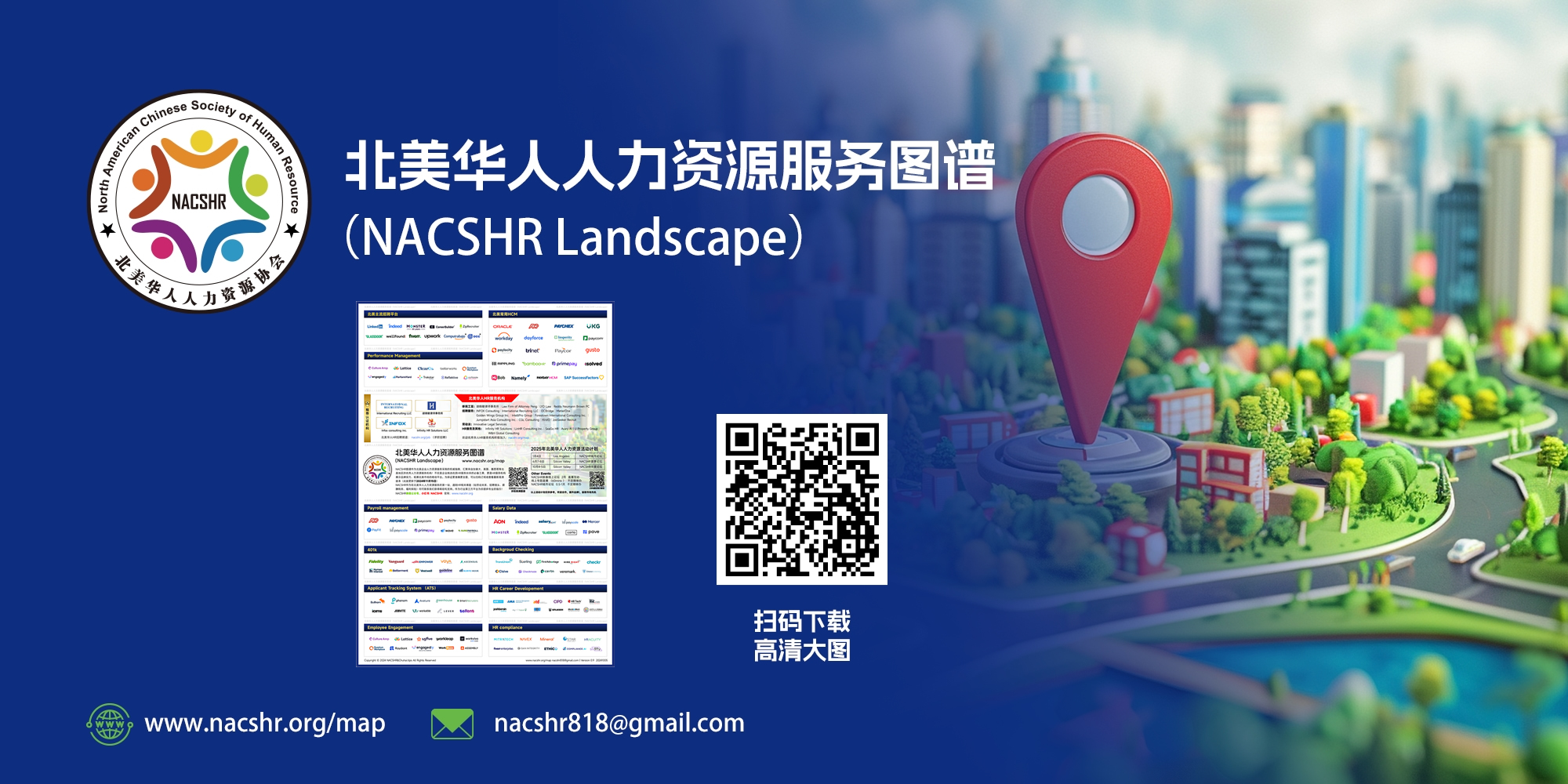
在北美复杂且高度多元的人力资源服务生态中,华人 HR 往往需要在招聘与猎头、用工与劳动合规、薪酬福利设计、跨州员工管理以及 HR 数字化工具选型等多个关键领域快速做出判断。然而,长期以来,市场上缺乏一张面向华人语境、结构清晰且具备参考价值的整体指南。
基于这一现实需求,NACSHR 正式发布 《2026 北美华人人力资源服务图谱(NACSHR Landscape)》,作为一份面向北美华人 HR 的实用型分类指南与快速参考工具。
该图谱系统性梳理了当前北美 HR 实务中常用的人力资源服务与科技工具,覆盖招聘平台、HCM、ATS、Payroll、员工福利与 401(k)、HR 合规、PEO / EOR、薪酬数据、绩效管理与员工体验、AI 面试、People Analytics 等核心领域,并结合企业规模与实际使用场景进行分类呈现,帮助华人 HR 更高效地理解市场结构、识别工具定位,并在日常工作中做出初步判断。
需要特别说明的是,本图谱并非完整市场清单,也不构成对任何具体产品或服务的推荐。其核心价值在于提供一个结构化的行业认知框架与参考视角,以降低信息筛选成本,提升华人 HR 在北美人力资源体系中的专业判断效率。
作为北美华人 HR 社群与人力资源服务连接平台,NACSHR 将持续对该图谱进行维护与更新,并根据市场变化、技术演进以及华人 HR 的实际需求进行迭代升级。我们也欢迎来自 HR 从业者、人力资源服务机构及行业伙伴的补充建议与交流反馈,共同推动这一长期公共参考资产的不断完善。
同时,NACSHR 图谱也作为北美企业人力资源服务采购的重要参考指南,系统性汇聚来自美国、加拿大、墨西哥等北美地区的优质人力资源服务机构,覆盖招聘猎头、劳动用工合规、薪酬与税务、员工福利与保险、HR 数字化等核心领域。(更新于 2026 年 1 月 3 日)
这不仅是一份帮助企业甄选可靠 HR 服务伙伴的实用工具,也为出海企业在北美实现从落地、合规搭建,到稳定运营与长期发展的全过程提供参考支持。作为北美华人人力资源服务的第一站,NACSHR 始终基于第三方平台立场,为企业在劳动关系、招聘用工、薪酬税务、福利保险等关键人力资源议题上提供专业指引、资源对接与持续支持,助力企业完成从进入北美市场到实现可持续运营的关键跨越。
关注 NACSHR 微信公众号 / 小红书:NACSHR官网:www.nacshr.org官方邮箱:nacshr818@gmail.com
了解更多 NACSHR 在北美华人人力资源领域的研究、活动与服务信息。
As the North American HR ecosystem continues to grow in complexity, Chinese HR professionals often face challenges in navigating recruitment platforms, compliance requirements, payroll systems, benefits administration, and cross-state workforce management—without a clear, structured reference tailored to their context.
To address this need, NACSHR officially releases the 2026 North American Chinese HR Services Landscape (NACSHR Landscape)—a practical, high-level reference guide designed specifically for Chinese HR professionals working in North America.
This landscape maps out commonly used HR services and technologies across key domains, including recruiting platforms, HCM and ATS systems, payroll management, employee benefits and 401(k), HR compliance, PEO and EOR solutions, salary data, performance management, employee engagement, AI interviewing, and people analytics. Tools and services are categorized by function and company size to reflect real-world HR use cases.
The NACSHR Landscape is not intended to be an exhaustive market list or a product endorsement. Rather, it serves as a structured overview and cognitive framework to help Chinese HR professionals better understand the market landscape, compare categories, and make more informed preliminary decisions.
As a community-driven platform for Chinese HR professionals in North America, NACSHR will continue to maintain and evolve this landscape in response to market developments, technology trends, and practical HR needs. Feedback and contributions from HR practitioners and service providers are welcome as we build this resource into a long-term industry reference.
The NACSHR Landscape serves as an authoritative guide for enterprise HR service procurement in North America. It systematically brings together high-quality human resources service providers from the United States, Canada, and Mexico, covering key areas including recruitment and executive search, employment and labor compliance, payroll and taxation, employee benefits and insurance, and HR digitalization.(Last updated on January 3, 2026)
More than a practical tool for enterprises to identify reliable HR service partners, the NACSHR Landscape is also an important reference for companies expanding into North America—from initial market entry and compliance setup to stable operations and long-term growth. As the first stop for Chinese HR services in North America, NACSHR adopts a third-party platform perspective to provide professional guidance, resource connections, and ongoing support for enterprises facing HR-related challenges such as labor relations, hiring and workforce management, payroll and taxation, and employee benefits. NACSHR aims to help companies achieve a successful transition from market entry to sustainable operations in North America.
Follow NACSHR on WeChat Official Account / Xiaohongshu: NACSHRWebsite: www.nacshr.orgOfficial Email: nacshr818@gmail.com
Learn more about NACSHR’s research, events, and services for the Chinese HR community in North America.

 头条
头条
 头条
头条
 头条
头条
 头条
头条
 头条
头条
 头条
头条
 头条
头条
 头条
头条
 头条
头条
 头条
头条


 扫一扫
添加客服
扫一扫
添加客服


