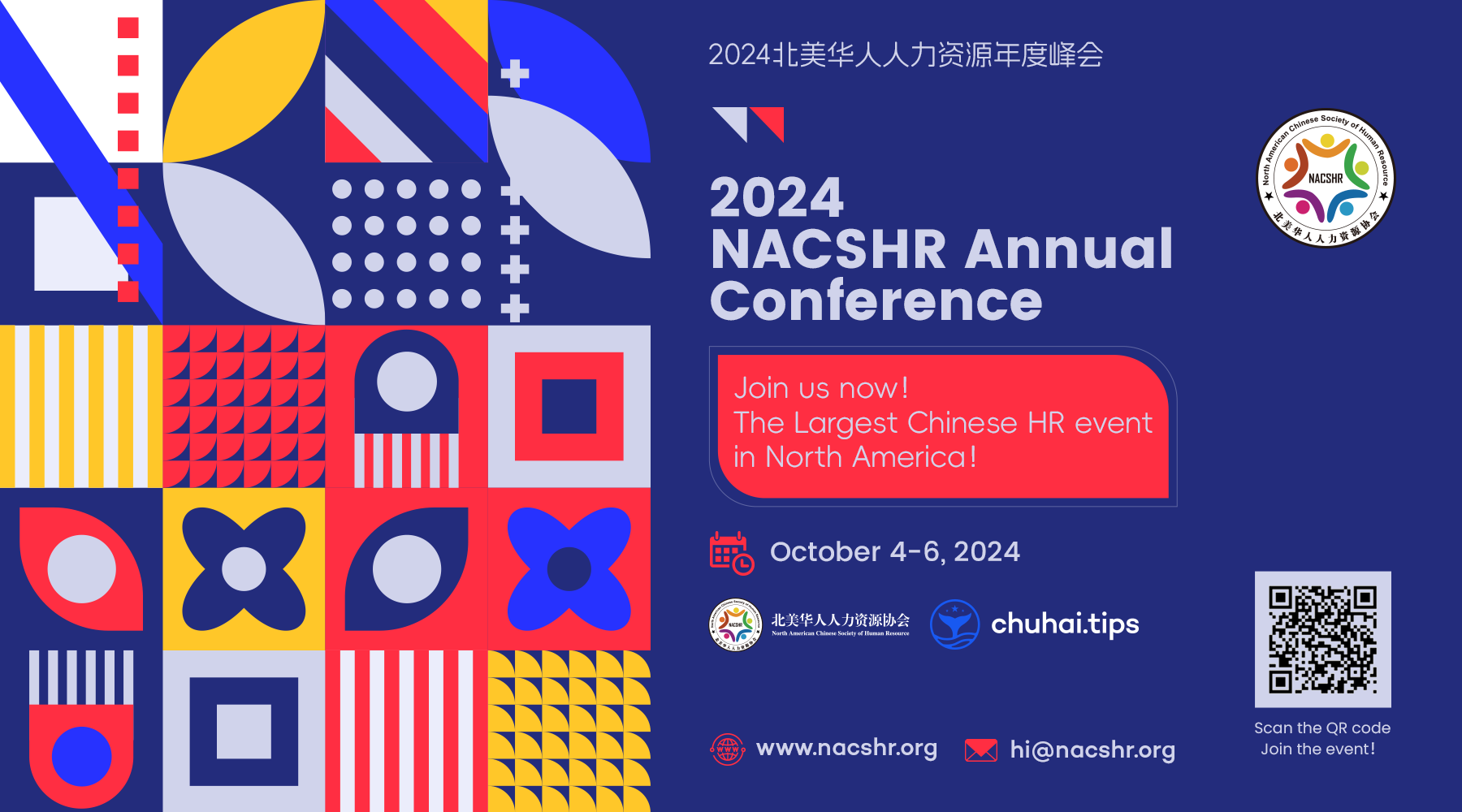
【重磅】北美地区最大的华人人力资源盛会-2024北美华人人力资源年度峰会10月硅谷举办,日程嘉宾发布2024 NACSHR Annual Conference -The Largest Chinese HR event in North America
2024北美华人人力资源年度峰会-北美地区最大的华人人力资源盛会
北美地区最大规模的华人人力资源盛会——2024北美华人人力资源年度峰会,将于10月在硅谷盛大举办,诚挚邀请您共襄盛举!
自2016年成立以来,北美华人人力资源协会(NACSHR)一直致力于为华人HR专业人士和职场高管精英打造一个卓越的交流平台。多年间,NACSHR年度论坛已发展成为北美最具影响力的人力资源活动之一,吸引了无数行业领导者和HR专家的关注与参与。
2024年,NACSHR年度论坛将升级为北美华人人力资源年度峰会,规模更大,内容更丰富,形式更多样,话题更专业,汇聚更多杰出的HR代表。我们诚挚邀请您加入我们,共同参与和创造这一盛会!
十月硅谷,我们将再次迎接全球华人人力资源专业人士和从业者齐聚一堂,延续我们成功的传统。即将到来的峰会将包括专业小组讨论、实用工作坊、行业大咖演讲、年度奖项评选、企业参观、晚宴酒会等丰富多彩的交流活动。这些会议不仅旨在提供最新的行业知识和趋势,还为与会者提供了与顶尖专业人士近距离交流的宝贵机会,并帮助与同行建立或加深联系。
Stay Together Stay Powerful
NACSHR2024年度峰会不仅是学习和交流的场所,更是启迪和灵感的源泉,为华人HR同仁搭建了通向职业新篇章的桥梁。我们期待全球华人HR同事们共聚一堂,共同探索和塑造未来人力资源的新趋势。
加入我们的NACSHR2024年度峰会,共享思想的碰撞和心灵的触动。我们期待您的参与,共同见证这一人力资源盛会的精彩时刻!
2024北美华人人力资源年度峰会 2024 NACSHR Annual Conference
时间:10月5日-6日 周六周日 October 5-6, 2024 (9:00-17:00)
地点: Crowne Plaza Silicon Valley North ( Union City)
(32083 Alvarado-Niles Rd. Union City CA 94587)
报名:https://www.nacshr.org/Survey/418189BC-FF9F-D9B7-B7F8-8E5980AAFFA1
费用:400美元/人 (10月4 日前报名支付) 现场门票:500美元/人
晚宴:150美元/人(不单独销售,需购买门票,名额有限,售完为止 参与者为分享嘉宾、特邀专家、VIP参会等40人规模)
合作伙伴:Law Office of Xiaomin Hu P.C.、 中国南方航空 、LYD Law、虚位以待
会议形式:专业论坛、年度评选、晚宴酒会、参访交流、职业机会等
注:不含会议午餐和参访期间交通 (付款方式及报名后的注意事项:https://www.nacshr.org/2022.html)
10月5日周六第一天日程安排
10月6日周日第二天日程安排
NACSHR年度峰会同期活动:
·北美HR采购指南—NACSHR图谱登记:https://www.nacshr.org/2063.html
·北美HR招聘平台: https://www.nacshr.org/job
你为什么不能错过NACSHR峰会:
聆听行业大咖的精心分享:
演讲嘉宾包括成功的企业家、重量级的行业内大咖、优秀的人才战略专家。
他们精通中国以及北美的人力资源市场,乐于分享他们的观点和经验。
确保您能听到行业内最专业成功人士的分享。
学习新知识,掌握新动态:
不论您是职场老将还是新兵,更新知识库是一个永恒的课题。
峰会设置了多种会议形式,各种方式获取行业动态和职场经验。
有行业内大咖的独家分享,帮助您打开新视野,更具竞争力。
职业发展新机遇,更广泛的选择:
NACSHR设置了北美地区HR岗位需求,现场更有机会面对面沟通交流。
非正式的会议交流,更有益深入交流,为您的职场铺就成功之路。
北美地区最大的华人HR行业盛会:
聚焦北美华人人力资源行业精英,汇聚北美职场华人力量。
汇集首屈一指的企业家、创业家和行业先锋,打造北美唯一、最大的华人HR盛会。
交流新资讯,结交新伙伴:
探讨行业热点话题,激发创新思维,共同推动HR行业的发展。
利用大会机会结识北美地区的华人HR同仁,拓展个人交际圈。
启发职场新思维,实现职业新突破:
探讨华人管理者如何实现职场发展目标。
设有职场人讨论环节,与嘉宾、行业专家和同行伙伴一起探讨如何在美国职场实现自我价值。
如何可以参与NACSHR峰会?
作为人力资源服务机构,有多种方式可以参与共襄盛举。你可以选择各种赞助形式,如钻石赞助、演讲赞助、设置展位、Demo展示,年度合作等多种方式,具体可以联系我们。
另外亦可参与NACSHR年度评选!
参展赞助与合作:
Annie annie@nacshr.org
或者点击这里:https://www.nacshr.org/Survey/CDBE9324-6291-EB0E-3E50-91532A2A70BB
参与分享演讲:(仅限 inhouse HR)
Gavin nacshr818@gmail.com
嘉宾申请链接: https://www.nacshr.org/1732.html
The Largest Chinese HR event in North America, —the 2024 North American Chinese HR Conference — will be held in Silicon Valley this October. We warmly invite you to join us!
Since its inception in 2016, the North American Chinese Society of Human Resources (NACSHR) has been dedicated to creating an exceptional platform for Chinese HR professionals and executive elites to connect and exchange ideas. Over the years, the NACSHR Annual Summit has grown into one of the most influential HR events in North America, attracting numerous industry leaders and HR experts.
In 2024, the NACSHR Annual Summit will be upgraded to the North American Chinese HR Conference, featuring a larger scale, richer content, more diverse formats, and more professional topics. We sincerely invite you to join us in participating and creating this grand event!
This October in Silicon Valley, we will once again welcome Chinese HR professionals and practitioners from around the world to gather together, continuing our tradition of success. The upcoming conference will include professional panel discussions, practical workshops, keynote speeches from industry leaders, annual awards, company visits, gala dinners, and other diverse networking activities. These sessions are designed not only to provide the latest industry knowledge and trends but also to offer attendees valuable opportunities to engage closely with top professionals and build or strengthen connections with peers.
Stay Together Stay Powerful
The NACSHR 2024 Conference is not just a venue for learning and networking; it is also a source of inspiration and ideas, serving as a bridge for Chinese HR colleagues to embark on new career chapters. We look forward to seeing Chinese HR professionals from around the globe come together to explore and shape the future trends of human resources.
Join us at the NACSHR 2024 Conference to share in the exchange of ideas and the touching of hearts. We eagerly anticipate your participation in witnessing the exciting moments of this HR grand event!
2024 North American Chinese HR Conference
Date: October 5-6, Saturday-Sunday (9:00 AM - 5:00 PM)
Location: Crowne Plaza Silicon Valley North ( Union City )
(32083 Alvarado-Niles Rd. Union CityCA 94587)
Registration: https://www.nacshr.org/Survey/418189BC-FF9F-D9B7-B7F8-8E5980AAFFA1
Fee: $300 per person for early bird tickets (before September 1)
Why Attend the NACSHR Event?
Gain Insights from Industry Experts:
Our speakers include successful entrepreneurs, industry leaders, and top talent strategy experts. With deep knowledge of both the Chinese and North American HR markets, they are eager to share their perspectives and experiences, ensuring you gain valuable insights from the best in the field.
Learn New Knowledge and Stay Updated:
Whether you are a seasoned professional or new to the field, updating your knowledge base is a perpetual endeavor. The summit features various session formats to provide industry updates and practical career insights. Exclusive shares from industry experts will help you broaden your horizons and enhance your competitiveness.
Discover New Career Opportunities:
NACSHR highlights HR job opportunities in North America, offering a unique chance for face-to-face networking. Informal networking sessions facilitate deeper connections, paving the way for your career success.
Participate in North America's Largest Chinese HR Industry Event:
Focused on elite Chinese HR professionals in North America, the event brings together the strength of Chinese professionals in the workplace. Featuring top entrepreneurs, innovators, and industry pioneers, NACSHR stands as the largest and only Chinese HR event in North America.
Exchange New Information and Build Partnerships:
Explore industry hot topics, stimulate innovative thinking, and collectively drive the HR industry forward. Use the event to connect with fellow Chinese HR professionals in North America and expand your personal network.
Inspire New Career Thinking and Achieve Breakthroughs:
Discuss how Chinese managers can achieve their career development goals. With dedicated discussion sessions, engage with speakers, industry experts, and peers to explore ways to realize your potential in the American workplace.
往届回顾:
https://www.nacshr.org/762.html
https://nacshr.org/1991.html
头条
2024年09月23日
头条
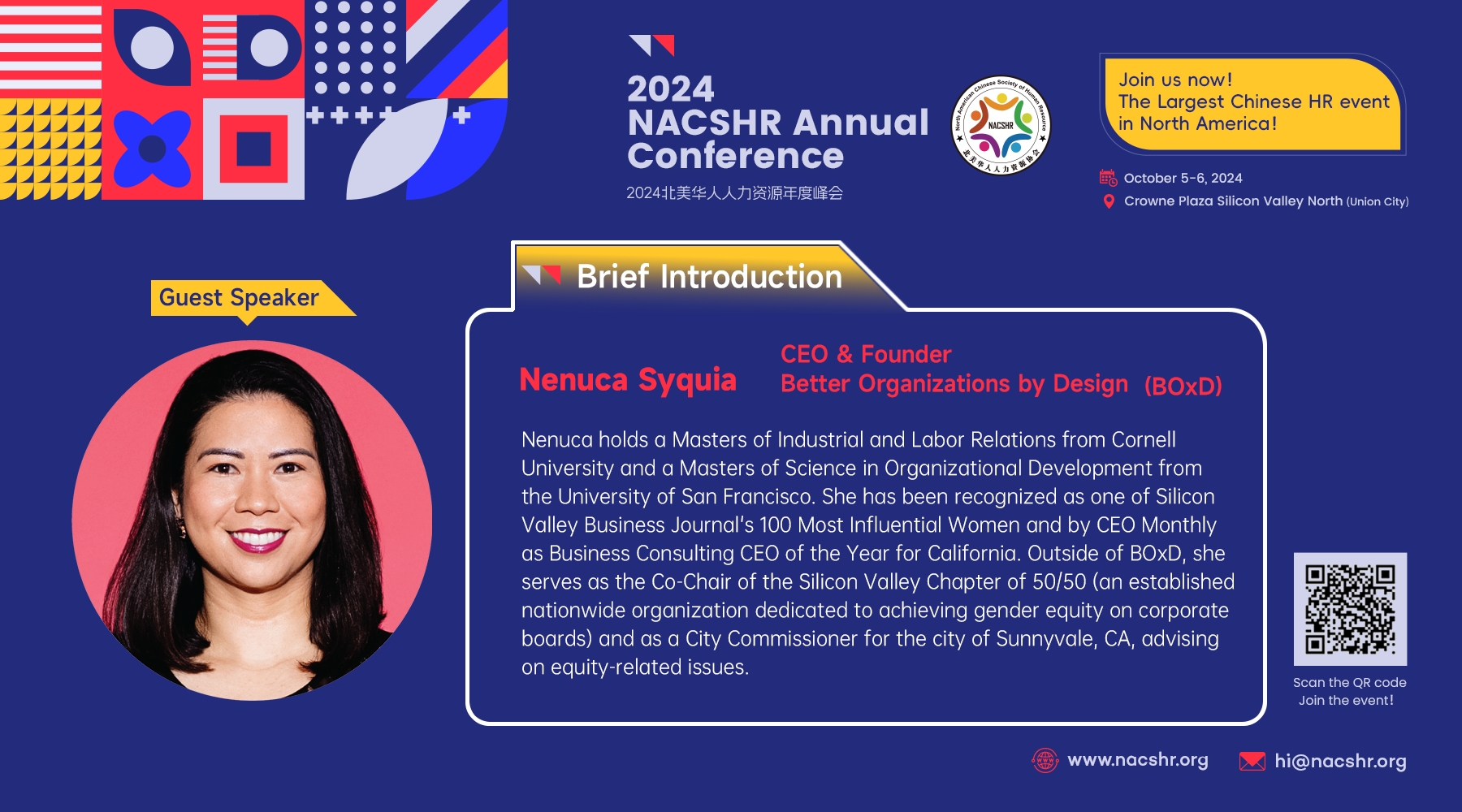
Nenuca Syquia:硅谷百位最具影响力女性之一将亲临华人人力资源年度峰会,教你如何掌握职场“隐形力量”!
硅谷百位最具影响力女性之一、加利福尼亚州“年度商业咨询CEO”得主 Nenuca Syquia 将于今年十月出席硅谷华人人力资源年度峰会,并发表主题分享「Power Beyond Title and Presence」,探讨如何在职场中发展和运用个人力量。
在当今社会,我们常常认为权势人物是那些位高权重的高管或知名董事会成员,他们的决策不仅影响员工和客户,还对大众产生深远影响。那么,对于那些尚未成为这种“权力人物”但心怀抱负的人来说,应该从哪里开始?当权力历来掌握在与你截然不同的人手中时,该如何赢得他人的认可与重视?
Nenuca Syquia 将在演讲中分享:
权力不是与生俱来的天赋,而是可以后天培养的。
权力并非模糊的概念,它可以被拆解为具体的技能,供你学习和掌握。
权力不是非此即彼的;你可以根据不同情境灵活运用自己的影响力。
在本次峰会中,Nenuca 将引导与会者深入理解权力的真正含义,分析权力的不同来源,识别自身拥有的权力类型及需要扩展的部分,并帮助大家制定个性化的影响力策略。
关于演讲嘉宾:Nenuca Syquia
Nenuca Syquia 是 Better Organizations by Design (BOxD) 的首席执行官兼创始人,这是一家致力于将客户业务中的人力资源与战略目标相结合的咨询公司。BOxD 提供广泛的服务,包括组织设计、团队辅导、领导力发展、多元化与包容性(DEI)、变革管理及业务整合。Nenuca 称这种综合方法为“融合变革层次”,以此提高变革成功的可能性,无论是在组织、团队还是领导层级。
Nenuca 拥有跨行业的丰富经验,从跨国企业如赛诺菲、谷歌到旧金山芭蕾舞团及家族企业,她成功地帮助各种规模和生命周期的企业完成转型。作为一位企业家、全球团队领导者和移民,她对多种挑战有着切身的体会。
此外,她还担任50/50硅谷分会的联合主席(该组织致力于推动公司董事会的性别平等),以及森尼维尔市的市政委员,为地方政府在公平相关问题上提供建议。
Nenuca 的演讲通俗易懂、非常接地气。届时她将新的概念与当前趋势、客户故事及个人经验相结合,为观众带来生动而富有启发的体验。此次峰会上,Nenuca 将帮助与会者学会如何发掘和增强个人的力量,为自身和组织创造更大的价值。不要错过这次与 Nenuca 交流和学习的机会!
了解最新的人力资源优秀实践,拓展优秀的专业人脉,加入北美HR互助社团......
金秋十月,邀您相聚硅谷,参与这场华人人力资源盛会。
2024北美华人人力资源年度峰会 2024 NACSHR Annual Conference
时间:10月5日-6日 周六周日 October 5-6, 2024 (9:00-17:00)
地点: Crowne Plaza Silicon Valley North ( Union City) (32083 Alvarado-Niles Rd. Union City CA 94587)
报名:https://www.nacshr.org/Survey/418189BC-FF9F-D9B7-B7F8-8E5980AAFFA1
参会联系:nacshr818@gmail.com
赞助合作:Annie(annie@nacshr.org)
附录:
Title: Power Beyond Title and Presence
Abstract:
When we conjure up images of powerful people, those likely include high-ranking executives and members of illustrious boards. Their choices shape the lives of their employees, customers, and even communities.
If you’re not already one of those powerful people but aspire to, where do you even begin? What do you do when power has historically been held by a group of people who are nothing like you? How do you get others to recognize and value what you bring to the table?
Here’s some good news:
Power isn’t innate or something you’re born with. It can be developed.
Power isn’t an ambiguous concept. It can be broken down into specifics which you can master.
It isn’t binary in that you either have it or you don’t. You can learn to flex your power depending on the situation.
In this session, you will:
Understand what power actually is
Parse apart the different sources of power
Identify what kind of power you have, and what kind you need to expand
Develop your own custom strategy for influence
Nenuca's bio:
Nenuca Syquia is the CEO and Founder of Better Organizations by Design (BOxD), a consulting firm dedicated to aligning the people side of client's businesses with their strategy and goals. The firm offers services in organization design, team coaching, executive and leader development, DEI, change and integration. If you're thinking, "That's quite the breadth of services!" You are right, and that is 100% by design. Nenuca refers to this as "tying together the layers of change," which increases the odds of successful change, whether it is primarily at the organization, team or leader levels.
Having transformed businesses large and small, across industries, and at different parts in their lifecycle - from Sanofi to The San Francisco Ballet and Google to family-owned businesses - Nenuca has seen almost everything. As an entrepreneur, leader of a global team, and immigrant, she can relate to a wide variety of challenges firsthand.
As a regular speaker at conferences, webinars and podcasts, Nenuca is known for making complex topics accessible and actionable. She introduces new concepts and blends them with examples from the zeitgeist, clients' stories, and her own personal life to create an engaging and informative experience.
Nenuca holds a Masters of Industrial and Labor Relations from Cornell University and a Masters of Science in Organizational Development from the University of San Francisco. She has been recognized as one of Silicon Valley Business Journal's 100 Most Influential Women and by CEO Monthly as Business Consulting CEO of the Year for California. Outside of BOxD, she serves as the Co-Chair of the Silicon Valley Chapter of 50/50 (an established nationwide organization dedicated to achieving gender equity on corporate boards) and as a City Commissioner for the city of Sunnyvale, CA, advising on equity-related issues.
头条
2024年09月22日
头条
抓住机遇,加入北美HR采购指南-NACSHR图谱认证推荐服务!赢取北美市场先机!
为什么要加入北美HR采购指南NACSHR图谱的认证服务?
在北美HR服务市场竞争激烈的今天,如何脱颖而出,赢得更多企业的信任?加入NACSHR图谱认证服务,就是您迈向行业顶尖、快速拓展市场的最佳捷径!
NACSHR图谱是北美地区华人HR服务的权威指南,覆盖加拿大、美国、墨西哥三地,专为企业提供精准的服务对接。作为行业影响力的象征,NACSHR图谱汇聚了北美最优秀的HR服务机构,为企业挑选优质服务商提供可靠依据。而您的品牌,将通过认证,成为这份权威指南的一部分,直接享受流量加持和声誉提升。
为什么您一定要加入?
品牌权威的象征
在北美华人HR服务领域,成为被推荐的专业品牌,不仅意味着实力的认可,更是开拓市场和建立信任的关键武器!通过认证,您的品牌将跻身行业领导者行列,在客户心中占据首选位置。
独家曝光的机会
NACSHR图谱不是简单的服务名录,而是专注于为华人HR服务机构提供多渠道、多层次传播的强大平台。每一次的品牌展示、每一场的行业活动,您的机构都将成为瞩目焦点,品牌价值将倍增!
抢占市场先机
北美市场瞬息万变,企业对HR服务的需求正在不断增加。认证服务将确保您抢先占领市场,将您的服务精准传递给真正需要的企业客户,牢牢锁定他们的信任。
覆盖的精准人群
NACSHR图谱认证服务不仅提升了品牌形象,更将带来大量潜在客户的关注!
您的品牌信息将通过官网、微信群、小红书、LinkedIn等多种渠道,精准触达北美的华人管理精英和人力资源决策者。
借助NACSHR的全方位传播网络,您不仅会影响本地市场,还能辐射到更多跨国企业和高潜力客户。
NACSHR图谱VIP服务权益:3000美元/年 4800美元/2年
· NACSHR图谱版本LOGO+简称展示,优先前排展示(其他仅为文字简称)
· 网页版本分类优先显示,LOGO展示,品牌形象好,实力展示
· 网页版本页面提供推荐的VIP徽章
· NACSHR推荐服务机构海报
· NACSHR网站右侧长年推荐展示
· NACSHR每周EDM中推荐展示
· 客户需求优先对接
· NACSHR活动优先\优惠参加
如何申请加入推荐认证服务:
1、点击登记贵司信息:https://www.nacshr.org/map/Register/join
2、如果已经登记,请直接发邮件到 nacshr818@gmail.com 告知贵司信息即可
覆盖人群
NACSHR服务图谱将覆盖北美地区的NACSHR用户和会员。我们将通过微信群、小红书、网站、LinkedIn等社交媒体渠道进行广泛传播,确保您的品牌信息触达更多潜在客户。
现在加入,轻松拥有领先优势!
时间不等人,市场也不等人! 每一分每一秒,您的竞争对手可能已经抢占了更多客户资源,而您正好可以反其道而行之!抓住这一黄金机会,加入NACSHR图谱,不仅是一个展示的起点,更是迈向无限潜力的开端。
加入北美华人人力资源服务机构图谱,是提升品牌和拓展市场的绝佳机会。立即行动,抓住这次难得的机遇,成为众多企业信赖的HR服务提供者!
不要等待市场被瓜分殆尽,现在就是抢占先机、提升行业地位的最佳时机!
立即申请认证,让您的品牌成为北美HR服务领域的标杆,与顶尖同行共享荣誉和机会!
你还可以先免费加入,点击即可参与登记! https://www.nacshr.org/map/Register/join
北美华人人力资源协会
North American Chinese Society of Human Resource, (known as NACSHR)
关于北美华人人力资源服务图谱
北美华人人力资源服务图谱(NACSHR Landscape)汇聚来自加拿大、美国、墨西哥等北美地区的顶尖华人人力资源服务机构,全面覆盖企业所需的各类HR服务。作为北美企业人力资源服务采购的权威指南,NACSHR图谱不仅是企业挑选优质服务伙伴的必备工具,更是服务机构展示品牌实力、拓展北美市场的绝佳平台。
NACSHR图谱将通过全方位、多渠道的广泛传播,精准触达北美地区的华人管理精英,成为企业开拓北美市场的首选资源。无论是本土扩张还是海外发展,NACSHR图谱都将助您抢占先机,赢得市场。加入NACSHR图谱,您的品牌将与北美最优秀的HR服务商齐名,共同引领行业未来!
NACSHR图谱最新版本下载地址: https://www.nacshr.org/map/Index/download/
北美HR采购指南-NACSHR图谱官网:https://www.nacshr.org/map/
如图所示:(部分服务展示)
Why Join the North American HR Procurement Guide (NACSHR Landscape) Certification Program?
In today’s highly competitive North American HR services market, how can you stand out and earn the trust of more businesses? Joining the NACSHR Landscape Certification Program is your fastest path to becoming an industry leader and expanding your market rapidly!
The NACSHR Landscape is the authoritative guide for Chinese HR services in North America, covering Canada, the U.S., and Mexico. It connects businesses with top-notch HR service providers. As a symbol of industry influence, the NACSHR Landscape gathers the best HR service agencies in North America, offering businesses a reliable resource to find quality partners. By becoming certified, your brand will become part of this trusted guide, gaining visibility and enhanced reputation.
Why You Must Join
A Symbol of Authority
In the North American Chinese HR services industry, being recommended as a professional brand signifies not only recognition of your expertise but also serves as a crucial tool for market expansion and trust-building. Certification places your brand among the industry leaders, making it a top choice for potential clients.
Exclusive Exposure Opportunities
The NACSHR Landscape is more than a service directory; it’s a powerful platform offering multi-channel, multi-tiered promotion for Chinese HR service agencies. With every brand showcase and industry event, your organization will be in the spotlight, exponentially increasing its value.
Seize Market Opportunities
In a rapidly evolving North American market, businesses’ demands for HR services are growing. Certification ensures that your services reach the right business clients first, securing their trust and business loyalty.
Targeted Audience Coverage
The NACSHR certification program not only elevates your brand’s image but also attracts substantial attention from potential clients.
Your brand will reach North America’s Chinese management elites and HR decision-makers through platforms like the NACSHR website, WeChat groups, Xiaohongshu, and LinkedIn. Leveraging NACSHR’s comprehensive communication network, your influence will expand beyond local markets to multinational corporations and high-potential clients.
NACSHR Landscape VIP Service Benefits
Discounted Rates: $3,000/year or $4,800/2 years
Priority Logo Display: Prominent placement on the NACSHR Landscape (logos prioritized over text-only names).
Web-Based Premium Listing: Highlighted category placement with logos and badges.
Exclusive Promotion: Featured in NACSHR weekly EDMs and website sidebar ads.
Event Benefits: Priority and discounted participation in NACSHR activities.
Client Connection: Priority matching with business client needs.
How to Apply for Certification
Register Your Company Information: https://www.nacshr.org/map/Register/join
If already registered, email your company information to nacshr818@gmail.com
Reach the Right Audience
The NACSHR Landscape reaches users and members across North America, ensuring your brand is widely promoted through WeChat groups, Xiaohongshu, websites, LinkedIn, and other social media platforms.
Act Now to Gain a Competitive Edge!
Time waits for no one, and neither does the market! Every moment counts as your competitors gain more clients. Take the opposite approach—seize this golden opportunity to join the NACSHR Landscape. It’s not just a platform for showcasing your services but also the beginning of infinite potential.
Becoming part of the NACSHR Landscape is the ultimate opportunity to enhance your brand and expand your market. Act now to become a trusted HR service provider for businesses across North America. Don’t wait for the market to be saturated; now is the time to gain a first-mover advantage and elevate your industry position!
Apply for certification now and make your brand a benchmark in the North American HR services industry, sharing honor and opportunities with top peers!
You can even start by joining for free. Click here to register: https://www.nacshr.org/map/Register/join
North American Chinese Society of Human Resources (NACSHR)
About NACSHR Landscape
The NACSHR Landscape brings together top Chinese HR service providers from Canada, the U.S., and Mexico, offering comprehensive HR solutions for businesses. As the authoritative guide for HR services procurement in North America, it’s an essential tool for businesses seeking premium service partners and an excellent platform for HR service providers to showcase their expertise and expand their reach.
Through extensive, multi-channel promotion, the NACSHR Landscape precisely targets North America’s Chinese management elites, serving as a valuable resource for businesses entering or expanding in the North American market. Whether for local growth or global expansion, the NACSHR Landscape helps you stay ahead and win the market. By joining the NACSHR Landscape, your brand will stand alongside the best HR service providers in North America, leading the future of the industry!
Download the latest NACSHR Landscape version here: https://www.nacshr.org/map/Index/download
Visit the NACSHR Procurement Guide Official Website: https://www.nacshr.org/map
David Green:The best HR & People Analytics articles of August 2024
I’ve just returned from a three-week family holiday in the South of France and am feeling refreshed, recharged and ready for the final four months of the year. These are invariably the busiest for the team at Insight222, and 2024 is set to be no different.
The Digital HR Leaders podcast returns from its summer sojourn on September 3 with a special episode on how HR can help their organisations embrace the blended workforce, featuring Diane Gherson and Lynda Gratton, and based on their brilliant recent HBRarticle,
The Insight222 Global Executive Retreat, which we host annually for leaders of 100+ companies that are part of the Insight222 People Analytics Program, takes place in Amsterdam from September 24-26 with guest speakers including: Erin Meyer, Prasad Setty, Janine Vos, and a workshop on storytelling with Duarte, Inc..
The fifth annual Insight222 People Analytics Trends report, which studies how leading companies are using people analytics to generate business value will be published in October – you can read the 2023 study here.
Additionally, I will be speaking at a number of conferences before the end of the year including Workday Rising (Las Vegas, September 16-19), People Analytics World (New York, October 2-3), UNLEASH World (Paris, October 16-17), and Workday Rising EMEA (London, November 12-14).
This edition of the Data Driven HR Monthly is sponsored by our friends at 365Talents
365Talents goes beyond traditional approaches, offering more than just technology for Skills-Based Organizations. Our approach is not just about managing skills; it's about making the entire process seamless, effective, and enjoyable. Picture real-time insights into your workforce's skills, coupled with the expertise to implement strategic HR projects aligning with your business goals.
Our experience in talent mobility and skill development contribute to creating a more democratic, inclusive, and future-ready world of work where every individual has the power to shape their professional path. Start your skills journey with 365Talents today and join the ranks of trailblazers like Veolia, SLB, TotalEnergies, SocGen, and more! To find out more click here: https://www.365talents.com/en/lp/experience-365talents
2024 Skills Impact Report
In today’s fast-paced and increasingly disruptive environment, companies need to adopt a more flexible approach that puts its people and their skills at the center of its talent management strategies. This has become more and more imperative as:
59% of the global workforce are disengaged.
69% of job candidates say they would reject a job offer from an employer with a negative reputation, even if they were unemployed.
87% of organizations currently have an existing skills gap or expect to within the next two to ten years.
Enter the 2024 Skills Impact Report. It explores the business imperative of talent experience for Skills-Based Organizations, the impact it has on your employees, the pillars of design thinking for HR and how to start applying it to your strategy with 5 intuitive roadmap worksheets.
CASE STUDY: SEGULA Technologies Group
In 2020, as the world faced significant engineering transformations, the COVID crisis, talent shortages, and the rise of AI, SEGULA Technologies Group launched a strategic initiative to plan and manage the resources and skills of its workforce. The goal of this ambitious project was to identify and leverage the talents of the Group's 15,000 employees across 30 countries, using AI to drive innovative skills management and enhance overall performance.
Read the Case Study to learn all the steps and actions taken to successfully tackle the challenge!
To sponsor an edition of the Data Driven HR Monthly, and share your brand with more than 130,000 Data Driven HR Monthly subscribers, send an email to dgreen@zandel.org.
Share the love!
Enjoy reading the collection of resources for August and, if you do, please share some data driven HR love with your colleagues and networks. Thanks to the many of you who liked, shared and/or commented on July’s compendium.
If you enjoy a weekly dose of curated learning (and the Digital HR Leaders podcast), the Insight222 newsletter: Digital HR Leaders newsletter is published every Tuesday – subscribe here.
NEW: Insight222 research report on the People Analytics Ecosystem
Access the new Insight222 study here: Building the People Analytics Ecosystem: Operating Model v 2.0.
HYBRID, GENERATIVE AI AND THE FUTURE OF WORK
MCKINSEY - Gen AI’s next inflection point: From employee experimentation to organizational transformation
HR plays an especially important role in gen AI, both by transforming the people domain and by acting as a gen AI copilot for all employees. One executive noted that for every $1 spent on technology, $5 should be spent on people.
A new study by McKinsey finds that to generate value from the momentum associated with GenAI, businesses must transform their processes, structures, and approach to talent. The article, penned by Charlotte Relyea, Dana Maor, Sandra Durth, and Jan Bouly, outlines the key findings from the research: (1) Employee use is at an inflection point, while their organisations lag behind. (2) The next inflection point will see organisations shift from individual experimentation to strategic value capture. (3) Reinvent domains by translating vision into value. (4) Reimagine talent and skilling by putting people at the centre (see FIG 1). (5) Reinforce the changes to continue transforming (“To make gen AI changes stick, organizations need the right infrastructure to support continuous change and win over hearts and minds”).
FIG 1: Early adopters prioritise talent and the human side of GenAI more than other companies (Source: McKinsey)
DAVE ULRICH - How are You Doing at AI for HR? A Ten-Item Assessment to Evaluate Your Progress
Getting started in AI for HR often begins with initiatives that can be done relatively quickly and easily.
Dave Ulrich shares key takeaways from a recent deep-dive, he and his colleagues at The RBL Group facilitated with senior HR leaders on AI in HR. He distils these into ten dimensions designed to help HR leaders assess how they are doing at applying AI for HR to their organisation (see FIG 2). These include: (1) Articulate a business case. (2) Develop Talent who can ‘do’ AI. (3) Create Responsible AI policies. (4) Create metrics to guide and measure success. (5) Start with low-hanging fruit.
FIG 2: Criteria to evaluate how well your organisation is using AI for HR (Source: Dave Ulrich)
DUNCAN HARRIS AND KATE ZOLNER - 5 Employee Fears of AI and How to Overcome Them
If companies want to get the most out of AI, they need employee trust. Securing it is not easy. More than three-quarters of employees don’t think their organization’s future use of the technology will be ethical.
Duncan Harris and Kate Zolner present the findings of Gartner research on the five main employee fears of AI use by their organisations (see FIG 3), which have a negative impact on employee trust. They then explain how leaders can address these fears through initiatives in areas such as learning, co-creation, effective communications, ethics and data privacy. As well as enabling the organisation to benefit from AI, Harris and Zolner argue that these solutions will lead to higher levels of inclusion, engagement and effort.
FIG 3: Five Employee Fears of Organizational AI Use (Source: Gartner)
STACIA GARR - How is HR using Gen AI today? | MAX BLUMBERG - GenAI in HR: Slashing Costs, Boosting Efficiency | SWANAND DEODHAR, FAVOUR BOROKINI, AND BEN WABER - How Companies Can Take a Global Approach to AI Ethics | BAIN - AI Survey: Four Themes Emerging
Four more resources tracking topics related to GenAI in HR. (1) Stacia Sherman Garr’s LinkedIn post summarises RedThread Research analysis of how HR is using GenAI today (see FIG 4). (2) Max Blumberg (JA) ?? provides a summary of his report on Slashing HR Costs: The Ultimate Blueprint for Implementing GenAI in HR, which provides guidance on implementing GenAI to transform HR cost efficiency, and includes Max’s GenAI HR Cost Reduction Maturity Model (see FIG 5). (3) Ben Waber teams up with Swanand Deodhar and Favour Borokini in a Harvard Business Review article offering guidance on how companies can take a global approach to AI ethics: “Because AI and related data regulations are rarely uniform across geographies, compliance can be difficult. To address this problem, companies need to develop a contextual global AI ethics model that prioritizes collaboration with local teams and stakeholders and devolves decision-making authority to those local teams.” (4) Gene R., Sanjin Bicanic, Jue Wang, Richard Lichtenstein, and Arjun Dutt share the four key themes that emerged from Bain’s recent AI survey, which includes that the emphasis has shifted from experimentation in 2023 to delivering real value 12 months later – thanks to Hung Lee for sharing Bain’s research in a recent edition of Recruiting Brainfood.
FIG 4: How HR is using GenAI (Source: RedThread Research)
FIG 5: GenAI HR Cost Reduction Maturity Model (Source: Max Blumberg)
MARC EFFRON - Above the Fray: What We Know About How WFH and Hybrid Affect Work
We should approach solving this problem in the same intelligent way as we suggest all human problems be solved – start with the science.
As his article on skills-based organisations testified, Marc Effron has a penchant for cutting through the hype and getting to the heart of an issue. As such, I highly recommend digging into his new analysis on what the science and evidence says are the trade-offs among WFO, WFH and hybrid work. Firstly, Effron dispels four myths propagated by proponents and opponents on CEOs, real estate, proximity bias and employees who prefer WFH. Then he examines the consequences of different work arrangements on (1) performance, (2) creativity, (3) innovation (4) work relationships, (5) collaboration, and (6) managing based on the emerging knowledge available via Google Scholar.
LYNDA GRATTON - Seven Truths About Hybrid Work and Productivity | BRIAN ELLIOTT - Hybrid Work: How Leaders Build In-Person Moments That Matter | REBECCA KNIGHT - 17 Team-Building Activities for In-Person, Remote, and Hybrid Teams
To get the most from hybrid work, leaders should prepare for trade-offs, make expectations clear, and think harder about how productivity is measured.
Three more resources on hybrid work to read in conjunction with Marc Effron’s article above. First, Lynda Gratton unveils seven key findings from what she is seeing from experiments in hybrid working including: (1) Hybrid work is a continuum. (2) Productivity is usually challenging — and measurement is always complex. (3) It’s useful to view hybrid work as fundamentally a job design option. Second, Brian Elliott provides guidance on the four essential times leaders should be intentional about building moments that matter for hybrid workers: (1) Team development (“Get people together three or four times a year, with a 50-50 mix of business and social”). (2) Onboarding and training. (3) New-team formation and major-initiative kick-offs (“Grapple together over the objectives and norms of a project”). (4) Business-function-specific activities (“Let teams figure out the best in-person schedules for their needs”). Finally, Rebecca M. Knight provides guidance to leaders on team-building activities for in-person, remote and hybrid teams.
FIG 6: Focus on Productivity, Not Physical Presence (Source: Brian Elliott, Future Forum)
PEOPLE ANALYTICS
NAOMI VERGHESE, JONATHAN FERRAR, AND JORDAN PETTMAN - Building the People Analytics Ecosystem: Operating Model v2.0 ARTICLE | FULL REPORT
One of the questions we get asked most by the people analytics leaders and chief people officers we work with at Insight222 is: What capabilities do I need to build into our people analytics function? Based on research of more than 250 companies, focus interviews with 20 organisations, and our experience of working with more than 120 global companies as part of the Insight222 People Analytics Program, my colleagues Naomi Verghese, Jonathan Ferrar and Jordan Pettman have developed a new report: Building the People Analytics Ecosystem: Operating Model v 2.0. The executive article provides a summary of the key highlights, while the full report breaks down the six elements of the People Analytics Ecosystem (see FIG 7): (1) A Value Chain: from client drivers to business outcomes. (2) People Strategy at the Centre: a symbiotic relationship exists between people strategy and people analytics. (3) Five Core Capabilities: consulting, data science and research, employee listening, analytics at scale, adoption. (4) Four Additional Capabilities: reporting, data governance, workforce planning, AI strategy. (5) Internal Partnerships: HR and other business stakeholders are key to operational effectiveness. (6) External Partnerships: external suppliers and expertise are important for enabling success.
FIG 7: The People Analytics Ecosystem (Source: Insight222 Building the People Analytics Ecosystem: Operating Model v 2.0)
NELSON SPENCER - Introducing the S.T.A.R.T. Framework
The strategy pillar is all about aligning with your overall HR and Business goals. You should be able to connect how your strategy is driving business outcomes.
Nelson Spencer, who has worked in both sports and people analytics, presents his S.T.A.R.T Framework (see FIG 8), which is designed to solve a perennial problem for many HR functions: the disconnect between analytics, technology and operations. As Nelson explains, S.T.A.R.T has been designed “to consider these three critical functions holistically, acknowledging that they are part of a bigger puzzle and are all deeply interconnected.” The five pillars, which Nelson describes in detail in his article, are: (1) Strategy, (2) Technology, (3) Analytics, (4) Results, and (5) Transformation. He then provides guidance on how to implement the framework in organisations of varying sizes, from small to large.
FIG 8: The S.T.A.R.T Framework (Source: Nelson Spencer)
MICHAEL LUCA AND AMY EDMONDSON - Where Data-Driven Decision-Making Can Go Wrong
When making decisions (using data), managers should consider internal validity—whether an analysis accurately answers a question in the context in which it was studied. They should also consider external validity—the extent to which they can generalize results from one context to another.
Drawing on their research and work with companies, Michael Luca and Amy Edmondson present an approach that considers internal validity and external validity that leaders can apply to discussions of data to support better decision-making. This approach is designed to help leaders avoid five common pitfalls (see FIG 9) associated with data-driven decision-making.
FIG 9: How to avoid predictable errors (Source: Michael Luca and Amy Edmondson)
WILLIS JENSEN - Building a Network View of Data | MARTHA CURIONI - Supporting HR Adoption of People Analytics | JACKSON ROATCH - Your Best Career Move could be Going for a Run | SERENA HUANG - The Future of Work is Wellbeing | JASPAR SPANJAART - How NVIDIA's Talent Intelligence approach helped fuel its trillion-dollar rise | TOBY CULSHAW - The Talent Nexus: Redefining Business Agility for the 21st Century CEO
In each edition of the Data Driven HR Monthly, I feature a collection of articles by current and recent people analytics leaders. These are intended to act as a spur and inspiration to the field. Six are highlighted in this month’s edition. (1) In another excellent edition of his Making People Analytics Real blog, Willis Jensen discusses how to get a network view of data: “Linking your data together should be a top priority for any people analytics team.” (2) Martha Curioni provides guidance on how to support HR to adopt people analytics harnessing insights from the likes of Isabel Naidoo, Patrick Coolen, Greg Newman, and Amit Mohindra. One of Martha’s tips focuses on the importance of including HRBP’s rather than going around them. (3) As someone whose best ideas invariably come when I’m on a run, I particularly enjoyed Jackson Roatch’s article exploring the link between physical exercise and workplace learning, performance and thriving. (4) In an edition of her From Data to Action blog, Serena H. Huang, Ph.D. explores how AI can support wellbeing and lays out a ten-point plan on responsible AI principles for workplace wellbeing (see FIG 10). (5) NVIDIA’s Meta McKinney, MLIS and Nickolas Dowler, MBA explain to Jasper Spanjaart how the company’s Talent Intelligence strategy helped fuel its growth: “A winning Talent Intelligence strategy requires several key ingredients: data-driven and tested theories, meticulous and thoughtful research, reliable data, creative problem-solving, clear communication of the rationale, trusted relationships with business leaders, and the financial support and freedom to execute.” (6) Toby Culshaw provides a compelling breakdown of what he describes as The Talent Nexus: “The Talent Nexus represents a revolutionary approach to talent management and acquisition in the modern business landscape. It's an AI-driven, quantum-computing-enhanced ecosystem that transforms how organizations interact with, deploy, and develop talent.” A must-read for all those involved in talent intelligence, people analytics and workforce planning.
FIG 10: Responsible AI Principles for Workplace Wellbeing (Source: Serena Huang)
THE EVOLUTION OF HR, LEARNING, AND DATA DRIVEN CULTURE
RAVIN JESUTHASAN - The AI revolution is coming to L&D
AI will empower the L&D function to support strategic workforce planning through skills-related insights and interventions. This will help organizations shift from costly ‘churn and burn’ strategies to more cost-effective and sustainable reskilling and upskilling programs.
Ravin Jesuthasan, CFA, FRSA examines how AI is set to transform the learning and development function. He highlights Mercer analysis that finds that AI and automation will likely augment some L&D activities (see FIG 11), as well as outlining four potential AI uses cases for corporate L&D: (1) Producing L&D content. (2) Personalising L&D delivery. (3) Driving the skills-powered revolution. (4) Democratising knowledge. For more from Ravin, watch the recent LinkedIn Live on Skills-Powered Organisations in the Age of AI, which I moderated and featured Ravin alongside Tanuj Kapilashrami.
FIG 11: Time by task: L&D versus AI and Automation (Source: Mercer)
NANCY DUARTE - Are Your Presentations Too Emotional — or Too Analytical?
When making a presentation, leaders need to balance appeals to both logic and emotion — the head and the heart.
Nancy Duarte provides invaluable guidance on how to strike a balance between logic and emotion when making a presentation, and how credibility plays a crucial role in this balancing act. She explains that the first step in achieving this balance is understanding the audience: “Are they data-driven decision makers who thrive on statistics and factual evidence? Or are they more likely to be swayed by personal stories and emotional connections?”
FIG 12: An Analytical and Emotional Balance That’s Just Right (Source: Nancy Duarte)
WORKFORCE PLANNING, ORG DESIGN, AND SKILLS-BASED ORGANISATIONS
SANDRA LOUGHLIN – Seven Elements of Skills Data Quality
Skills data quality isn’t talked about much despite being the foundation for the SBO value proposition, a critical input to selecting and gaining value from skills tech vendors, and arguably the most difficult part of a skills transformation.
These wise words open Sandra Loughlin, PhD’s excellent article, where she outlines seven aspects of skills data quality, why they matter and their trade-offs: (1) Relevance (“Skills that are tracked should be the skills that need to be tracked—there’s no point in collecting skills data that won’t help you make better business decisions”). (2) Accuracy. (3) Validity. (4) Completeness. (5) Consistency (“Skills data should be consistently defined, recorded, and categorized across systems and within the organization”). (6) Timeliness. (7) Uniqueness. Thanks to Victoria Holdsworth for highlighting Sandra’s article.
EMPLOYEE LISTENING, EMPLOYEE EXPERIENCE, AND EMPLOYEE WELLBEING
CATHERINE COPPINGER - Introducing Two New Metrics: Fragmented & Interrupted Time
Catherine Coppinger from Worklytics introduces two new metrics: (1) Fragmented Time (“the sum of the total number of hours people have in blocks of time that are too short to get any deep work done”) and (2) Interrupted Time (“a metric designed to measure those periods of the day where people keep getting interrupted and just can’t find enough concentrated time to finish an important task”). Understanding these can help individuals and managers organise time more productively while enhancing employee wellbeing (see FIG 13). Read as a follow-up to another recent article by Catherine: 4 New Ways to Model Work, which featured in the July edition of Data Driven HR Monthly.
FIG 13: Source: Catherine Coppinger, Worklytics
MCKINSEY - What employees say matters most to motivate performance
Performance management is most effective when it features strong, consistent internal logic that employees understand
In their article, Asmus Komm, Brooke Weddle, Dana Maor, Katharina Wagner and Vivian Morrow Breaux present the findings of a McKinsey study of more than 1,000 employees across the globe on what matters most to motivating employee performance. The findings provide insights to employers to guide their approach with regards to performance management. These include: (1) Performance management frameworks should be consistent and clearly articulated. (2) Goal setting has impact when goals are measurable and clearly linked to company priorities (see FIG 14). (3) Performance reviews with skilled managers are crucial to employee performance. (4) Rewards that include nonfinancial incentives provide a boost.
FIG 14: Employees are motivated by measurable goals linked to company/team (Source: McKinsey)
LEADERSHIP, CULTURE, AND LEARNING
MEGAN REITZ AND AMY EDMONDSON - When a Team Member Speaks Up — and It Doesn’t Go Well
Speaking up — and being heard — in organizations is critical. What gets said, and what doesn’t, directs ethical behavior, innovation, inclusion, and performance.
In their article for Harvard Business Review, Megan Reitz and Amy Edmondson explore how 'conversational failures' often cause breakdowns in psychological safety rather than being used as opportunities to learn and develop. They discuss why they occur and the reasons why it is difficult to learn from these failures, before providing guidance on how these failures can become ‘intelligent’: (1) Prepare to learn from conversations. (2) Notice critical moments. (3) Implement process tools. (4) Attend to learning over the long term. For more on ‘intelligent failure’, tune in to Amy’s conversation with me on the Digital HR Leaders podcast: How Learning to Fail Can Help People and Organisations to Thrive.
If you’re not failing, you’re not journeying into new territory
JAMIE SMITH - How boards can champion a resilient talent strategy
Talent strategy is increasingly vital to driving overall strategy.
Based on a study of by EY and Corporate Board Member magazine of US public company directors across a range of industries, Jamie Carroll Smith presents analysis of the four opportunities identified in the research for boards to champion a resilient talent strategy: (1) Gain deeper insight into the employee experience. (2) Enable a workforce for the future (“Directors recognize that AI developments demand a reskilling of the workforce”). (3) Harness the value of diversity, equity and inclusion (“The future talent pool may depend on companies prioritizing DEI”). (4) Identify opportunities to strengthen talent governance. Thanks to Brian Heger for highlighting in an edition of his excellent Talent Edge newsletter.
FIG 15: The biggest impacts of AI on company workforce strategy (Source: EY)
JEN FISHER, SUE CANTRELL, JAY BHATT, AND PAUL SILVERGLATE - The important role of leaders in advancing human sustainability
More than eight out of 10 executives surveyed say a stronger commitment to prioritizing a positive human impact would increase their company’s ability to attract new talent (82%), appeal to customers and clients (81%), and profitability (81%).
Jen Fisher, Susan Cantrell, Jay Bhatt, and Paul Silverglate outline the key findings from Deloitte’s third annual Workplace Wellbeing report. The primary finding suggests that leaders can play a key role in prioritising and advancing a human sustainability agenda, particularly when it comes to measuring outcomes and holding their organizations accountable for progress. Insights identified in the study include: (1) The three trends impacting today’s workforce the most are skills, burnout and mental health. (2) The modern work experience doesn’t promote human sustainability but C-suite leaders aren’t seeing it. (3) While three out of four executives believe workforce wellbeing is excellent or good, workers are having a different experience (see FIG 16). The article then provides guidance on the metrics companies can implement to measure human sustainability including on skills development, purpose, DEI and societal impact.
FIG 16: Source – Deloitte Wellbeing at Work survey, 2024
DIVERSITY, EQUITY, INCLUSION, AND BELONGING
JANINE LEE - Breaking Down Barriers to Belonging for Women of Color in Tech
In her article in Harvard Business Review, Dr. Janine Lee, MBA, Ed.D. Global Head of L&D at Google, outlines the findings from her doctoral research on workplace belonging for women of colour in the tech industry. Janine highlights the top belonging contributors and detractors identified in the study (see FIG 17), and then offers three recommendations to boost workplace belonging: 1) Invest in programs that foster peer-based relationships, 2) Enable sponsorship and mentoring opportunities, and 3) Hold leaders accountable to “walk the talk.”
FIG 17: Sense-of belonging contributors and detractors (Source: Janine Lee)
HR TECH VOICES
Much of the innovation in the field continues to be driven by the vendor community, and I’ve picked out a few resources from August that I recommend readers delve into:
GURU SETHUPATHY – Understanding the EU AI Act in Four Handy Charts – Guru Sethupathy of FairNow provides an invaluable breakdown of the EU AI Act and its implications.
FIG 18: The four risk levels under the EU AI Act (Source: FairNow)
EMILY KILLHAM - How to Build a Better Boss: What Leaders (and Their Teams) Need Now to Thrive – Emily Killham delivers a new study by Perceptyx identifying five key behaviours for managers, the positive and negative impacts of manager behaviour on employees and organisations, and the role of employee feedback in help managers take corrective action.
FRANCISCO MARIN - The Role of Active and Passive Organizational Network Analysis in Cybersecurity – Francisco Marin of Cognitive Talent Solutions breaks down how active and passive ONA can support organisational cybersecurity initiatives including the detection of anomalous communications, enhancing incident response and tailoring security strategies.
LOUJAINA ABDELWAHED - How To Lose an Employee in 10 Days – Loujaina Abdelwahed, PhD presents analysis by Revelio Labs highlighting the negative impact of return to office on employee reviews and attrition.
FIG 19: Negative reviews of RTO correlate positively with attrition (Source: Revelio Labs)
ALICIA ROACH – Not all ‘Workforce Planning’ is the Same – If you are interested in workforce planning and don’t follow Alicia Roach of eQ8 on LinkedIn, you really should. In her recent post, Alicia reflects on her ‘triangle of workforce planning’ (see FIG 20), which skilfully illustrates the value of ‘strategic’ workforce planning.
FIG 20: Source – Alicia Roach
PODCASTS OF THE MONTH
In another month of high-quality podcasts, I’ve selected six gems for your aural pleasure: (you can also check out the latest episodes of the Digital HR Leaders Podcast – see ‘From My Desk’ below):
EMILY HACKER AND DAN WEISS - The Critical Role Data Plays in Skills Development - Emily Hacker, CPTD and Dan Weiss share insights from MetLife's skills journey with Stacia Sherman Garr and Dani Johnson of RedThread Research on the Workplace Stories podcast. The key learning from the conversation is that your skills data doesn't need to be perfect to benefit employees, improve talent acquisition, and enhance workforce planning.
JOSH BERSIN - The Future Of The Workforce Has Arrived, Can’t You See It? – Inspired by his recent trip to Europe, Josh Bersin explains why the traditional industrial work model has ended, gig work is now mainstream, reskilling should be given primacy, and why HR professionals need to reskill in AI to stay relevant.
BRYAN HANCOCK AND EMILY FIELD - Managing in the era of gen AI – In this episode of McKinsey Talks Talent, Bryan Hancock and Emily Field, two of the authors along with Bill Schaninger, Ph.D. of Power to the Middle: Why Managers Hold the Keys to the Future of Work, join host Lucia Rahilly to explain why middle managers matter, what leaders could do differently to make more of the managers on their teams, and how gen AI could change middle managers’ jobs—for the better.
ANSHUL SHEOPURI - How Mastercard is Training Employees for the AI Era – Anshul Sheopuri, EVP People Operations and Insights at Mastercard, joins Christopher Rainey on the HR Leaders podcast to shares insights on leveraging AI in HR and the importance of continuous learning.
JAMES GALLMAN - Bridging HR Technology, Analytics, AI Agents, LLMs, & Nudging at NetApp - James Gallman , VP HR PMO, Systems and Analytics at NetApp, joins hosts Cole Napper and Scott Hines, PhD on the Directionally Correct podcast to discuss the overlap between HR technology and people analytics.
LILY ZHENG - Ground Your DEI Efforts in Data – In an episode of Women at Work, DEI strategist and consultant Lily Zheng joins hosts Amy Bernstein and Amy Gallo to explain the role of data and analytics in DEI, and the importance of measuring outcomes to make lasting progress.
VIDEO OF THE MONTH
JULIET SCHOR - Smarter Work for a Better World?
Studies suggest that the Four Day Week may reduce burnout and depression, while also offering significant opportunities to reduce our collective carbon footprint.
One of my favourite sessions at this year’s Wharton People Analytics Conference saw Professors Juliet Schor and Iwan Barankay discuss what we know about the four-day work week and share their different perspectives on what this alternate structure might mean for organisations and their employees.
BOOKS OF THE MONTH
One of the benefits of being on holiday the past few weeks has been that it enabled me to catch up on some reading, hence there being two books of the month for August:
NICK VAN DAM – Boosting Your Well-being: The Best Version of Me - A wonderful book – and a wonderful cause with 100% of the book’s royalties being donated to the e-Learning for Kids Foundation. Written by Prof. dr. Nick van Dam, and 20 co-authors, this is a comprehensive book on professional wellbeing. It delves into the interconnected aspects of four key dimensions: body, mind, purpose, and environment, and offers a compelling approach to self- improvement. I particularly enjoyed the chapters on resilience and adaptability (written by Jacqui Brassey, PhD, MA, MAfN ?️ (née Schouten) ), sleep (Dr Els van der Helm) and contribution (Emily Ricci). An uplifting and potentially life-changing read.
KALIFA OLIVER – I Think I Love My Job: Secrets To Designing A People-Centered Employer Value Proposition - At times a powerful and relatable story of the ups and downs of corporate life, and at others a compelling narrative on how to approach work, harness data and build a world-class employee experience. Kalifa Oliver, Ph.D. combines both an academic and a practitioner mindset that empowers the reader to take charge of their career, challenge workplace norms, and use data to revolutionise the employee experience.
FROM MY DESK
August saw us reach a notable milestone on the Digital HR Leaders podcast – our 200th episode, and we celebrated in style with a special guest, Amy Edmondson, Thank you to Louis Gordon and the team at HiBob for sponsoring series 40 of the podcast.
AMY EDMONDSON - How Learning to Fail Can Help People and Organisations to Thrive – Harvard professor, pioneer of psychological safety and Thinkers50 #1, Amy Edmondson joined me for our 200th episode, where we discussed intelligent failure, and how failing well can drive individual and organisational success.
DAVID GREEN - What key elements do you believe are essential to building a strong company culture? - A round up of series 40 of the Digital HR Leaders podcast, with insights from John Winsor, Maureen N. Dunne, Ph.D., Nirit Peled-Muntz, Heidi Manna and Amy Edmondson.
DAVID GREEN - Five Key Elements For Building a Strong Company Culture? – A recent article for myHRfuture, where I break down five elements in building a strong company culture including aligning with organisational mission and using people data as your GPS.
LOOKING FOR A NEW ROLE IN PEOPLE ANALYTICS OR HR TECH?
I’d like to highlight once again the wonderful resource created by Richard Rosenow and the One Model team of open roles in people analytics and HR technology, which now numbers close to 500 roles – and has now been developed into a LinkedIn newsletter too.
THANK YOU
Wayne Tarken for kindly writing a post about me on LinkedIn: Curious About People Analytics? - What Leaders Can Learn from Thursday's Thought Leader.
Ester Martinez and her team at People Matters for including the Digital HR Leaders podcast in their list of 100 must-read resources for HR and talent leaders.
Rachel Collins for her post emphasising the need to move from employment to employability, inspired by the LinkedIn Live I hosted recently with Ravin Jesuthasan and Tanuj Kapilashrami.
Similarly, thanks to James Elliott for also posting here about the LinkedIn Live with Ravin and Tanuj.
David McLean , whose post on learning from your failures references the Digital HR Leaders podcast episode with Amy Edmondson.
Veronika Birkheim , whose post on Culture Diagnostics, references the Digital HR Leaders podcast episode with Heidi Manna.
Andrew Gadomski for his post on how he uses the Data Driven HR Monthly as a learning tool at the Cybersecurity and Infrastructure Security Agency.
Irada Sadykhova for her post on how to build a strong company culture, which was inspired by a recent series of the Digital HR Leaders podcast.
Ashley Utz for her post reflecting on the recent Digital HR Leaders podcast episode with Nirit Peled-Muntz.
HR Executive Leadership Exchange for including me in their list of the Top 10 HR Leaders You Should Follow.
Mirro.io for including me in their list of Top HR Leaders to Follow in 2024.
Daniyal Wali and The Talent Games for including me in their list of the Top 10 HR Tech Leaders to Follow in 2024.
Finally, a huge thank you to the following people who shared the July edition of Data Driven HR Monthly. It's much appreciated: Jaqueline Oliveira-Cella Andrés García Ayala Kristhy Bartels Sandy Zou Danielle Farrell, M.A. David Hodges Jeff Wellstead Gord Johnston MA, BHJ, BA, CHRP Debbie Harrison Dave Millner Sharna Wiblen Aizhan Tursunbayeva, PhD, GRP Catriona Lindsay Amardeep Singh, MBA Walter Maes Marcano Gert-Jan Tretmans Tim Peffers Kouros Behzad Adam Tombor (Wojciechowski) Lewis Garrad Sebastian Szachnowski Bob Pulver John Golden, Ph.D. Ben Wigert, Ph.D, MBA Ken Oehler Alexis Fink Katia Simões Francisca Solano Beneitez Abbas Qaidari Onno Bouman Aravind Warrier Kathleen Kruse Adedamola Adeleke ☁️ Elodie MENAGER Susan Knolla John Healy David Simmonds FCIPD Andrews Cobbinah, MLPI, ACIHRM Deviprasad Panda Vanesa C. David McLean Timo Tischer Prachi Agasti Maria Alice Jovinski Tristan Hack Adam McKinnon, PhD. Nicole Hazard Michael Arena Andras Vicsek Jane Kuhn Emily Pelosi, PhD Malgorzata Langlois Ahmed Salah ?? Swechha Mohapatra (IHRP-SP, SHRM-SCP, CIPD) Paul Daley Kyle Forrest Shivaani Talesra Ryan Wong Shujaat Ahmad Tessa Hilson-Greener Vivek Ojha Jacob Nielsen Søren Kold Tobias W. Goers ツ Terri Horton, EdD, MBA, MA, SHRM-CP, PHR Galo Lopez Noriega Marino Mugayar-Baldocchi Alexandra Nawrat Marian Stancik Hanadi El Sayyed Marcela Niemeyer Higor Gomes Kirsten Edwards Andreea Lungulescu Bradford Williams Faiza Tasneem(Associate CIPD) Alysson DuPont, SHRM-SCP, MBA Dr. Peter Schulz-Rittich Joaquin Hernandez Doug Shagam Mariami Lolashvili Caitie Jacobson Jaap Veldkamp Jaejin Lee Yvonne Bell (She/Her) John Gunawan Roberto Amatucci Philipp Heller Tina Peeters, PhD Gianni Giacomelli Lina Makneviciute Roshaunda Green, MBA, CDSP, Phenom Certified Recruiter Jacob Bradburn, Ph.D. Ying Li Phil Inskip Jack Liu Jonathan Berríos Leiva Stephen Hickey Lars Schmidt Geetanjali Gamel Dan George Anabel Fall Alejandra Barbarelli Adam Gibson Mia Norgren David van Lochem Nick Lynn Silja Kupiainen Heather Whiteman, Ph.D. Meghan M. Biro Martijn Wiertz Agnes Garaba Dolapo (Dolly) Oyenuga Laurent Reich Sebastian Kolberg Sebastián Mestre Chris Long Penny Newman Ralf Buechsenschuss Sebastian Knepper Marcela Mury Joseph Frank, PhD CCP GWCCM Dave Fineman Ron Ben Oz Danielle Bushen Kimberly Rose Daorong Lin Sukumaran Mariappan Abhilash Bodanapu Sonia Mooney Kerrian Soong Jay Polaki⚡️ SHRM-SCP/SPHR Remco van Es Ken Clar Matt Elk Aulia Raubien Natalie Wiseman Graham Irene Wong David Balls (FCIPD) Olivier Bougarel Ramesh Karpagavinayagam Oliver Kasper Andrew Kilshaw Nick Hudgell Gal Mozes, PhD Tatu Westling Brandon Merritt Johnson
UNLOCK THE POTENTIAL OF YOUR PEOPLE ANALYTICS FUNCTION THROUGH THE INSIGHT222 PEOPLE ANALYTICS PROGRAM
At Insight222, our mission is to make organisations better by putting people analytics at the centre of business and upskilling the HR profession The Insight222 People Analytics Program® is your gateway to a world of knowledge, networking, and growth. Developed exclusively for people analytics leaders and their teams, the program equips you with the frameworks, guidance, learnings, and connections you need to create greater impact.
As the landscape of people analytics becomes increasingly complex, with data, technology, and ethical considerations at the forefront, our program brings together over one hundred organisations to collectively address these shared challenges.
Insight222 Peer Meetings, like this event in London, are a core component of the Insight222 People Analytics Program®. They allow participants to learn, network and co-create solutions together with the purpose of ultimately growing the business value that people analytics can deliver to their organisations. If you would like to learn more, contact us today.
ABOUT THE AUTHOR
David Green ?? is a globally respected author, speaker, conference chair, and executive consultant on people analytics, data-driven HR and the future of work. As Managing Partner and Executive Director at Insight222, he has overall responsibility for the delivery of the Insight222 People Analytics Program, which supports the advancement of people analytics in over 90 global organisations. Prior to co-founding Insight222, David accumulated over 20 years experience in the human resources and people analytics fields, including as Global Director of People Analytics Solutions at IBM. As such, David has extensive experience in helping organisations increase value, impact and focus from the wise and ethical use of people analytics. David also hosts the Digital HR Leaders Podcast and is an instructor for Insight222's myHRfuture Academy. His book, co-authored with Jonathan Ferrar, Excellence in People Analytics: How to use Workforce Data to Create Business Value was published in the summer of 2021.
MEET ME AT THESE EVENTS
I'll be speaking about people analytics, the future of work, and data driven HR at a number of upcoming events in 2024:
September 11 - Productivity, Purpose, and Profit: How to thrive in ‘25 (London)
September 16-19 - Workday Rising (Las Vegas)
September 24-26 - Insight222 Global Executive Retreat (Colorado, US) - exclusively for member organisations of the Insight222 People Analytics Program
October 2-3 - People Analytics World (New York)
October 16-17 - UNLEASH World (Paris)
October 22-23 - Insight222 North American Peer Meeting (hosted by Workday in Pleasanton, CA) - exclusively for member organisations of the Insight222 People Analytics Program
November 12-14 - Workday Rising EMEA (London)
November 19-20 - Insight222 European Peer Meeting (hosted by Merck in Darmstadt, Germany) - exclusively for member organisations of the Insight222 People Analytics Program
More events will be added as they are confirmed.
头条
2024年09月03日
头条
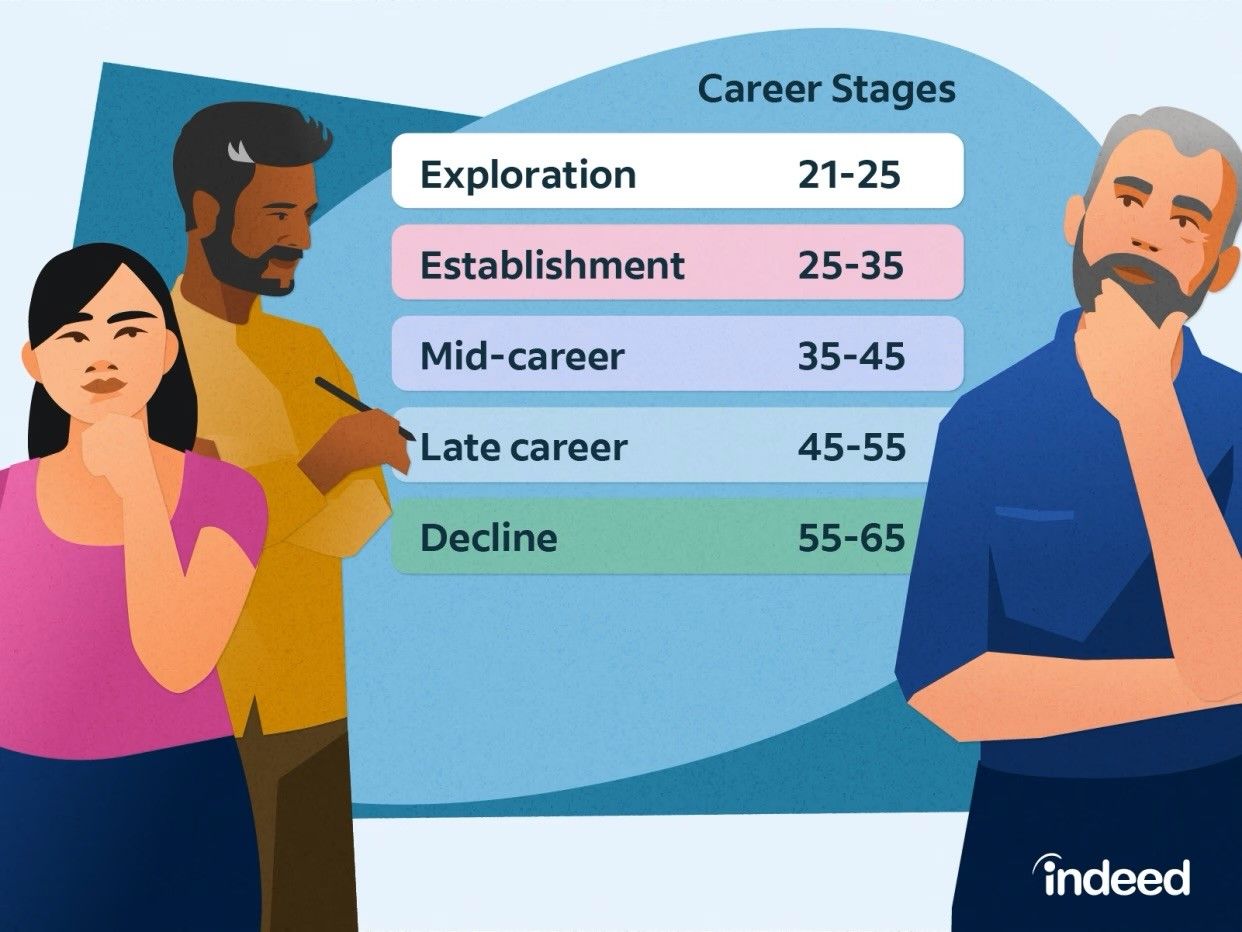
Indeed 职业定义中的年龄歧视引发的轩然大波 The Uproar Over Ageism in Career Definitions by Indeed最近的Indeed报告将45岁定义为“职业晚期”、55岁以上为“职业衰退”,引发了对年龄歧视的批评。专家如Lyndsey Simpson强调,这种标签不仅有害,还忽视了老年工作者的潜力。尽管该报告旨在描述职业阶段,但其用语引起了广泛反响,最终导致信息图的删除。像Elizabeth Isele这样的倡导者强调,多代工作力的好处,如更强的人才管道和增强的工作稳定性。
最近,Indeed的一份报告因将45岁定义为“职业晚期”、55岁以上定义为“衰退”而被批评为“年龄歧视”。来自Freelance Informer的报道指出,55Redefined Group的创始人兼首席执行官、全球老龄化人口价值专家Lyndsey Simpson在LinkedIn上发文,批评该平台发布了她所视为“公然的年龄歧视和不负责任的内容”。
Indeed的信息图将45岁定义为“职业晚期”、55岁以上为“衰退”,同时将35-45岁称为“职业中期”。根据Freelance Informer的报道,该信息图在多次投诉后已被撤下。
Simpson表示:“在55岁以上,数百万人正在他们选择的职业中找到自己的步伐,或者正在重新技能培训,重新回到劳动力市场,或者开始新的企业。”
Simpson认为,Indeed的指南延续了有害的刻板印象,削弱了老年工作者的潜力。她敦促公司认识到老年工作者的价值,并起来反对过时的偏见。
Next Up招聘机构的首席执行官Victoria Tomlinson说:“感谢成千上万分享、评论和发送电子邮件的人——Indeed已经撤下了这篇文章。”
尽管在Tomlinson的评论之后该图形仍可见一段时间,但现已被删除。
全球经验丰富的企业家精神研究所创始人Elizabeth Isele为Indeed的报告做出了贡献。她在报告中说:“多代工作力具有明显的竞争优势,原因有很多。立即,雇主就能开辟更强大、更广泛的人才渠道。你会得到一个更大的想法基因池。提高你的劳动力的连续性和稳定性。并在该劳动力中保留知识。”Isele指出,预计到2030年,55岁以上的工作者将增加1.5亿。
头条
2024年09月03日
头条
Happy Labor DayHappy Labor Day to all Chinese HR professionals in North America! Your dedication and hard work significantly enrich our workplaces and drive the future of HR. #LaborDay #ChineseHR #NACSHR #HappyLaborDay
Happy Labor Day
头条
2024年09月01日
头条
Why it’s time for HR Business Partners 2.0文章中强调了人力资源商业伙伴(HRBP)从通才到战略顾问的演变。最初旨在将人力资源战略与商业目标对齐,HRBP经常被日常运营任务分散注意力。Kathi Enderes 主张通过加强培训、指导和系统性的人力资源方法来复兴这一角色,这种方法整合了商业咨询能力。她引用了TomTom和乐高集团的例子,这些公司已成功地将其HRBP角色转变为更具战略性、数据驱动和有效促进业务增长和创新的角色。文章指出,只有11%的公司完全整合了这种模式,但见证了更高的增长和创新。
Kathi Enderes的观点强调了在当今由AI驱动的市场中,将HRBP转变为战略顾问不仅是一种改变,更是一种必需。
Global Industry Analyst Kathi Enderes, SVP of Research at The Josh Bersin Company, sees the need to clear the dust off a 30-year great idea of HRBPs.
Expert Insight
HRBPs are a crucial part of the success of the HR functions, and organizations as a whole.
However, as Kathi Enders, SVP of Research at The Josh Bersin Company, shares in this exclusive OpEd, they need to move from being a jack of all trades to becoming a business savvy consultant.
Here's how to achieve this!
Thirty years ago, HR embraced a groundbreaking concept: the HR Business Partner (HRBP).
The idea was that these professionals would collaborate closely with business leaders and line managers to align people strategies with the organization’s broader business objectives.
This remains a crucial concept and a contribution that organizations desperately need.
The problem is that somewhere along the way, we lost sight of the strategic part of the equation.
As a result, we’ve ended up misusing resources and devolving the role of the HRBP into a much more tactical, and less globally impactful, function.
In fact, the HRBP role is the most critical, yet the most misunderstood, of all HR jobs.
But by refreshing and modernizing the original concept and investing in HRBP capabilities, we can revitalize the role and get it back to its even more strategic purpose.
How we got here, and where we have to go next
We introduced HRBPs when we transitioned to the tiered HR service delivery model in the 1990s.
Originally, the HRBP was envisioned as a crucial connector between the various HR Centers of Excellence (COE) and the business.
But before too long, a lot of operational tasks were loaded onto their plates by business managers who needed immediate assistance with less strategic, day-to-day issues—think, “I need to hire someone but don’t know how to submit the requisition in the system,” or “I need to transfer someone: can you help me with that?”
When this happens frequently, the HRBP unintentionally becomes more of an HR workflow admin assistant.
While this helps solve short-term issues, it detracts from the original strategic intent of the role.
Consequently, many HRBPs end up not working “at top of license”—acting more like HR generalists than the specialized, strategic partners they could be.
To get things on track and empower HRBPs to grow into the strategic role you hired them for (and what they came on board to do), look to:
accept and encourage them to become business consultants, not just advisors or general admins, and support them in developing strong relationships with business leaders and the rest of HR
build the level of HR business partner capabilities they need to do that
organize their roles in new ways, and communicate clearly how you expect them to operate and contribute.
Leading the development of this critical in-house resource
It’s important to emphasize that all three elements noted above are crucial to the success of HRBPs – and they are interconnected.
Implementing just one recommendation won’t achieve the desired outcomes.
Equally importantly, this isn’t about increasing headcount costs; it’s about enhancing the training and utilization of the people you already have.
Indeed, in some organizations, there are significant numbers of HRBPs; myself and The Josh Bersin Company have worked with organizations where there are 200 or more in place.
So, the mission of the CHRO is to develop them, help them build the right relationships across the business, give them the support they need, and consciously organize them for success.
For capability development, some of that investment will go towards formal learning programs.
However, a significant portion will also be dedicated to facilitating mentorships and fostering connections.
This approach works best by consciously placing HRBPs in project roles where they can expand their knowledge and gain valuable exposure.
How to move to next-gen HRBP ground-level support
A Systemic HR approach, a concept The Josh Bersin Company introduced to the market last year, can be the driver of transformation here.
Why? Because by its very definition, Systemic HR transforms HR from a siloed service provider into an integrated, consultative function that tackles a company’s most pressing business challenges.
By doing so, the HRBP evolves from an HR ‘jack of all trades’ to a highly-skilled, data- and technology-savvy business consultant.
According to our research, only 11% of companies operate a truly Systemic HR function, so there is huge opportunity here – and these organizations have much higher company growth, delight their customers, innovate more, and create a great place to work.
Next-generation HRBPs can accelerate the journey towards Systemic HR and drive successful business outcomes.
However, to achieve this, you must be prepared to both pose and find answers to questions such as:
What are my new-style HRBPs’ specific accountabilities?
What does success look like?
How will our newly-energized and skilled-up HRBPs interact with managers and leaders?
Evidence from front-rank organizations, like TomTom, a geolocation technology company that specializes in mapping, navigation, and real-time traffic information services, suggests a move to a more integrated, fully data-driven, Systemic HR framework can deliver significant benefits.
In its case, TomTom has strategically restructured its HRBP team, moving away from a traditional, rigid HR model to a more fluid, team-based approach.
Its HRBPs are now organized into cross-functional teams that operate with flat hierarchies, allowing for quicker decision-making and more responsive HR practices.
Its HRBPs also now sit on the HR strategy and strategic business partnering team, which also includes HR strategy, people analytics and insights, HR portfolio management, and organizational development.
Working across this group, collaborating with the business, and supporting the highest-priority initiatives makes the HR function much more impactful.
Through this organizational model, TomTom ensures that its HRBPs are well-equipped to support the organization’s dynamic needs, driving effectiveness and efficiency.
Achieving ‘Master Builder’ HRBP capability
TomTom is not the only one looking at a new way to utilize HRBPs. Famous Danish toy leader The LEGO Group has taken a proactive approach to building HRBP capabilities.
Specifically, it implemented a series of initiatives aimed at enhancing business acumen, leadership skills, and understanding of complex organizational dynamics.
This includes specialized training programs to equip HRBPs with skills in change management, organization design, and coaching and developing leaders.
This new approach to the HRBP also centers on supporting their participation in cross-functional projects so as to develop a deeper understanding of its multiple business units and achieve a truly holistic view of the organization.
Doing so broadens their perspective and enhances their ability to contribute to strategic discussions and initiatives. This is an approach many other organizations can and should explore, as it’s a great way to develop full-stack HRBP capabilities.
In summary, HRBPs are incredibly important to organizational success, but along the way, we lost sight of how to maximize their potential fully.
As businesses accelerate under the influence of AI and other factors, this oversight becomes a luxury we cannot afford.
Therefore, the CHRO must prioritize developing HRBPs to enable their business to outperform competitors, nurture talent, and cultivate the innovation-driven organization necessary to thrive and endure.
原文来自:https://www.unleash.ai/strategy-and-leadership/why-its-time-for-hr-business-partners-2-0/
头条
2024年08月31日
头条
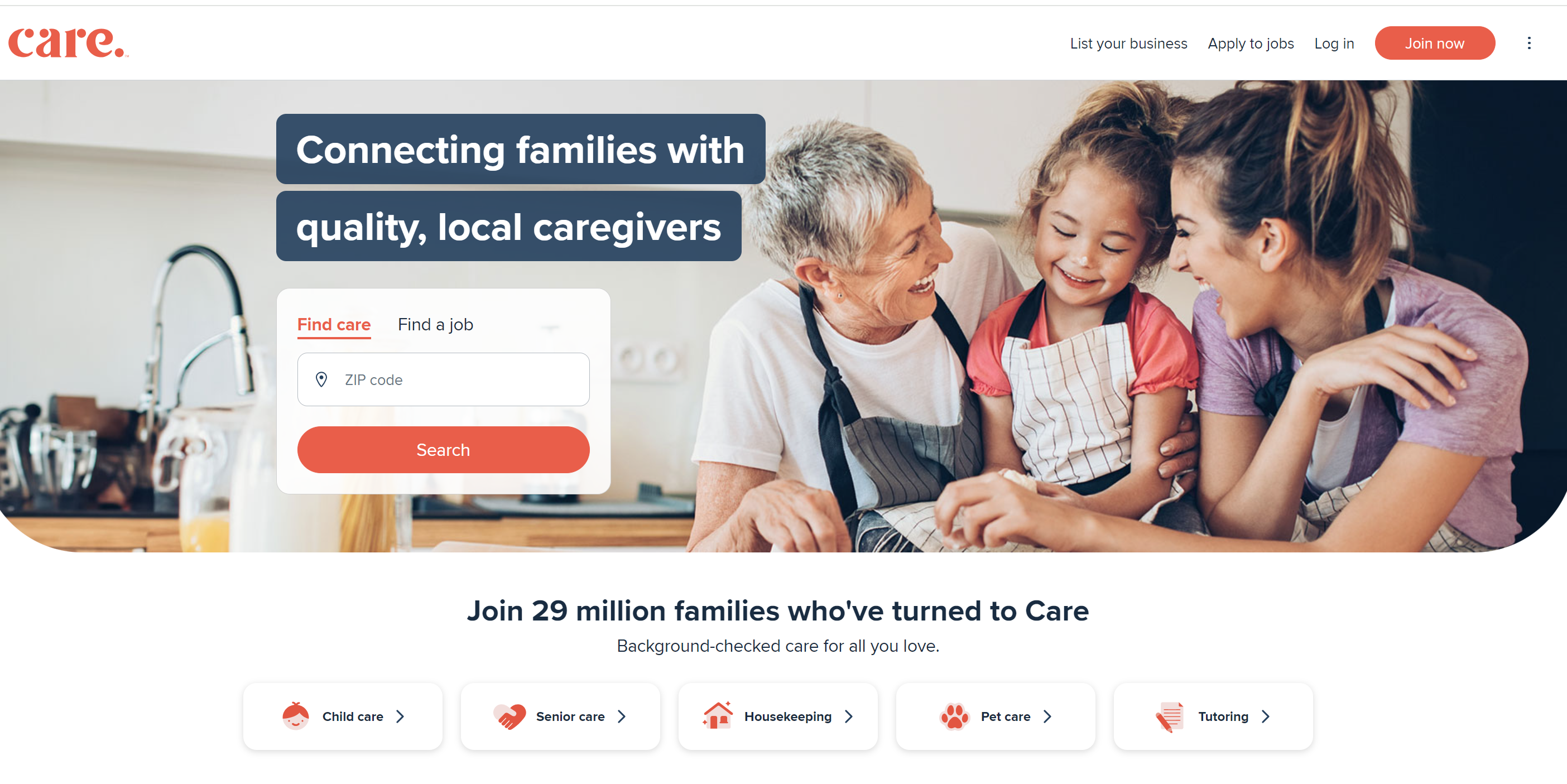
Care.com因夸大工作数量和收入,被诉向FTC支付850万美元和解金美国联邦贸易委员会(FTC)对Care.com采取了法律行动,原因是该公司在其平台上关于照护工作的可用性和潜在收入的广告中存在误导性陈述。这些广告经常夸大了工作的数量和可能的收入,同时还使用户难以取消他们的订阅。根据和解协议,Care.com必须支付850万美元用于消费者退款,并且要求公司未来在做出收入声明时必须实事求是,并简化订阅取消流程。此举不仅保护了消费者权益,也促进了更为诚信的市场环境。
近日,美国联邦贸易委员会(FTC)与在线护理服务平台Care.com达成了一项重要的和解协议。此次和解,Care.com将支付850万美元,用于赔偿因其误导性广告和复杂的取消流程受损的消费者。
FTC指控Care.com在其平台上发布的护理工作的可用性和潜在收入方面存在误导性信息。此外,Care.com的订阅取消流程复杂,迫使消费者无法轻易取消服务,从而违反了消费者权益。
对此,Care.com表示,尽管公司对FTC的指控持有异议,并有信心通过法律途径争取正当权益,但最终决定选择和解,以避免长时间的诉讼消耗公司资源。Care.com强调,和解不代表对FTC指控的认可,公司的主要目标仍是为美国家庭及看护工作者提供高质量的服务。
Care.com回应称,他们一直致力于透明和公平地展示工作机会和薪资信息,任何误导消费者的行为都不符合公司的业务宗旨。关于FTC提出的取消订阅问题,Care.com承诺将进一步简化流程,确保消费者能够轻松管理其订阅。
此外,此次事件也引起了业界对护理经济透明度和公平性的广泛关注。随着护理服务需求的增加,消费者对透明度和公平交易的要求也日益增强。业内专家指出,此类和解案例可能会推动行业内更多的自我监管和改进,从而提高服务质量和消费者满意度。
长期以来,Care.com已在全美各地提供服务,帮助数百万家庭找到合适的看护资源。公司表示,尽管面临FTC的指控和和解,但会继续扩展其服务,确保为更多家庭和看护工作者创造价值。
FTC方面也表达了对和解结果的满意,认为这是保护消费者权益的重要一步。FTC表示将继续监督市场,确保所有企业都能遵守公平竞争和诚实宣传的原则。
总之,此次和解不仅解决了Care.com与FTC之间的法律纠纷,也为护理服务行业树立了一个公平交易和消费者保护的标杆。未来,Care.com及同行业的其他公司可能需要在确保广告真实性和提供消费者友好服务方面做出更多努力。
附录Care.com 的回应新闻稿
CARE.COM RESPONSE TO FTC AGREEMENT
At Care.com, we put our members first, providing valuable tools and resources to help families find care and caregivers find jobs.
Though we were fully prepared to litigate for the next several years if necessary and confident in our position, we decided to enter into an agreement with the FTC to resolve this matter now and keep our focus on helping our customers.
This settlement is in no way a validation of the FTC’s claims. In fact, the settlement requires no material change in how Care.com serves those who use its platform.
At a time when the care economy is under assault, when families are draining their savings to afford child care, when caregivers are leaving the profession and when our growing senior population is facing astronomical long term care costs, it is disappointing that the FTC has chosen to attack trusted businesses who are part of the solution.
We have been in business nearly 20 years, available in every state and every town in America. That kind of longevity and scale comes from putting customers first every day; helping millions of families access the care they need and connecting millions of caregivers with meaningful, well-paying jobs.
In response to the FTC’s press release, we wanted to clarify a few facts:
The presentation of available job opportunities: We would not be in business for long if we manipulated optics, inflated statistics and attempted to trick our customers. We have found that many care seekers prefer to see a level of interest in their job post before committing to a premium membership, and our basic service tier offers this “try before you buy” opportunity. When a seeker sees the array of caregivers available, the commitment to premium membership—which enables seekers to contact and hire caregivers—follows naturally.
Earnings data: Care.com does not set rates and we never make promises about earnings. The data we provide about posted rates is based solely on what families say they are willing to pay, which varies significantly. Given the size of our platform, the potential earnings data we provide is at scale, and helps maintain a balanced and fair market for care.
Cancellation process: Families and caregivers can and do cancel memberships at any time and for a variety of reasons, including having successfully found a caregiver or a job. Our members can easily cancel if they wish, and we are further streamlining the process for doing so. Cancellation instructions for desktop and mobile users are included in every confirmation email upon sign up, accessible in our Help Center and available through our Customer Care support team which also offers 24 hour support via chat.
Given the care crisis in America, we believe our collective energy as a country should be on solutions, not nitpicking attacks. Care.com intends to keep our focus on what matters: American families and the hardworking caregivers who support them.
头条
2024年08月26日
头条
德州联邦法官全国范围内推翻联邦贸易委员会禁止竞业限制协议的禁令On August 20, 2024, a federal judge in Texas struck down the Federal Trade Commission's (FTC) nationwide ban on noncompete agreements, ruling that the ban exceeded the agency's statutory authority and violated the Administrative Procedure Act. This decision, just 15 days before the ban was set to take effect, marks a significant victory for employers, particularly in the healthcare sector, and a setback for medical workers who anticipated increased job mobility and wage growth. The ruling also aligns with concerns from the American Hospital Association and other industry groups regarding the potential disruptive impact of the ban. The FTC is considering an appeal, but the ruling emphasizes the ongoing legal challenges surrounding the agency's authority to regulate noncompete agreements.
德克萨斯州一位联邦法官周二推翻了联邦贸易委员会(FTC)对雇佣合同中竞业限制协议的禁令,裁定该禁令违反了《行政程序法》并超出了该机构的法定权限。
这一裁决适用于全国范围,并在禁令原定于9月4日生效前15天作出。
美国德克萨斯北区地方法院的艾达·布朗法官上个月已经做出裁定,初步禁止FTC的竞业限制禁令,但仅限于本案的原告。
然而,布朗法官在8月20日的决定中完全取消了这一规定,因为她写道,APA“并未考虑针对特定当事方的救济”。
这一决定是对美国商会——全国最大的商业游说团体——的胜利,商会与一家税务公司一起提起了诉讼。
对于医疗行业而言,这一裁决则是喜忧参半。禁令原本被认为可以帮助被限制性合同束缚的医生、护士和其他医疗工作者更容易换工作,并可能促使工资上涨。
据美国医学会称,大约35%到45%的医生受到竞业限制协议的约束。
然而,关于禁令仍有一些悬而未决的问题,包括FTC是否有法律权力颁布此禁令、是否适用于非营利性医院以及它将如何影响并购活动、医生短缺和招聘工作,特别是对较小的地区系统。
强烈反对这一禁令的强大医院游说团体——美国医院协会,对法官的决定表示了赞扬。
“这一规定是监管权力的惊人宣示……更糟糕的是,委员会没有尝试理解它对医院、卫生系统以及他们所服务的患者所产生的破坏性影响,”AHA总法律顾问查德·戈尔德在与Healthcare Dive分享的声明中说。
与此同时,FTC发言人维多利亚·格雷厄姆表示,FTC正在“认真考虑”上诉。
格雷厄姆指出,布朗的裁决并未阻止监管机构通过个案执法来追究过度限制性的竞业限制协议。
今年4月,FTC以3票对2票通过了这项禁令,该禁令将使所有现有的竞业限制协议(除了一些高级管理人员外)不可执行,并禁止签订新的此类合同。两位共和党委员投票反对这一禁令,认为FTC没有国会授权来实施它。
在周二的裁决中,布朗法官认为《联邦贸易委员会法》确实赋予FTC“制定规则以排除不公平竞争方法”的某些权力,但该机构“没有创建实质性规则”的权力,比如竞业限制协议禁令。
这一观点得到了这样一个事实的支持,即国会没有为某些FTC法规的违反规定制裁措施,“这表明缺乏实质性效力”,她说。
布朗还得出结论认为,FTC的禁令在《行政程序法》意义上是任意和反复无常的,因为它不合理地过于宽泛且没有合理解释。
法官表示,该机构未能为其决定禁止所有竞业限制协议而不是针对具体有害协议提供证据。
布朗的裁决与7月23日支持FTC的宾夕法尼亚州联邦法官的裁决相冲突,该法官拒绝阻止禁令。上周,佛罗里达州的一位联邦法官也对禁令发布了有限的禁令,认为FTC可能超越了其法定权限。
这些不同的裁决表明,FTC是否有权禁止竞业限制条款的问题可能会面临上诉审查。

 头条
头条
 头条
头条
 头条
头条
 头条
头条
 头条
头条
 头条
头条
 头条
头条
 头条
头条
 头条
头条
 头条
头条

 扫一扫
添加客服
扫一扫
添加客服


