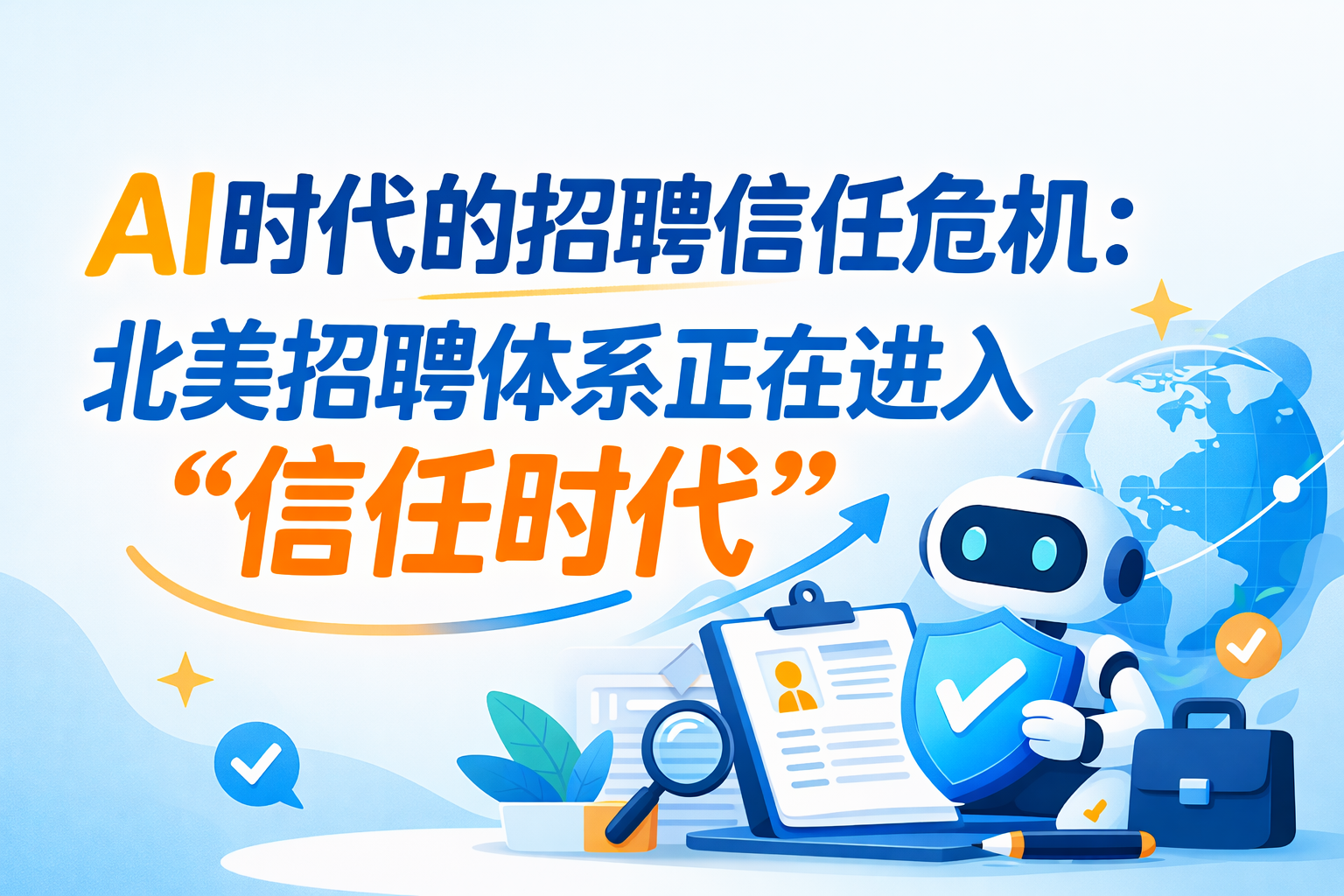
招聘技术的未来:如何应对候选人筛选中的社会性困境核心观点在于,多数招聘系统优化的并非“用人质量(Quality of Hire)”,而是“候选人质量(Quality of Candidate)”。前者关注员工入职后的真实绩效与留任表现,后者仅预测谁更可能通过招聘流程。两者错位导致企业在提升筛选效率的同时,并未真正提升组织绩效,也加剧了社会对算法不公的质疑。作者认为,招聘技术必须将招聘前数据与入职后结果建立实证关联,转向预测实际工作表现。
作者:Steve Hunt
“本案涉及利用隐藏的人工智能技术,在求职者毫不知情的情况下收集其敏感且往往并不准确的信息,并根据所谓的‘成功可能性’将他们从0到5进行评分,从而影响其人生中最重要的决定之一——是否获得一份工作。”这段话摘自2026年针对某招聘技术公司的最新诉讼文件。
在任何时刻,全球都有数以百万计的人在寻找工作。这些人是否能够获得与自身兴趣、需求和能力相匹配的岗位,不仅影响他们个人的幸福感和家庭福祉,也直接影响雇佣他们的企业成功与否,甚至关系到所在国家的经济实力。不幸的是,许多招聘决策最终让不符合岗位要求的人获得工作,同时忽视了那些原本可能在岗位上表现出色的候选人。我们能否解决这一问题,其影响将不仅限于企业或个人层面,而是关乎整个社会。招聘技术将成为解决方案的一部分,但它同时也可能成为问题的一部分,关键差异在于企业如何使用这些技术,以及候选人如何看待它们。
招聘并不仅仅是一个商业问题,它本质上也是一个社会问题。健康的社会依赖健康的经济,而健康的经济依赖高效运作的劳动力市场,使企业能够雇到合适的人才,同时让个人获得有意义的工作机会。
当前劳动力市场正在发生深刻变化,在线招聘平台、AI生成简历以及就业不稳定性三者叠加,导致求职申请数量达到前所未有的水平。这既让企业更难找到真正合适的人才,也让优秀候选人更难在海量申请中脱颖而出。
借用《辛普森一家》中的一句话,“技术既是我们所有招聘问题的原因,也是解决方案”“technology is the cause of and solution to all of our hiring problems”。AI让生成和投递简历变得极其容易,这是申请量激增的重要原因之一,尽管许多领域真正具备资格的候选人比例反而在下降。一家不足30人的公司发布一个岗位,在一个月内就收到了超过15,000份申请,其中大多数甚至不具备最基本的技能要求。类似的情况在招聘者和人才获取负责人中已变得越来越常见。同时,AI也让伪造申请材料变得更加容易,这进一步加剧了候选人与岗位匹配的难度。
面对真实与虚假申请数量不断增长的局面,企业正在构建越来越复杂的招聘技术系统来进行筛选和排序。然而,利用复杂算法评估和排名候选人的做法往往会引发求职者的怀疑和不信任。这种情绪源于担忧,即招聘技术可能不恰当地阻碍了他们获得原本胜任的工作。显然,企业不可能在没有技术支持的情况下人工筛选成千上万份简历,合格候选人同样能从技术中受益,被系统从海量申请中识别出来。但如果我们不能解决公众对招聘技术的疑虑,就很可能在社会层面看到更强烈的抵制,包括诉讼和监管限制。
要改善候选人对招聘技术的感受,可以从三个方面入手:
将招聘技术的设计重点从“候选人质量”转向“用人质量”,提高透明度以帮助申请者理解并从招聘过程中学习,以及从候选人视角更好地传达招聘技术带来的益处。
所谓“用人质量”,是指员工在入职后为企业创造的实际价值,它依赖于使用能够预测入职后绩效和留任情况的数据进行筛选决策。人们或许会认为,大多数招聘技术的目标就是提升用人质量,但事实并非如此。现实中,大多数系统衡量的其实是“候选人质量”,也就是某个申请人通过招聘流程并被录用的概率。多数招聘技术预测的是“谁更容易被录用”,而不是“谁在入职后更成功”。
成为一个“好候选人”和成为一个“好员工”之间存在显著差异。好候选人可能具备让自己顺利通过面试的技能、社交能力和背景资源,而好员工则需要真正能够在工作中持续创造价值的能力。两者虽有重叠,但远非等同。招聘经理可能被外表形象、名校背景或知名公司经历所打动,但这些并不一定意味着优秀的工作表现。相反,一位社交表现普通但技术能力出色的人,可能在面试中显得逊色,却在实际岗位上表现卓越。招聘技术衡量内容与真正决定成功的因素之间的错位,正是社会质疑的核心。要建立对招聘技术的信任,企业必须停止仅评估候选人通过概率的系统,转而构建能够预测入职后绩效的解决方案,并将招聘前数据与入职后结果进行实证关联。这在现代云计算和AI条件下完全可行,只是企业需要从单纯追求效率转向追求效果。
从组织角度看,招聘是处理成千上万名申请者的流程,每个候选人只是众多之一;但从候选人角度看,这只是关于他们自己的唯一一次机会。候选人往往不知道有多少竞争者,却清楚自己被拒绝了,并可能觉得是被一个冷漠的算法草率地评判。招聘过程之所以显得不公平,并不一定是因为它真的不公平,而是因为候选人不了解其设计逻辑。招聘更像是一场竞赛而不是考试。成功的竞赛需要明确规则、清晰标准和可解释结果,让参与者知道为什么输赢,从而产生公平感并获得改进方向。然而,大多数高量招聘流程缺乏这种透明度,申请者既无法了解评估方式,也得不到有意义的反馈。要获得公众对招聘技术的接受度,企业必须提供更多信息,例如申请人数、使用的数据及其与岗位的相关性,以及未被录用的原因。只有在信任候选人的前提下建立透明机制,才能真正建立信任关系。
社会对招聘测评的认知同样存在偏差。许多人将测评视为就业障碍,但其最初目的是通过客观评价减少对背景、关系或社会身份的依赖,为更多人创造公平机会。设计良好的测评能够帮助企业更准确地将人匹配到合适岗位,并减少隐性偏见的影响。然而,人们往往只记得测评让自己失去机会,却忽视它带来的积极结果。行业需要更多展示测评如何帮助个人实现职业成功的案例,以重塑公众认知。
当招聘技术被正确设计和使用时,它能够带来更好的招聘决策,而更好的招聘决策将产生更满意、更高效的员工队伍、更成功的组织以及更强劲的经济。但目前人们仍将招聘技术视为仅服务于企业筛选的工具。如果这种对立认知得不到改变,我们很可能会看到更多诉讼和立法限制。随着申请量不断增长,招聘技术的重要性只会进一步提高,因此确保公众对其持积极态度符合所有人的利益。企业应更加重视真正预测工作表现的技术,并提高候选人对招聘流程的理解与认知。
CHRO 的新战略机遇:生成式 AI 如何重塑组织的未来概要:74% 的 CEO 认为团队已准备好迎接 AI,但只有 29% 的 C-suite 同意。这一巨大认知差距既是风险,也是 CHRO 最关键的机会窗口。预计到 2025 年,77% 的初级岗位与超过 25% 的高管岗位都将因 AI 发生改变。未来三年,CHRO 必须从支持角色转变为组织未来的设计者,围绕三项任务展开:构建 AI 人才战略、重塑组织运营模式、建立 AI 治理框架。AI 时代的核心竞争力不再是技术本身,而是 CHRO 如何重塑组织能力与文化。抓住这个窗口期,组织才能真正迈向未来。
引言:迎接组织变革的“AI 时刻”
生成式 AI 与以往任何技术都截然不同,它正以前所未有的速度颠覆商业与社会,迫使领导者实时反思并重塑其核心战略。这场变革的核心并非技术本身,而是它对“人”与“工作方式”的根本性重塑。正如深度研究所指出的,“生成式 AI 的一切都与人有关——关乎工作如何完成”。
懂得如何用生成式 AI 赋能人才的领导者,将对业务产生“倍增效应”。在未来三年,首席人力资源官(CHRO)将迎来一个决定性的转折点,从传统的支持角色转变为驱动这一倍增效应的核心战略制定者。然而,当前仍有高达 60% 的高管将人力资源视为纯粹的行政职能,这一认知错位不仅是巨大的风险,更预示着一个前所未有的战略机遇。CHRO 必须抓住此刻,引领组织迎接未来。
--------------------------------------------------------------------------------
一、趋势洞察:生成式 AI 正在重塑工作的本质
1. AI 放大人类能力,而非取代人类
生成式 AI 的核心价值在于放大人类的专业能力。它通过自动化市场研究、内容创建、数据分析和代码开发等重复性任务,让员工得以专注于更高价值的创造性工作。例如,客服人员可以将常规问答交给 AI,从而专注于销售赋能;程序员可以摆脱繁琐的编程,聚焦于提升代码质量与安全性;HR 专家则能从日常流程中解放出来,全力投入于真正重要的人才发展。
企业的竞争优势不再仅仅来源于技术本身,而是来源于规模化员工的专业知识和扩展组织的能力。这催生了“AI 增强型劳动力”的概念。一个清晰的现实是:生成式 AI 不会取代人类,但使用生成式 AI 的人将会取代不使用它的人。
2. CEO 与组织间存在显著的“AI 准备度差距”
高管层对组织 AI 准备度的认知存在显著脱节,这种乐观情绪背后潜藏着巨大风险。数据显示:
74% 的 CEO 认为他们的团队已经为生成式 AI做好了技能准备。
然而,仅有 29% 的 C-suite 高管 同意这一观点。
这一巨大的认知鸿沟,代表了 CHRO 最为紧迫的行动指令。更值得警惕的是,AI 的影响是普遍的:到 2025 年,77% 的初级员工的岗位将发生转变,同时超过四分之一的高管也无法幸免。这使得 CEO 的盲目乐观尤为危险。CHRO 的核心机会在于,识别并弥合组织内部的人才与能力错配,确保组织具备驾驭变革的真实能力。
3. 未来关键能力:创造力与协作力超越技术力
在一个看似由技术驱动的变革时代,一个反直觉的真相浮出水面:人类独有的软性能力正变得空前重要。一项核心洞察指出:
高管们认为,到 2025 年,对组织最有价值的技能将是创造力。
当技术性工作可以被 AI 高效辅助时,企业的核心竞争力将从技术熟练度转向那些机器无法复制的能力。高管们认为,团队建设和协作能力与软件开发和编码同等重要,甚至领先于分析和数据科学。创造力,将成为引领未来的关键。
--------------------------------------------------------------------------------
二、CHRO 的三大新使命:未来 36 个月的行动框架
为应对挑战,CHRO 需要一个清晰、可执行的战略框架,围绕以下三大新使命展开行动。
1. AI 人才战略 (Talent Strategy for AI)
目标:重新设计人才的“选、育、用、留”体系,构建一支 AI 增强型团队。
行动建议:
重塑岗位与技能图谱:推动对现有岗位职责的重新定义,将工作重心从执行重复性任务,转向利用 AI 进行分析、创造和战略决策。
推动全员技能再培训:将 AI 技能提升视为员工重大的职业发展机遇。尤其要重点投资于高绩效员工,因为 AI 无法放大平庸的绩效,它带来的是一场革命而非演进,其真正价值在于将优秀人才的能力提升到全新高度。
将人力资源部作为战略试点:要让全员拥抱 AI,首先要从人力资源部开始。CHRO 应将 HR 部门打造为组织内 AI 转型的战略试点项目,率先对 HR 专业人员进行再培训,使其成为组织内 AI 应用的实践者、引领者和赋能者。
2. 组织运营模式重构 (Operating Model Redesign)
目标:打造更敏捷、更智能、更具创造力的组织模式,以释放 AI 的全部潜力。
行动建议:
聚焦高价值应用场景:避免被海量的可能性分散精力。集中资源投资于三到五个最具商业影响力的 AI 应用场景(“Focus on the top five. Or three.”),以点带面,实现价值最大化。
建立快速迭代与试错文化:鼓励团队以“快速失败”(fail fast)的方式进行小范围实验。建立跨部门的反馈循环机制,系统性地分享成功案例、失败教训和实践经验。
利用 AI 优化工作流程:应用 AI 增强的流程挖掘技术,深入分析现有工作流程,精准识别瓶颈与低效环节,并通过智能化改造加速决策效率。
3. AI 治理与伦理 (AI Governance)
目标:建立负责任的 AI 使用框架,确保技术向善,规避潜在风险。
行动建议:
建立明确的道德准则:制定并推行一套清晰的 AI 道德使用框架,其中包含明确的标准、指南和行为期望。
保障数据安全与隐私:在鼓励全员实验的同时,必须围绕数据保护和道德规范设立明确的护栏,确保创新在安全可控的范围内进行。
确保透明与公平:在招聘、绩效评估等关键人力资源环节应用 AI 时,必须建立有效的机制来管理算法偏见,确保决策过程的透明度与公平性。
--------------------------------------------------------------------------------
三、从战略伙伴到未来设计师:CHRO 的新定位
生成式 AI 正在推动 CHRO 的角色发生根本性演进。CHRO 必须从被 60% 高管视为被动的行政支持者,进化为主动的战略引擎,成为组织未来工作模式的总设计师和 AI 时代人力资本的管理者。CHRO 的新角色是通过前瞻性地引导 AI 在人才与组织层面的落地,主动重塑组织文化、决策模式和业务节奏。
在最高管理层中,CHRO 的新定位是连接技术、人才与业务战略的关键枢纽。AI 的成功绝非单一部门的责任,而需要建立一个由业务、IT 和人力资源负责人共同负责的问责模式。在这个领导力“三驾马车”中,CHRO 作为平等的战略伙伴,确保技术投资能够真正转化为组织能力和商业价值。
--------------------------------------------------------------------------------
决胜未来,重在组织能力的设计
生成式 AI 时代已经到来,领先的企业正在迅速采取行动。最终的成功者,将是那些能够围绕人才与技能建立灵活、深思熟虑的战略,并积极克服组织焦虑、奖励热情、拥抱包容与乐观的组织。
在生成式 AI 时代,决定企业未来竞争力的不是技术本身,而是 CHRO 对组织与人才能力的重新设计能力。
AI
2025年11月24日
AI
Josh Bersin:人工智能能战胜人类直觉做决策吗?不可能
多年来,我们一直在争论 AI 是否能用于人类决策,比如:该雇佣谁?该提拔谁?薪酬多少合适?以及数百种其他决策。领导者每天都面临复杂、艰难的抉择——我们能信任 AI 来替我们做决定吗?
我的观点是:不能。这正是我最新一期播客的主题。
什么是直觉?什么是情绪?
我们都知道所谓“第一类思维”(Type 1 Thinking)——也就是直觉反应——在我们日常生活中扮演着主导角色。比如你见到一个人、坐在一个会议中,突然就知道“该雇谁”或“该怎么做”,即使数据很难查证。
我最近深入研究了遗传学、情绪与直觉,并得出结论:再强大的 AI “超级智能”,也无法替代我们的情绪。而这些情绪,来自我们的成长背景、过往经历,甚至基因组成——往往比数据更具洞察力。
作为一名工程师,我当然推崇数据与科学,因此并不是在否定算法与数据驱动决策。但我在人力资本领域的研究一再证明,是“人类直觉”在补充、辅助,并最终确定那些 AI 给出的建议。
AI 做决策的局限性在哪里?
AI 系统依赖“概率神经网络”进行训练,模型会从已有数据中学习,再用来判断新信息——写一段代码、生成一张图、创作一篇文章,它做得确实很出色。这是因为它可以瞬间把所有训练内容当作一个巨大的“数据集”,并用向量计算给出答案。
但这都基于一个假设:数据本身就足够全面,能够包含足够多的观点和洞察。如今,大多数大型 AI 实验室已承认“可索引的数据已经用尽”,所以开始制造“合成数据”——也就是 AI 用已有数据生成新数据,以此来扩充模型。
问题来了:这些数据缺失了什么?
如果你研究情绪理论(至少有六种主流理论),你会发现大多数观点都认为,一个人“对一件事的感觉”源于其生活经历、刺激源(所见所闻所感)以及基因。而“基因”这个维度,则是几百万年人类进化的产物。
所以即使某个商业决策在逻辑上是合理的,但我们每个人对数据的解读都是不同的,而我们的反应也由经验和人性所驱动。这就是为什么在一个高管会议上,大家面对同一组营收与市场数据,却会得出完全不同的结论:
比如一个人说:“我们做得不错,该庆祝!”另一个则说:“为什么没更快增长?我们本可以更好!”
为什么人类决策更有优势?
人类互动千差万别,有人积极进取,有人保守稳重。这种“直觉差异”正是一些公司在市场中脱颖而出的关键。
那这种直觉来自哪里?来自我们几百万年的进化历史与独特的“表观遗传能力”(epigenetic capabilities)。换句话说,人类智能与直觉,源于我们的家族基因、成长经历与历史背景。
以我自己为例:父亲那边是音乐家与科学家,母亲家族是商人。我最终成了一个热爱商业与人力工作的工程师。而因为父母都是企业家,我也成了一个有野心、敢冒险、喜欢挑战的人。
这些人类“能力”,本质上是历史和基因的组合,它们在我们的情感、直觉、性格和智慧中展现出来。
AI 决策能超越人类吗?绝不可能。
很多人用丹尼尔·卡尼曼的书《思考,快与慢》来解释这个问题。书中提出:
“快速思维”是直觉,
“慢速思维”是分析。
尽管这个划分广受欢迎,但现实更复杂。AI 在“慢速分析”方面确实做得不错,但仍然极其“幼稚”。
比如让 Grok 来解释“杰弗里·爱泼斯坦事件”,它会给出一段生硬的描述,但完全没有触及人类直觉所捕捉到的“这是个肮脏、混乱、令人羞耻的丑闻”。
我想表达的是:无论 AI 如何发展,也无论企业在数据中心上投入多少资金,它都无法复制人类在基因、历史与演化层面累积的智能。
举几个例子你就明白了:
当你开车经过街口,看到一个小孩站在路边,你的本能反应是“她可能会突然冲出来”。
当你在会议中感到“这个决策不对”,你会下意识决定“我们先别急,明天再看看感觉”。
而 AI 呢?它只会基于逻辑推演立即给出一个“答案”。
总结:人类直觉,在AI时代更重要
这种“情绪 + 本能 + 遗传”的判断力,正是人类与众不同的关键所在。
正因如此,我们才会有乔布斯与盖茨的不同,马斯克与奥特曼的差异。我们必须正视并尊重这些“人类智能”的组成部分,它们比以往任何时候都更重要。
AI
2025年07月27日
AI
The Workday Economy – A Bold New Strategy EmergesBy Kathi Enderes, SVP Research and Global Industry Analyst with comments by Josh Bersin
The Workday Innovation Summit 2025 was more than an analyst meeting: it was a signal that Workday is attempting a full-scale reinvention. Under CEO Carl Eschenbach and Board Chair Aneel Bhusri, Workday is shifting from a product-centric model to an open, partner-driven, AI-powered ecosystem they call “The Workday Economy.”
Let’s explain what the company is up to.
Strong Financial Performance
Now on its 20th birthday, Workday is in a position of strength:
– $7.7 billion in subscription revenue
– 16.9% year-over-year growth
– 11,000+ customers in 175+ countries
– 70 million users
– 93% customer satisfaction.
The company’s goal is to reach $10 billion over the next few years, which means continuing this level of growth.
Workday is banking on a few big bets: aggressive partnerships and industry solutions, building Agentic AI, investment in Workday Financials, and a mid-market offering. Let’s look at each of the components in detail.
The Platform Play: From System to Ecosystem
Workday’s legacy as a highly integrated, proprietary stack (or “walled garden”) worked for years, but now it slows innovation. Now, with intention to make Workday an open platform, the company is expanding its Built on Workday program and expanded Workday Marketplace, to build a “Workday Economy.” Partners and customers can use Workday Extend to build applications natively, with low-code tools and lots of support.
Comment by Josh: Workday Extend is a massive priority, but building Workday apps is difficult. With 87 partners now, how big can this app ecosystem become? And just as Apple tightly controls apps for the i-Phone, can Workday do the same with such complex industry partners? They’re definitely going in the right direction.
Partnerships as Engine of Innovation
Workday’s partner ecosystem is now front and center, supporting ISVs, advisory firms, system integrators, and co-innovation partners. A new Clear Skies Initiative is supposed to prevent channel conflict, ensuring partners can build without competing with Workday’s core offerings.
Strategic alliances with Randstad, TechWolf, and five new Workday Wellness partners (including MetLife) are examples. Can Workday use these partnerships to drive real, measurable results? Many partner programs are simply referral relationships: how will sales and service teams invest in the success of these partnerships? This is a new muscle for Workday to build.
Comment by Josh: This is big. I think Carl understands that Workday’s “market power,” built through its reputation over 20 years, lets the company pick winning partners and resell their offerings, invest in them, and stop trying to build or compete with everyone in this market. This is the type of behavior a $20-30 Billion company demonstrates, and I hope it continues. (ADP white labels many products and their business never stops growing.)
Agentic AI: The Next Frontier
Agentic AI is clearly core to the strategy. The Workday Assistant, powered by Illuminate, lets employees interact with HR and finance in natural language, across Microsoft Teams, Slack, and more.
Early agentic applications like the Payroll Agent, Employee Self-Service Agent, or Recruiting Agent are promising, but the real test will be customer adoption to create business value.
As companies deploy more specialized agents, Workday’s Agent System of Record aims to manage all agents, not just the ones created on Workday. With big players like Microsoft, Google, and ServiceNow aiming for the same level of control, this will be a tough battle to fight.
Comment by Josh: I’m not really convinced that Workday can be a system of record for agents, when the system is missing so much data. I would bet on Microsoft, Google, Okta, or others to dominate the agent governance market. On the other hand, agents that work with Workday (recruiting agents, L&D agents, pay agents, etc.) do have to integrate with Workday somehow, so to me this is a way to integrate, not “govern” agents.
Agent Extensibility and Customization
The new Workday Assistant Studio lets partners and customers build agents to fit unique workflows. This extensibility is good news for customers, but it comes with risk. How well will these interfaces work and how easy will it be for vendors to build integrated apps? Workday now has direct integration with Microsoft Copilot and Google, but most Agent-builders are going after customers directly, and they may or may not want to be held hostage within the Workday Assistant.
Comment from Josh: Right now SAP Joule is a year ahead of Workday in ERP/HCM Assistants. Most Workday clients I talk with are afraid to even let employees touch the system and they’re deploying Copilot, ChatGPT, Galileo, or other dedicated assistants. The Workday Assistant strategy needs a bold new move, and Studio alone may not be enough. I think Workday may be better off focusing on optimizing its utility within other more broad AI assistants. (What happened to Workday’s big alliance with Salesforce I wonder.)
HCM Innovation: Industry Focus and Acquisition Integration
Workday’s HCM suite remains the company’s core, with a focus on practical AI and the employee experience. Industry-specific solutions for higher education, healthcare, and financial services are expanding, offering another path to growth and becoming indispensable for clients.
Recent acquisitions like HiredScore, VNDLY, and Evisort can add mature AI-driven capabilities that can bring the HCM product (built 20 years ago) into the latest AI era, given the competition in this space. (Workday now resells Evisort.)
Comment from Josh: Workday HCM product teams understand what customers need. The challenge they face is “getting there from here,” so I would bet we see many more acquisitions. If you read our latest research on the Revolution in Corporate Learning, for example, you see that Workday has missed this market. Ditto many recruitment features (high-volume, online job previews, AI-assessment.) So I would expect Workday to do more deals like HiredScore, where they get an AI product base and some amazing HCM product talent.
Strong Focus on the Financial Suite
Workday’s financial management suite is now central to its growth story, with over 35% of new customers choosing it. The company is pushing industry-specific financial applications, automation, and real-time insights. But the finance function can often be conservative and risk-averse, and the promise of truly integrated HCM and Finance solutions is still a dream for most customers.
International Expansion
Workday’s global ambitions are bold. New offices, expanded partnerships, and talent programs in EMEA are all part of the plan. Today only 25% of revenue comes from international markets so the company will need to invest heavily here. SAP and Oracle are quite dominant in some countries, so the company has to pick its markets carefully.
And remember local players. As Workday courts the Global 2000 (including First-Citizens Bank & Trust, UnityPoint Health, and Toyota), the company definitely needs to build out support, partnerships, and presence in these geographies.
Comment from Josh: There are many geographies (Asia, UK, Eastern Europe) where Workday is not well entrenched. While SAP and Oracle dominate some of these markets, if Workday builds a strong partnership model (ie. exclusive SI partnerships in these geos, etc.) they can double their growth rate in these sectors. Look at how well Workday has done in Australia (a fairly small market).
Is the Mid-Market Ready for Workday?
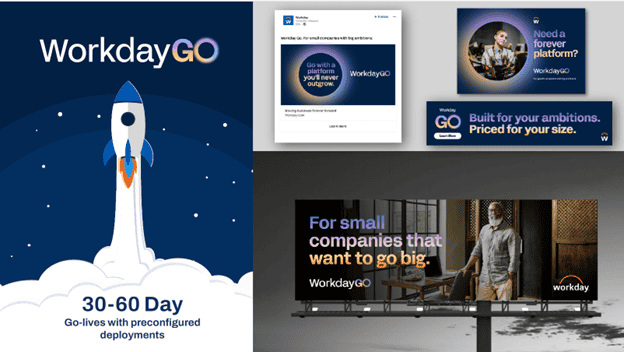
Expanding to the mid-market is another tenant of Workday’s growth plan. With WorkdayGo, the company is adapting its enterprise playbook to leverage partners. With players like UKG, Rippling, ADP, Dayforce, and HiBob providing tailored, right-sized solutions designed for this segment, Workday will find lots of resistance in this market. (SAP tried this years ago.)
Comment from Josh: This is a push for me, I’m skeptical. I love Workday as a product but it’s very complex and needs major administrative support. I doubt Workday can effectively compete with HiBob, UKG, and the others Kathi mentions without building or buying a new product. Years ago Taleo (pioneer in ATS) acquired a separate company to launch Taleo Business Edition and that product sold like hotcakes. I have a hard time seeing how pre-configured Workday SKUs make it that much easier to administer. But who knows, maybe an AI-powered “configurator” could fix that up.
Customer-Centric Innovation
The 2025 Spring Release delivered over 350 new features, shaped by customer feedback. AI-powered talent rediscovery, simplified workflows, and industry-specific enhancements are all on the list. Customers are reportedly happy and shaping the roadmap. This pace of innovation requires companies to keep up with Workday, often not an easy feat, especially in the AI areas, where adoption still lags the many capabilities Workday offers. A focus on supporting AI transformation will be key to drive real value.
Josh’s Perspectives
Workday is an ambitious, well run, culture-driven company. These announcements signal a major shift from “technology-based” to “market-based” growth. There’s no question in my mind that thousands of ISVs and integrators would love to build businesses around Workday. The only question is how quickly Workday can make this easy and profitable (for them).
As far as AI goes, the market is very competitive. SAP’s AI strategy quite far along (Joule is more extensible than the Workday Assistant), and many AI startups are reinventing the HCM market from scratch. So while the Workday Agent System of Record makes sense, many new “Agent-core” or “AI-native” HCM apps will chip away at Workday’s footprint.
That all said, this is an exceptionally well run, strong, “Irresistible Organization”. With a new CTO and strong focus on global growth, I see no reason Workday can’t achieve its $10 Billion target in the next 3-4 years.
AI
2025年06月12日
AI
Yes, HR Organizations Will (Partially) Be Replaced by AI, And That’s GoodI adore the human resources profession. These folks are responsible for hiring, development, leadership development, and some of the most important issues in business. And despite the history of HR being considered a compliance function, the role is more important than ever. CHRO salaries, for example, have increased at 5-times the rate of CEO pay over the last twenty years, demonstrating how essential HR has become.
That said, we have to be honest that AI is going to disrupt our role. This week IBM formally announced that 94% of typical HR questions are now answered by its AI agent, and the role of HR Business Partner is all but eliminated except for very senior leaders. As a result the CEO plans to reduce HR headcount and shift that budget towards sales and engineering.
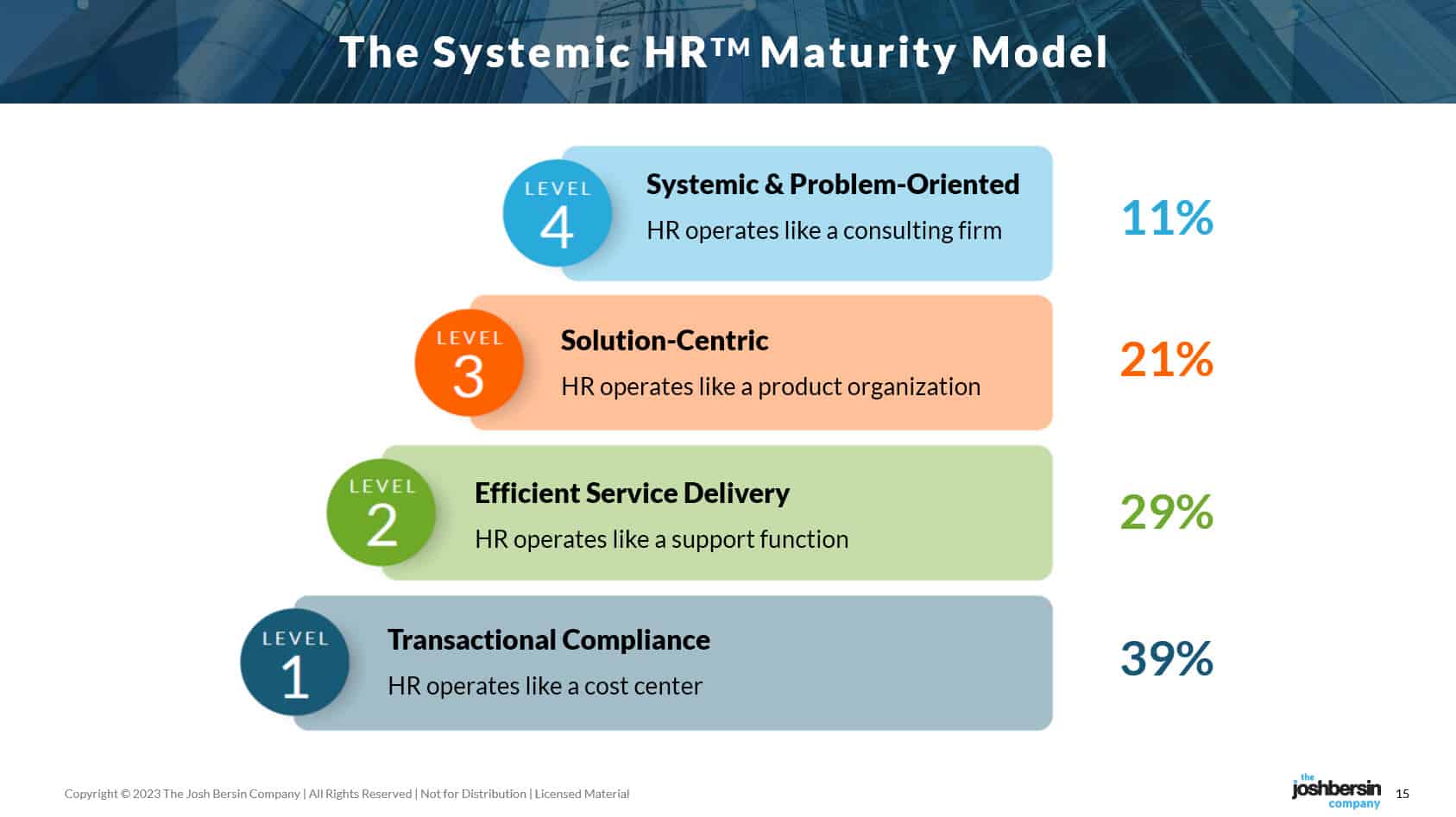
Let’s accept the fact that we are in a time of increasing acceleration. In other words, the capabilities of AI are growing much faster than our organizations” ability to adapt, so we have to lean forward and start redesigning our companies. In the case of HR, our Systemic HR model (which we launched two years ago) is now being fully automated by AI.
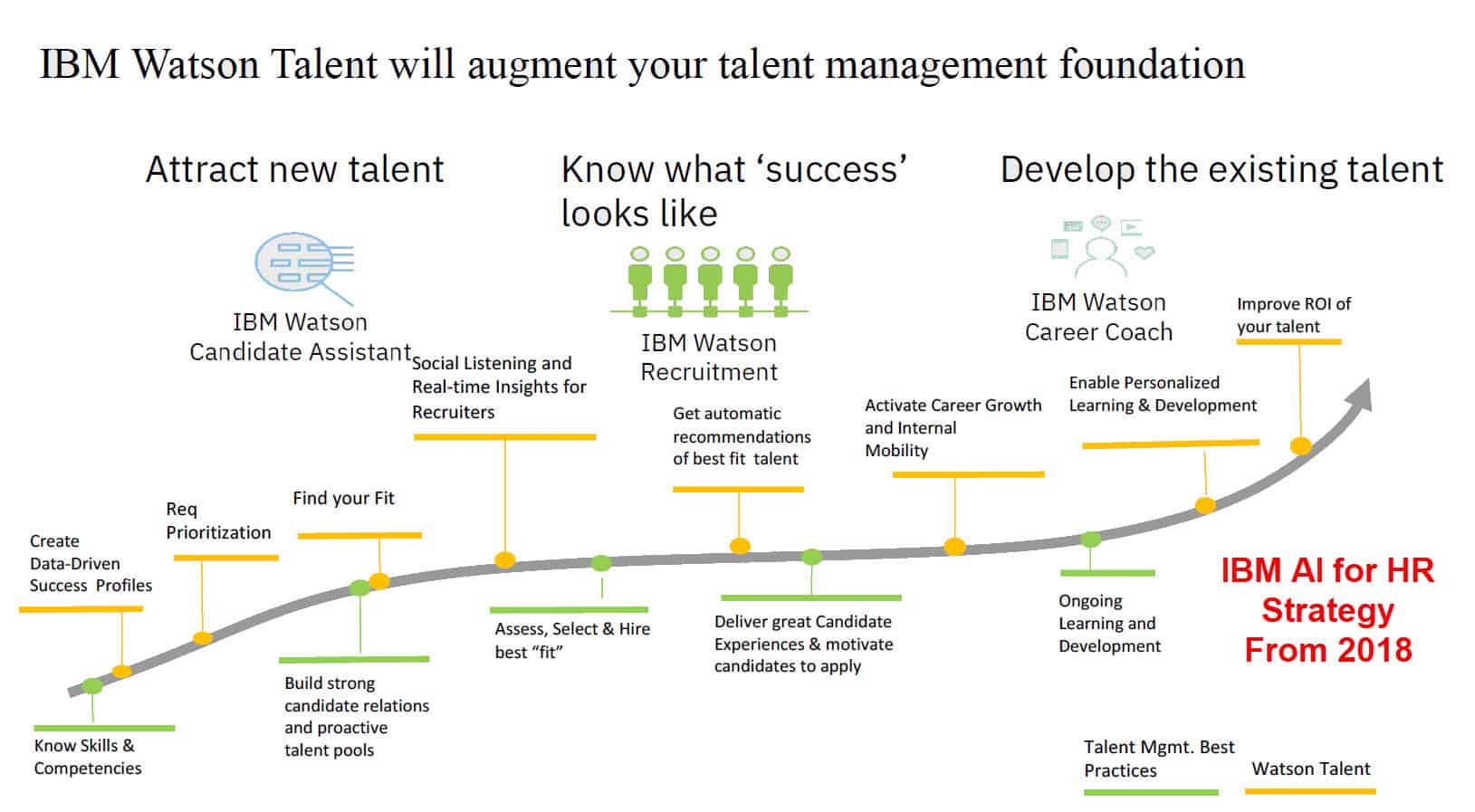
I know IBM’s story well, and I think it explains where all HR teams are going. Many years ago Diane Gherson (prior CHRO) started AI projects to automate recruitment, pay analysis, and performance management. She spoke at our conference eight years ago and shared how IBM’s pay tool (CogniPay was launched in 2018) uses AI to make pay recommendations based on skill. This type of tool, which was years ahead of the “skills-based” strategies we see today, essentially automated many of the performance and pay decisions left to managers.
Since then IBM has gone much further, and in my last conversation with Nickle Lamoureux (current CHRO) she told me the AI agent helps write performance reviews, creates development plans, and coaches managers and senior leaders on a myriad of performance based decisions. I totally believe this because I see Galileo doing these kinds of things for companies every day. (Check out the Mercury release.)
How does this impact the roles and jobs in HR? Well it definitely eliminates many.
In the case of L&D or HR business partners, I believe we could see a 20-30% or more reduction in HR headcount per employee. And that means these individuals may wind up managing the AI platforms, moving into roles as change consultants (which AI still can’t do), or move into areas like org design, learning architect, and data management.
I think this is all a good thing. While we all worry about AI taking our jobs, we have to remember that our real job is not to “do things” but to “add value” and bring complex problem solving skills to our companies. And in this journey to “crawl up the value curve,” we all have to learn to use AI, develop AI solutions, and think more systemically about how our companies go to market.
I recently interviewed a brilliant HR leader (podcast coming) at WPP who explained how he and his team rationalized their job architecture from 65,000 job titles to only 600 by using new AI tools from OpenAI and Reejig (a work intelligence vendor). As you’ll hear in his story, this effort was a combination of data management, business analysis, change management, and leadership. The results of this work, which are still ongoing, is the opportunity for WPP to dramatically change its go to market strategy, innovation, and growth.
That’s the kind of thing we want our HR teams to do.
And as these various agents hit the market (see my latest view of the market below), HR professionals are going to have to train them, implement them, and “manage them” for long term success. This means analyzing the cross-functional data they produce, extend them into better decision-making, and move our thinking from dated concepts like “time to hire” and “course completion rates” to meaningful measures like “time to revenue” or “time to productivity” or “time to customer service excellence.”
See where I’m going? In a time of increasing technology acceleration we have to “lean in” as hard as we can.
Stop thinking about how much money we save on headcount (which is a fleeting benefit, by the way) and focus on value creation. That’s the big benefit of AI: customer service quality, time to market, and innovation.
In many ways these “HR downsizing” stories are really stores of “HR crawling up the value curve,” which is really a good thing. And for HR professionals, it’s a time for personal reinvention.
AI
2025年05月16日
AI
Is The HR Profession As We Know It Doomed? In A Strange Way, Yes.I just spent a week in London meeting with several dozen companies and most of the discussion was about AI. The overwhelming majority of the conversations were about how companies are struggling, pushing, and agitating about the implications of AI, both within HR and within their teams.
Coming from the CEO and CFO, HR team are under intense pressure to automate, improve their services, and reduce headcount with AI. Yes, we know AI is a technology for growth and scale, but the main message right now is “hurry up and do some productivity projects.”
And “Productivity,” as you know, is a veiled way of saying “Downsizing.”
So before I get back to HR, let me discuss downsizing.
It’s absolutely true that almost every company we work with has too many people. Why?
We have a sloppy way of hiring people, allocating resources, and managing work. We delegate “headcount” to managers and they go out and hire as many people as they can.
We don’t really teach (or incent) managers how to build “productivity,” we actually do the opposite. We tend to reward them for “hiring more people.”
The result is a problem I just talked about with a large advertising company: too many weird jobs and no consistency or structure to our work. This particular company has around 100,000 employees and more than 60,000 job titles. In other words almost every job is “invented for this person.” It’s insane.
The whole reason we have companies (and not individual craftsmen) is to build scale. If we expect every individual manager to figure out how to scale, we’re more or less designing low productivity into the business.
There are some simple models we use: call centers, global services groups, shared services, capability communities, and centers of excellence. But that kind of high-level productivity design is now becoming obsolete. In this new era of high-powered multi-functional agents, we need to go much further.
Elon Musk likes the “first principles” approach. Fire everyone and start from “first principles,” only hiring the people you urgently need to build, sell, and support your product. That may work in small companies but when you’re big there are too many “support services” to consider.
One of the companies we are working with has “program managers” and “project managers” and “analysts” sprinkled all over the organization in random places. In other words, their core staff don’t know how to manage projects, programs, or data. So there’s a bunch of overhead staff doing this for them. Drives me crazy. This took place because there was no discipline in hiring, so each group “bulked up” with staff.
This is really business as usual. Organization design is an old, crusty, under-utilized domain so most companies barely think about it. IBM told me a few years ago that their “org design” strategy is to “hire a high performing executive and let him or her figure it out.” I hear that, it’s quite common.
The bottom line is this: if we want to get a sound ROI from all these AI tools and agents we have to get a lot smarter about “work design.” And that is not building org charts, it’s the basics of figuring out our workflows, areas of common and uncommon process, and where and how we can automate.
Most of our clients have tons of productivity systems already (ServiceNow, Salesforce, Workday, whatever), but they either don’t know how or don’t have the discipline to use them well. So they just keep hiring people.
As an engineer I see this visibly all the time. It’s very easy to delegate a “problem” to a person, and not think about it as “plumbing.” But it is plumbing. As Tanuj Kapilashrami from Standard Charter put it, we need to focus on plumbing first, then we figure out where to apply AI.
This means we can’t just cross our fingers and hope that the Microsoft Copilot is going to make everyone more productive. We need to look at business processes and skills at the core, and then literally reinvent our companies around these new AI tools.
And skills are very important. The reason companies hire a bunch of “analysts” and “project managers” is because individuals and existing managers just aren’t good at their jobs. We all need to learn how to project manage, schedule, and analyze work. That way these high-powered specialists can work on big things, not sit in staff meetings taking notes (where AI note-takers do this well).
(By the way, I have to guess that we’ll soon have AI agents for project management, program management, and functional analytics, so those staff jobs are going to be automated next!)
How Does This Impact HR
Let’s get back to HR. Given this massive effort to re-engineer and implement AI, where does HR fit?
Well fundamentally HR is tasked to build process, expertise, and advisory services around the “people processes” in the company. That means hiring, developing, managing, paying, rewarding, and supporting people. It’s a big mission, and when we start to focus on “productivity” then HR must be involved.
The general belief is that a “well run” HR team has about a 1:100 ratio to the company. In other words, if you have 10,000 employees you’re going to have around 100 HR people. And the HR team doesn’t just run around doing things, they buy and build HR technology for scale. So HR itself, as a “plumbing” type of operation, needs to be “lean and mean.”
If your CEO wants you to hire 50 top notch AI engineers you can’t just start phoning everyone you know: you must decide precisely how you’re going to do this in a scalable, efficient, and highly effective way. (AI engineers are rare, they’re hard to hire!)
So your little HR team has to think about productivity. Should we outsource this? (Which is a cheap and dirty way to look productive.) Should we buy a talent intelligence or sourcing system? Should we hire three high-powered recruiters? You know where I’m going. We have to find a way to “be productive” while we try to “make the company productive.”
This means we, as a support and advisory function (HR professionals spend a lot of time coaching and supporting managers) have to stop creating forms and checklists and implement AI agents as fast as we can. Why? Because so much of our work is transactional, workflow-oriented, and administratively complex. And AI can do a lot of amazing things, like “assessing the skills of an AI engineer” for example.
(Our AI Galileo can literally evaluate a recorded interview and give you a pretty good assessment of an individuals skills, mapped against the Lightcast, SHL, and Heidrick functional and leadership models.)
Let’s assume we do this well, and HR technology vendors give us good products. We wind up with amazing recruiting agents, AI agents for employee training, onboarding, and coaching, AI agents that help with performance management, AI agents for succession and careers, and AI agents that deal with all the myriad of personal benefits and workplace questions people have. Where do we end up?
Do we “automate away” our own jobs?
Well, in a way the answer is yes.
AI, through its miraculous data integration and generation capabilities, can probably do 50—75% of the work we do in HR.
All this is far from built out yet, but it’s clearly coming.
(We just talked with a large pharmaceutical company that is “all-AI” and they manage a team of 6,000+ scientists and manufacturing experts with only ten people in learning and development. They’ve automated training, compliance tracking, onboarding, leadership support, and all the details of training operations.)
Could you do all that for a fast-growing 6,000 person company with 10 people? I doubt it. Most companies would have more than 10 people in sales training and sales enablement alone.
So here’s my point. HR, like other functional areas in our companies, is going to have a real-life identity crisis. If you can’t figure out how to move your HR function up the maturity level quickly (check out our Systemic HR maturity model) someone’s just going to cut your headcount (the Elon Musk approach). Then you’ll be figuring out AI in a hurry.
(Galileo can assess your HR maturity with its “consulting mode,” by the way.)
I’m not saying this is easy. The AI products we need barely exist yet. But the pressure is on.
You shouldn’t wait for the CFO to point his “productivity gun” in your face, you have to get ahead of this wave. Start pushing yourself to fix plumbing, check out the new tools in the market, get your IT team involved, and redesign your work using your own expertise. Many surprisingly good things will happen.
Let me give you an example.
A few years ago Chipotle adopted an AI-based agent system for recruiting, effectively automating a complex workflow for hiring. Not only did it save millions of dollars, the “speed and quality” of hiring went up so high the CEO talked about it as their top “revenue driver” with Jim Cramer on CNBC.
In other words this “identity crisis” in HR is a good thing.
Our recruiting, training, and employee services groups are too big. AI can automate enormous amounts of this work. So my advice is this. As the AI wave sweeps across your company, get out your old “org design” book and start redesigning how your HR team operates right now. Then you can go to the AI vendors and tell them what you want. That’s the secret to keeping HR in tip-top shape.
Will HR go away? Well a lot of the process, data management, and support roles will absolutely change. And yes, employees and job candidates will happily use intelligent bots instead of calling their favorite HR manager.
But as a Superworker, you, as an HR professional will do more interesting things. You’ll become a consultant; you’ll manage and train AI systems; and you’ll have much more real-time information about the strength and weaknesses of your company. We’re just going to have to lean into this AI wave to get there.
As AI agents arrive, it’s time to seriously re-engineer HR. And this time it’s not a transformation, it’s a reinvention.
Bottom line is this. Don’t wait for Workday, SAP, or some other vendor to “invent” a tool that changes your HR operation. You should do it yourself first and bring your IT people with you. That way you’ll buy and build the AI systems you need, and the result will be a new career, an even better HR function, and the opportunity to help your company move from “hiring” to “productivity” in the future.
我刚刚在伦敦与数十家企业进行了为期一周的交流,大部分讨论都围绕着AI展开。绝大多数对话的主题是:公司在应对AI带来的影响时,感到焦虑、推动、甚至焦躁不安,这种焦虑不仅体现在HR部门,也体现在各业务团队中。
在CEO和CFO的压力下,HR团队正被要求加速自动化、优化服务、并通过AI实现人员精简。虽然我们都知道AI是一种能够促进增长和规模化的技术,但当前传递出的主要信息是:“赶紧推动生产力项目。”
而所谓的“生产力”,实际上就是“裁员”的委婉说法。
先谈谈裁员
几乎我们接触的每一家企业,都的确存在人员过剩的问题。这是为什么呢?
因为我们的招聘、资源配置和工作管理方式本身就非常低效。我们将“编制名额”下放给各级管理者,而他们则倾向于尽可能多地招聘人员。
我们并没有真正教导或激励管理者如何构建高效的生产力,反而往往奖励他们“扩大团队规模”。结果就是,像我最近在一家大型广告公司看到的那样,组织中充满了各种各样的职位,但缺乏统一性和结构性。这家公司有约10万名员工,却设有超过6万个不同的岗位头衔——几乎每个职位都是为某个人量身定制的,这种做法显然荒谬。
企业存在的根本目的,是为了实现规模化。如果每个部门经理都各自为战,自行搭建团队架构,那无异于将低效深植于企业之中。
虽然我们有一些基本的组织效率模型,比如呼叫中心、全球服务中心、共享服务、能力中心等,但这些传统设计在当下正逐渐过时。在高性能多功能AI代理全面普及的时代,我们必须走得更远。
从“第一性原理”重构组织?
Elon Musk 推崇“第一性原理”方法——即解散现有团队,只从零开始招聘最核心、最迫切需要的人员。这种方法在小型公司或许奏效,但在大型企业中,由于存在大量“支持服务”,简单地“砍掉重建”并不可行。
现实中,很多公司在各个角落散布着项目经理、程序经理、分析师等职位,因为核心员工缺乏管理项目、推进计划、或进行数据分析的能力。由于招聘过程中缺乏严格的标准和规划,各部门纷纷自行扩编,导致组织臃肿、效率低下。
组织设计本来就是一门古老且被严重忽视的学问,多数公司对此缺乏系统化思考。IBM 曾表示,他们的组织设计策略是“聘请一位高绩效高管,让他/她自己摸索出解决方案”——这实际上是行业普遍现象。
AI真正改变的,是“工作设计”
如果我们希望从AI工具和代理中获得真正的投资回报率,就必须彻底重新思考“工作设计”——不仅仅是画组织结构图,而是要厘清工作流程、标准化与非标准化的业务环节,并找出可以自动化的领域。
尽管大多数企业已经部署了大量的生产力系统(如ServiceNow、Salesforce、Workday等),但由于缺乏使用这些系统的能力或纪律,反而持续地通过“增加人手”来解决问题。
作为一名工程师,我对此体会尤深。将问题推给某个人远比优化底层“管道”来得容易。然而,管理工作流程就像修建城市水管系统——如果基础设施不合理,再先进的AI工具也无济于事。
正如渣打银行Tanuj Kapilashrami所说:“必须先修好管道,才能合理应用AI。”
这意味着,我们不能指望微软Copilot之类的工具神奇地提升员工生产力。我们必须从根本上重新审视业务流程与员工技能,并围绕AI重新设计整个企业运作模式。
员工技能,未来的关键
企业之所以聘请大量“分析师”和“项目经理”,往往是因为普通员工和管理者缺乏项目管理、时间安排、数据分析等基本技能。未来,所有人都需要掌握这些能力,而不再依赖大量辅助人员。高阶专业人才应当专注于重大事务,而不是出席会议做会议记录(AI记录工具早已能胜任此事)。
(顺便提一句,我预测很快就会出现AI项目经理、AI程序经理、AI数据分析师——这些岗位也将逐步被自动化!)
那么HR会怎样?
回到HR领域,当企业致力于重塑流程、导入AI时,HR的角色至关重要。
HR的本质任务是构建并管理围绕“人”的各项流程:招聘、培养、管理、薪酬、激励与支持等。这项使命极为庞大,当公司将焦点转向“提升生产力”时,HR必须积极参与。
一般认为,一个运作良好的HR团队与公司整体人数的理想比例是1:100。也就是说,一家拥有1万名员工的公司,大约需要100名HR人员。而优秀的HR团队不仅自己高效运作,更会采购、搭建技术系统,以实现规模化管理。
举例来说,如果CEO要求你招聘50名顶尖AI工程师,你不能只是随便打几个电话,而是要设计一套高效、可扩展的方法。这可能包括外包、引进人才情报系统、招聘高端猎头,等等。总之,HR自身也必须成为高效运作的样板。
因此,HR团队必须迅速引入AI代理,取代大量重复性事务,尤其是那些依赖工作流、流程管理和行政性处理的工作。比如,我们的Galileo系统已经可以自动评估候选人的面试表现,并将其技能映射到Lightcast、SHL和Heidrick的领导力模型。
未来,HR工作会消失吗?
某种程度上,答案是肯定的。
凭借出色的数据整合和生成能力,AI可以完成50%-75%的HR工作。目前这些AI系统尚未完全成熟,但趋势已经非常明显。
我们刚刚与一家大型制药企业交流,他们已经基本实现了“全AI化管理”,以仅10人规模的学习与发展团队,服务6000多名科学家和制造专家。他们通过AI自动完成了培训、合规追踪、入职辅导、领导力支持等任务。对于大多数公司来说,这种效率简直是难以想象的。
HR将迎来身份危机
未来,HR必须迅速向更高的成熟度迈进(可以参考我们提出的Systemic HR Maturity Model)。否则,就会像Elon Musk那样,被大规模裁员,并被迫在短时间内仓促上马AI项目。
我并不是说这条路轻松易行。事实上,市面上真正成熟的AI HR产品还非常有限。但压力已经到来。
HR不能等着CFO拿着“生产力枪”指着自己,必须主动出击,修好内部“管道”,试用新工具,联合IT团队,重新设计工作模式。这样,你将能主动选择适合自己公司的AI系统,并构建一个全新的、充满机遇的职业未来。
结语:HR的重塑与再创造
让我们看看Chipotle的案例。他们通过部署基于AI的招聘代理,成功自动化了复杂的招聘流程,不仅节省了数百万美元,还大幅提升了招聘速度和质量。甚至在接受CNBC采访时,CEO将这一成果称为公司的“主要营收驱动因素”。
这场HR身份危机,其实是一个难得的机遇。
我们今天的招聘、培训、员工服务团队规模普遍过大。AI将能够自动化其中大量工作。我的建议是:在AI浪潮席卷而来之前,立即拿起你尘封已久的组织设计手册,重新设计HR团队的运作方式。这样,当面对AI供应商时,你可以主动提出自己的需求,而不是被动接受他们的产品。
未来HR不会消失,但大量传统流程、数据管理与支持岗位将发生剧变。员工与候选人也会越来越习惯通过智能机器人,而非人力HR来解决问题。
不过,真正优秀的HR专业人士,将会变成超能型人才(Superworker)——你将成为企业战略顾问、AI系统训练师,并且能够实时掌握公司人才与流程的整体健康状况。
这次,不再是简单的“转型”,而是真正意义上的“再创造”。
超级员工的崛起 -The Rise of the Superworker: Delivering On The Promise Of AI《超级员工的崛起》研究报告揭示了AI如何深刻改变工作场所与工作方式。随着AI技术融入工作流程,传统工作模型被重新定义,AI正助力“超级员工”以创新的方式提升生产力和创造力。
报告指出,企业若想在AI时代中保持竞争力,必须重新设计工作与组织模式。首先,需要通过AI实现任务自动化并提高工作效率;其次,推动工作流程的整合,利用智能代理提升整体生产力;最后,培养员工适应变化的能力,推动动态化的工作环境。
AI并不是简单地取代工作,而是通过赋能实现员工能力的跃升。例如,一些企业利用AI快速生成培训计划,将原本需要数月的工作缩短为数天。报告也强调,随着AI成为“同事”,全新岗位将随之出现,如知识库维护员、AI数据隐私与伦理管理者等。
为了迎接这一变革,报告提出了五大关键战略:重新设计工作与组织模式,构建动态人才模型,调整薪酬与绩效体系,加强以人为本的领导力,以及加速系统性HR®的转型。只有将技术与人的因素完美结合,企业才能成功实现AI转型。
报告强调,AI的核心并非技术,而是通过创新推动人与组织的共同成长。1月28日的发布会将深入剖析这些趋势与战略。
We’re excited to launch our groundbreaking research “The Rise of the Superworker,” a deep dive into the impact of AI on the future of work. As our hallmark research for the year, it defines the roadmap for leadership, technology, and HR. (Register for the launch webinar on January 28.)
The Workforce and Workplace Environment
We are entering a year of political change, economic disruption, and changing labor markets. As I discussed recently (The Tumultuous Year Ahead), the world is experiencing talent shortages in front-line and blue collar work (US unemployment remains at 4.1%) while white-collar employment is softening. CEOs are investing in AI in a quest for productivity and workers are asking to be retrained. And many core values (diversity and inclusion, pay equity, remote work) remain challenging.
Companies believe that AI will transform their business, so investment in technology is exploding. Yet as history tells us, this “trillian dollar AI-based re-engineering” effort is about people, not technology. As the research points out, the AI revolution, as exciting as it feels, is all about redesigning the way we get things done. And that lands in the laps of HR: how we redesign, reskill, and redeploy people in a world of highly intelligent systems.
Understanding The Superworker and The Superworker Company
Let’s start with the basics. Companies are filled with business processes, tools, and job models designed around traditional people-centric work. Every job function, from sales to marketing to manufacturing, has been designed around the old-fashioned job families of the past.
In other words, we’ve run our companies as “people machines.” We design a set of jobs and job families, then hire, train, and promote people to grow. This model creates a sprawling company filled with skills challenges, people wanting promotion, and fragility as the business goes through change.
The digital revolution, which defines the last 27 years of transformation, did speed things up. It automated many processes and opened up the ideas of self-service, e-commerce, and direct consumer transactions. But it didn’t fundamentally change how companies are organized: rather it accelerated the processes we had.
Suddenly, with AI everything is different. As the most intelligent and data hungry technology ever, AI stands to integrate and redefine every business process and “superpower” every employee. And this shift, toward copilots, agents, digital twins, and intelligent platforms, forces us to rethink how we’re organized, what we do, and what we define as a “job.”
We are building a company of Superworkers.
What exactly is a “Superworker?”
A Superworker is an individual who uses AI to dramatically enhance their productivity, performance, and creativity. As routine work gets automated, AI has the potential to empower everyone, eliminating some roles while empowering many others.
A “Superworker company” is an organization that embraces this transformation, building a culture of adaptability where people reinvent themselves. Our new Dynamic Organization research shows that such change-ready companies outperform their peers by six-times.
Just as Superman Clark Kent learned to channel his powers, we must learn to harness AI for individual and team performance. This means not just automating existing tasks, but rethinking how work gets done, empowering people to do more, and creating opportunities for growth.
The Historical Perspective: From Automation to Autonomy
We’ve seen waves of automation before, but this time it’s different.
In the past we used machines to automate the work of craftsmen and tradespeople. A welder, farmer, or shoemaker had his or her expertise built into a machine so their craft could scale at low cost. The expert didn’t go away, rather he or she helped design the machine.
AI does the same for white collar work. Writers, analysts, marketers, and sales people are now superpowered, leveraging their skills to drive scale. AI will not replace these special individuals: it empowers them to scale and expand their impact.
But in the case of AI we go further: it doesn’t just automate tasks; it becomes a co-worker itself: listening, learning, reasoning, and acting. So new and better jobs are created, designing, training, and managing the AI.
And the shift to Superworker happens everywhere: from the retail clerk to the nursing supervisor to the senior executive.
The New Corporate Imperative: Redesign Work and Jobs
This transformation won’t happen without effort.
Today, as AI systems still mature, our challenge is not implementing AI, but redesigning jobs, and business processes around AI. And that’s why success with AI is a people problem, not a technology one. And if you don’t get this right, your AI transformation will lag.
Academic studies show that 45% of change management programs fail, and 72% of the reason is “people resistance.” So consider this:
For each dollar spent on machine learning technology, companies may need to spend nine dollars on intangible human capital,” Erik Brynjolfsson wrote in 2022, citing research by him and others.
Consider the four stage model below, where we look at “current jobs” vs “re-engineered jobs” on the horizontal, and level of output on the vertical.
AI transformation begins with assistance, then moves to augmentation, then to work replacement and then to autonomy. The level of performance improvement goes up exponentially.
This process of rethinking business processes takes time. When electricity was invented companies replaced horse-driven machines with motors. Decades later engineers realized we could redesign the entire manufacturing process by integrating the entire supply chain.
The same will happen again. We may start by automating emails and data access, but over time we build “digital twins” and configurable agents to manage entire projects and business processes.
One of our clients built an entire platform that can interview stakeholders, import documentation, build training programs, and publish training and certification programs by AI. Humans are still needed, but now they’re the “super-curators” and “craftsmen” perfecting the product. New programs that took 3-6 months can be generated in a few days.
This kind of redesign is now being used for claims analysis, sales enablement, RFP generation, and workplace design. (Our report 100 Use Cases For Galileo explains dozens of such solutions available now for HR.)
The Work Redesign Challenge
How do we get there? Business and HR teams work together, following these stages.
Improve efficiency at current job: Use AI to make existing work more efficient: same job as before, new tools to make it easier. Examples include an office worker using MS Copilot.
Automate tasks to increase scale: An engineer uses AI to write code. A marketer builds videos and campaigns automatically. An HR manager rapidly builds job descriptions or analyzes performance.
Integrate processes to improve productivity: Agents now handle multiple connected steps. A retail clerk automatically checks out customers; a nurse uses a machine to monitor dozens of patients and make diagnostics; an HR manager builds learning programs in minutes.
Leverage autonomy for more: The AI manages multi-step processes (customer service, candidate communications, recruiting, campaign design) and the people “manage” the digital employee.
This creates four types of Superworker:
An Example: The HR Business Partner
Consider the role of HR Business Partner (HRBP), a complex job that’s constantly changing.
An HR business partner (HRBP) equipped with AI like Galileo™ can automatically analyze turnover, productivity, individual performance, and leadership potential. The AI HR Agent can help compare job candidates against multiple requirements. Analysis, coaching, and hiring speed goes up, and the HRBP is now a Superworker.
Then the transformation continues. What if we give the AI to managers. Do we need the HRBP at all? (IBM has made this step.)
Yes, now the HRBP manages the AI. Just as Wayze may drive you automatically, someone behind the scenes is monitoring your trip to help you when things go wrong. This “Superworker” job is the upgraded role of the HRBP.
AI As A Job Creation Technology
Many new jobs will be created. Who maintains the knowledge base that feeds the AI? Who ensures data privacy and security? Who handles the ethical issues that arise? Who monitors the AI to make sure it’s trained well? And once these multi-step digital employees exist, who will manage them?
These are new Superworker jobs.
Five Imperatives for 2025
How do we make this transition a success?
Here are five key imperatives detailed in our study:
Redesign Work, Jobs, and Organizational Models: Focus on the customer, how success is measured, then apply AI. This is what we call “productivity-based job design”. Deconstruct work into activities, evaluate AI solutions, and determine the human role alongside AI, using the models above.
Create a Dynamic Talent Model: The traditional “prehire to retire” model is becoming obsolete. We need a more dynamic approach where people move across roles and projects. Prioritize internal mobility and foster a culture of growth. Focus on “doing more with what we have” by upgrading the productivity of our existing workforce. Focus on building “talent density“.
Rethink Pay, Rewards, and Performance: Move from traditional pay models to “systemic rewards,” based on role, skills, and output. New roles may warrant higher pay, not lower. (Lightcast sees a $45,000 premium for workers with AI skills.)
Refine Leadership and Culture: Focus on human-centered leadership: this is a time of change. Ensure leaders understand AI, foster innovation, and focus on productivity, not headcount. Start co-design projects in every functional areas. Get line employees involved in transformation efforts.
Accelerate the Shift to Systemic HR®: HR must operate in a consulting role. Integrate HR silos, develop a change-enablement team. Experiment with AI tools in HR and train the HR team about AI.
Let me give you an example.
One of our large clients, a healthcare company, created a “transformation enablement” team in HR that does co-design workshops throughout the business, helping with process redesign, role design, job changes and pay and rewards changes. They built a set of tools and methodologies which are well established. HR professionals rotate into this team for education. Every HR function should set up “AI transformation teams” like this.
AI isn’t here to replace us; it’s here to empower us.
How To Get The Research and Learn
The Rise of the Superworker predictions report is available to all users of Galileo™, The Josh Bersin Academy, or Corporate Members. (A Galileo Pro membership is only $39 per month, and JBA membership is $49 per month.)
If you want to learn more and follow our ongoing case studies, briefs, and AI tools, download the Rise of the Superworker Overview today. You will be registered for regular updates. And please register for our launch webinar on January 28 where I will detail this entire story.
The Superworker era has arrived, join us in the journey!

 AI
AI
 AI
AI
 AI
AI
 AI
AI
 AI
AI
 AI
AI
 AI
AI
 AI
AI
 AI
AI
 AI
AI



 扫一扫
添加客服
扫一扫
添加客服


