LinkedIn推出AI招聘助手:重新定义未来招聘流程LinkedIn Enters AI Agent Race With LinkedIn Hiring Assistant
LinkedIn推出了首个AI Agent : Hiring Assistant,旨在帮助招聘人员重新成为招聘人员。
LinkedIn于本周推出了全新的AI招聘助手,这款工具旨在自动化招聘过程中高达80%的工作,特别是候选人筛选和招聘前的步骤。通过与LinkedIn平台的无缝集成,这款助手不仅提高了招聘人员的工作效率,也显著提升了候选人的质量。该工具的“体验记忆”和“项目记忆”功能,可以记录招聘人员的搜索和操作习惯,并将所有与招聘项目相关的信息进行整合,从而智能化地优化招聘流程。
这款助手已经在西门子、Canva等公司的招聘流程中得到了应用,这些公司报告称,通过LinkedIn招聘助手,招聘人员的生产力显著提升,候选人质量也得到了极大的改善。招聘前的AI辅助搜索仅需30秒即可完成,而传统的搜索通常需要15分钟。
LinkedIn招聘助手还通过AI驱动的沟通功能改善了候选人的体验。数据显示,使用AI辅助发送的招聘信息的接受率提高了44%,接受速度也加快了11%。此外,AI搜索的候选人接受率高出18%。
随着越来越多的公司采用AI技术,招聘与候选人之间的竞争日益加剧。求职者也在利用AI工具优化简历,甚至在面试中使用AI辅助表现,从而使HR在筛选候选人时面临更多挑战。因此,LinkedIn招聘助手等工具正成为招聘人员不可或缺的助手。
LinkedIn招聘助手不仅仅是提高效率的工具,它真正的价值在于解放招聘人员,使他们能够专注于与候选人和招聘经理的对话,改善雇主品牌,并更好地了解就业市场。这种转变反映了人才获取的战略性转变——从执行角色转变为人才顾问,帮助公司更好地实现增长。
详细请看Josh Bersin 写的这篇介绍
As I discussed in the article Digital Twins, Digital Employees, Agents Everywhere, tech vendors are creating AI-powered Agents as fast as they can. And in HR, where we deal with hundreds of mundane checklist-types of processes, the opportunity for automation is everywhere.
This week, just as Microsoft launched a tools to help companies build Agents in Copilot, LinkedIn announced its Hiring Assistant. And this is a pretty amazing product.
The Hiring Assistant is the first highly-integrated agent I’ve seen that fits right into the LinkedIn workflow. And the companies using it now (Siemens, Canva, AMS) are seeing recruiter productivity and candidate quality skyrocket.
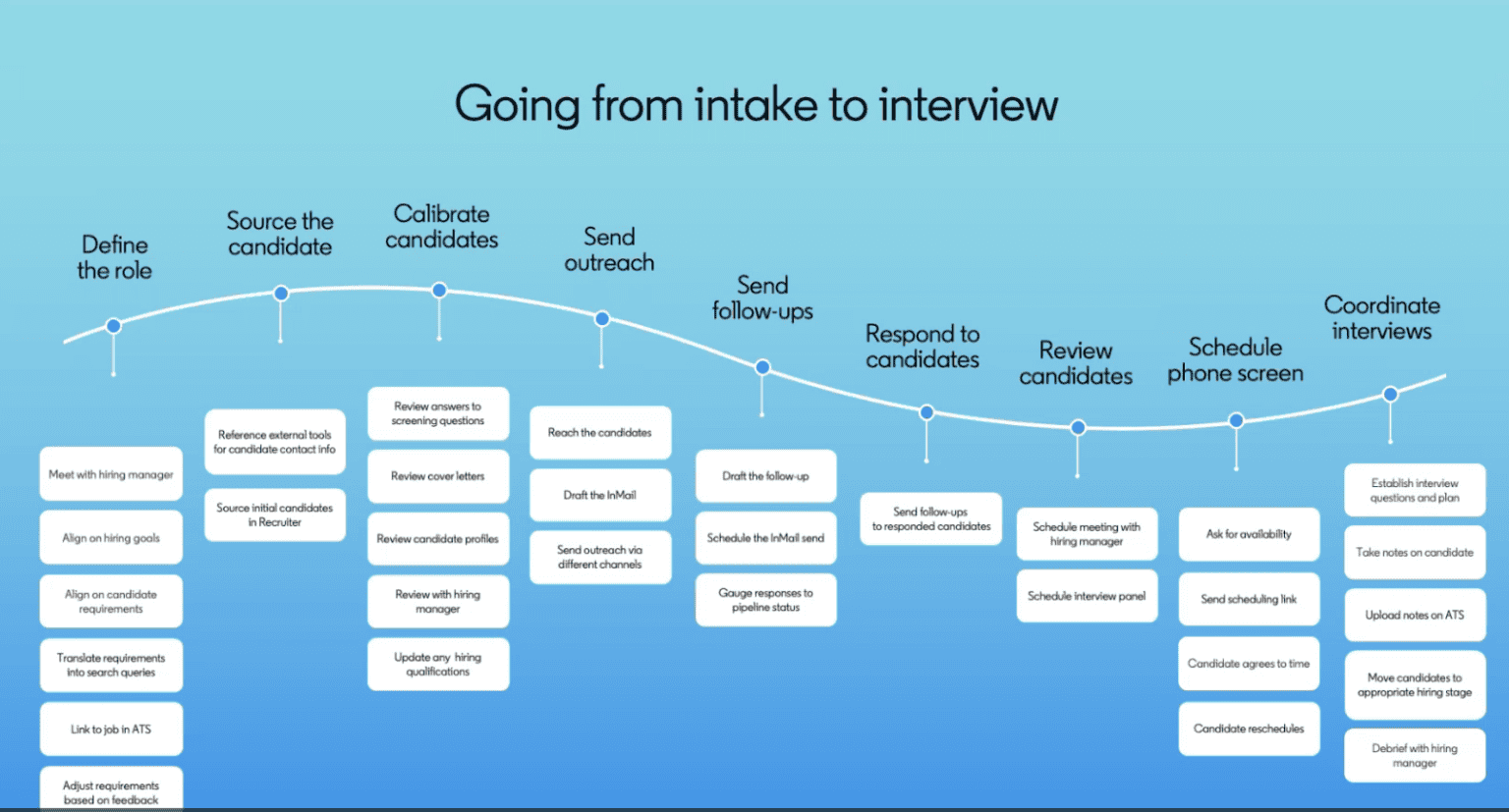
Here’s how to think about it: consider a schematic of the recruitment workflow.
As you can see, there are more than 30 steps to complete, and this doesn’t even include background checking, offer-letter generation, benefits discussions, pre-boarding, and onboarding.
With this brand new Assistant LinkedIn believes they can automate almost 80% of this pre-offer workflow. And the LinkedIn Hiring Assistant is just getting started.
Here are some screenshots of the workflow:
As you can see, the agent prompts the recruiter with intelligent responses and questions along the way. And throughout the process it stores more and more information to get smarter and smarter.
This Is A Sophisticated Product
This is a well-engineered product. Not only does it include many subtle features (ie. “find me a candidate like Joe,” which brings in Joe’s profile and analyzes Joe’s role, skills, and experience), it includes several platform innovations.
The first is something LinkedIn calls “Experiential Memory,” storing the recruiter’s search and activity history for future work. The Hiring Assistant learns what this recruiter is doing, how they communicate, and how they operate, to tune its results to each recruiter’s needs (ie. a tech recruiter vs. an executive recruiter).
Second is a feature called “Project Memory,” which brings together all the information about a single search project. This means the candidate selection criteria, emails, and input from hiring managers are stored in the project, enabling the assistant to see the whole experience of selection. Recruiters understand this challenge: every hire and every hiring manager is different, and each project has unique and sometimes new requirements which have nothing to do with the job description.
Other Agents Will Have To Take Notice
LinkedIn is not the first mover in this space, but the company’s credibility will accelerate the market. Paradox, the current leader in recruitment automation, has been automating high-volume recruiting for almost a decade and offers an agent that not only helps recruiters but also supports job seekers. It isn’t focused on sourcing liked LinkedIn, but it automates the rest of the process (candidate inquiries, interview scheduling, assessment, onboarding).
And it really works: this week Chipotle announced that Paradox’s solution reduces time to hire by 75%, making it a central part of the company’s growth strategy.
LinkedIn Hiring Assistant is receiving similar accolades.
“Doing a normal search before AI took upwards of 15 minutes. Now, with AI-Assisted Search, it takes about 30 seconds to get results. The time saved is tremendous. It is so much more convenient and easier doing it this way,” said Victoria Östryd Söderlind, Senior Recruitment Specialist, Toyota Material Handling Europe.
“The AI features on LinkedIn have allowed our recruiters to do more, to be better and to grow faster in all of our activities. It’s about spending time in the right places where our time is more valuable and LinkedIn’s AI features have enabled us to do that. What it’s not doing is removing great conversations with candidates, stopping our ability to ask them questions or getting to know candidates as people and humans,” said Olivia Brown, Head of Talent Acquisition, Octopus Energy.
Improving Candidate Experience
While LinkedIn talks about the value to HR, the bigger value may be for candidates. The company found that AI-Assisted outreach messages generate a 44% higher acceptance rate and are accepted 11% faster by job seekers. And AI-based searches produce 18% higher candidate acceptance. As Paradox has discovered, candidates don’t like to waste time scheduling calls with recruiters if they can avoid it.
And that leads to another important issue. There is now a growing AI battle between recruiter and candidates. AS AI helps recruiters source and screen candidates, the candidates are using AI to “power-up” their resumes. One of our clients told me that almost all their job applicants now submit resumes that look eerily similar to job descriptions. Why? Job candidates are using AI also!
This means is that tools like LinkedIn Hiring Assistant are more essential than ever. As job seekers tweak their identity and even use AI interview assessments to game interviews, HR has to beef up its tools to better differentiate candidates.
Liberating Recruiters To Recruit And Advise
The big story is actually this: while Hiring Assistant is an efficiency tool, what it really does is free up recruiters to talk to candidates. Recruiters who are bogged down with drudgery can talk with hiring managers, improve employment brand, and get to know candidates and the job market better. This is part of what we call Systemic HR: moving talent acquisition away from the “fulfillment center” role to that of a talent advisor, helping the company think about its best ways to grow.
As you look at these tools and think about automation, I encourage you to read our new research on the strategic shift in talent acquisition. Automation is not just about productivity and cost savings: it’s really about liberating our minds to think and add value in new and exciting ways.


 扫一扫
添加客服
扫一扫
添加客服