Why AI is now HR’s businessCould the AI revolution also herald a revolution in HR?
Generative AI is leaving many businesses in a fix.
On the one hand, the potential of the technology is strikingly obvious. Since ChatGPT debuted to the public in late 2022, AI has made extraordinary advances. Coding tools can spin up micro apps from a simple prompt. Chatbots can produce instantaneous research. Video models can create studio-grade clips. Tools like these can supercharge all kinds of work, whether it’s helping create a whole marketing campaign or simply assisting an individual reason through a thorny problem. One estimate sizes the corporate opportunity at $4.4 trillion globally.
Yet it can be bewilderingly hard for enterprises to realize those gains. Studies show that generative AI is having limited impact on productivity. Many organizations find themselves either stuck in pilot purgatory, or rolling out initiatives that fail to deliver ROI. Others don't even know where to start.
This issue is especially pronounced for smaller enterprises. In fact, research suggests that AI is seen as the number-one challenge by four out of five small business leaders in the UK. Small firms are half as likely to have implemented it compared to larger companies. And within the small companies that have adopted AI, usage is often uneven. Seventy three percent of senior managers use it at least once a month, compared with only 32 percent of entry-level employees. This creates what Kevin Fitzgerald, UK Managing Director of the all-in-one employment platform Employment Hero, calls the “AI advantage gap.”
“AI is only delivering productivity gains for some, and that’s a huge problem,” he says. “For technology to drive meaningful change, it needs to be in the hands of everyone.”
Human resources (HR) departments are uniquely positioned to help manage some of the challenges around AI adoption. That’s because taking full advantage of the new AI tools available to organizations is more than just an IT project. “AI is all about job redesign, new skills, new organization structures, and new roles for leaders,” says Josh Bersin, a respected HR industry analyst and CEO of HR consultancy The Josh Bersin Company. “HR people are essential as part of companies’ AI transformations.” In practice, this kind of project tends to be easier for smaller businesses, which have fewer employees and less organizational complexity to disrupt.
Bersin says that Chief Human Resources Officers (CHROs) now frequently lead AI-based organizational redesigns. Going further, almost two thirds of IT decision-makers expect their HR and IT teams to merge in the next five years, according to a recent survey. This is already happening at companies such as Moderna, the biotech firm with more than 5,000 employees, which now has a single leader covering both.
“HR has a once-in-a-generation opportunity to reshape the future of work,” says Fitzgerald. “And it’s important to get this right. Bad AI rollouts can slash personal productivity in half.”
So what does HR-led transformation look like in practice? Here we spotlight three ways HR leaders can set their organization up for AI success…
1. HR as pioneers
Leading on AI transformation means deeply understanding training needs, integration challenges, employee resistance and—fundamentally—how and where AI offers value. This means HR professionals need real experience of those things themselves.
There are many HR tasks to which both traditional machine learning and generative AI is well suited. Much of the press buzz is around recruitment—using AI to source candidates, screen CVs, and automate parts of the application process—but its impact can be much broader. The creative and communication side of the job is a natural fit for the capabilities of large language models (LLMs), which excel both in summarizing and expressing information. Whether it’s drafting job descriptions, communicating complicated policies in plain language, or managing the team’s internal knowledge, there’s plenty that an LLM can help with (so long as it offers appropriate privacy assurances). There are a range of options for deployment, from buying tools that package up an LLM for delivering on a specific use case—such as offering AI training programs or building FAQ chatbots—to simply subscribing to a frontier AI assistant like ChatGPT.
The most immediate benefit is the potential gains for the HR team itself. Handing off repetitive tasks to AI can free up time. But it’s also the baseline for any HR team that is planning on leading the way in a business’ AI transformation, because credibility will be vital.
That’s not to say that it should only be HR leading the charge on AI—Bersin says that more often than not having a dedicated committee with representatives from HR, legal, and IT is most effective—but it’s a necessary criterion for playing a central role. “It’s about leading by example,” says Fitzgerald. “People don’t want technology forced on them—they want to see its benefits, and be given the freedom and encouragement to explore it.”
Of course, much of HR’s AI usage will be internally facing, so there’s a comms job to be done. “My advice to the HR leader would therefore be: share,” says Fitzgerald. “Share the wins that you've had, and actually put them out there to the broader business.”
2. HR as culture definers
Establishing the right culture around AI is vital. “It’s the missing link in AI adoption,” says Deepali Vyas, Global Head of Data & AI at global talent advisory firm ZRG.
There are two crucial reasons for this.
The first is that when a company chooses to roll out AI, it can create ill feelings. People can fear it’s a prelude to cost cutting and job losses. Of course, an organization may be planning to downsize—but equally it could be planning to do more with the same number of people. Whatever the plan, be transparent. If nobody needs to worry about their jobs, tell them. If a restructure is likely, fair dealing and honesty can go a long way to attenuating resentment. HR has the authority and the skills to lead on conveying this information in the most effective and appropriate way.
The second reason concerns “shadow AI.” This is where employees use AI tools of their own without telling management, either because they fear for their jobs or because they view AI as a shortcut and don’t want to pull back the curtain on how they get things done. Shadow AI is already widespread; the security firm Varonis estimates that up to 98 percent of employees use shadow AI or shadow IT in some capacity, with employees hiding their AI use out of fear of their employer's reaction.
While the primary risks of shadow AI are to do with security and privacy, there is also a more systemic drawback. Top-down AI tool implementation can be important, but companies that don’t also tap into the wisdom of the crowd will miss out on AI opportunities. Generative chatbots are general-purpose tools with the most open-ended interface possible: there are countless different ways to use them, and the people best placed to figure out how this kind of AI can help your business are the people who work there. But you can’t enjoy the fruits of their experiments if they are unwilling to share how they’re using it and what they’re discovering as a result.
“You really need to bring shadow AI use to the surface,” Vyas says. “In any case, banning or ignoring shadow AI is not going to make it disappear. It's only going to drive it further underground.” Bringing it out into the light is, again, a question of culture. If IT owns guardrails and platforms, and the C-suite owns vision and accountability, HR owns the people and behaviors piece. In addition to quelling fears that revealing AI usage will jeopardize jobs, HR needs to create forums to encourage sharing across all teams. This could take the form of workshops and hackathons or simply dedicated channels on Slack. There should also be incentives, so that individuals who come up with approaches that create meaningful value are well remunerated for their contributions.
“There's a lot of fear versus empowerment,” says Vyas. “HR’s cultural mandate is building a culture of AI fluency, normalizing AI as a partner in work and to build trust around its use.”
3. HR as organization designers
AI transformation is not just about rolling out the tools. You need teams with AI literacy, skills and mindsets—teams that are open to new ways of working and to reimagining workflows that have perhaps remained unchanged for decades. You may also need to create new roles like a Chief AI Officer, or hire specialist software developers.
“It's about building that future-ready workforce,” says Vyas. HR’s expertise in recruitment and training will be crucial in this effort—only half of employees in SMEs believe their company has done a good job instilling technological know-how—and AI itself can play a powerful role in making a success of it. Forward-thinking organizations weave AI into workforce management, from how workers move internally to how they train and learn, Vyas says. “There’s personalized learning journeys, there's internal mobility recommendations, there's workforce planning tied to all of these business scenarios.”
As they scale, companies may wish to rethink their org charts in light of AI. The traditional triangular org chart has been a mainstay since Brigadier General Daniel McCallum unveiled the first example in 1855. But many commentators believe that new architectures will coalesce to reflect how people work best with AI. Microsoft’s Work Trend Index Annual Report 2025 argues that the org chart will be replaced with a “Work Chart,” which it describes as “a dynamic, outcome-driven model where teams form around goals, not functions, powered by [AI] agents that expand employee scope and enable faster, more impactful ways of working.” In practice this means a flatter, more flexible operating model. Firms that have harnessed AI in this way report having more satisfied, more optimistic employees.
HR will need to play a pivotal role in managing any such transformation. “That’s not only because most savvy HR leaders are also very good at change enablement,” says Bersin, “but also because this clearly would have implications for pay models, reward systems, and leadership pipeline.” What’s more, Microsoft argues that in a Work Chart world, orchestrating the interplay between humans and AI agents—and getting the balance right—is going to be an emerging area of responsibility for HR. In discharging this duty, they will need to collaborate more closely than ever with technical teams.
This shift may seem radical. But, as the aphorism has it, it's easy to underestimate the long-term effects of new technologies. Vyas believes this kind of business architecture will just be “the new normal—and sooner than we might think”.
原文:https://www.wired.com/sponsored/story/employment-hero-why-ai-is-now-hrs-business/
organizational change
2025年11月28日
organizational change
Yes, HR Organizations Will (Partially) Be Replaced by AI, And That’s GoodI adore the human resources profession. These folks are responsible for hiring, development, leadership development, and some of the most important issues in business. And despite the history of HR being considered a compliance function, the role is more important than ever. CHRO salaries, for example, have increased at 5-times the rate of CEO pay over the last twenty years, demonstrating how essential HR has become.
That said, we have to be honest that AI is going to disrupt our role. This week IBM formally announced that 94% of typical HR questions are now answered by its AI agent, and the role of HR Business Partner is all but eliminated except for very senior leaders. As a result the CEO plans to reduce HR headcount and shift that budget towards sales and engineering.
Let’s accept the fact that we are in a time of increasing acceleration. In other words, the capabilities of AI are growing much faster than our organizations” ability to adapt, so we have to lean forward and start redesigning our companies. In the case of HR, our Systemic HR model (which we launched two years ago) is now being fully automated by AI.
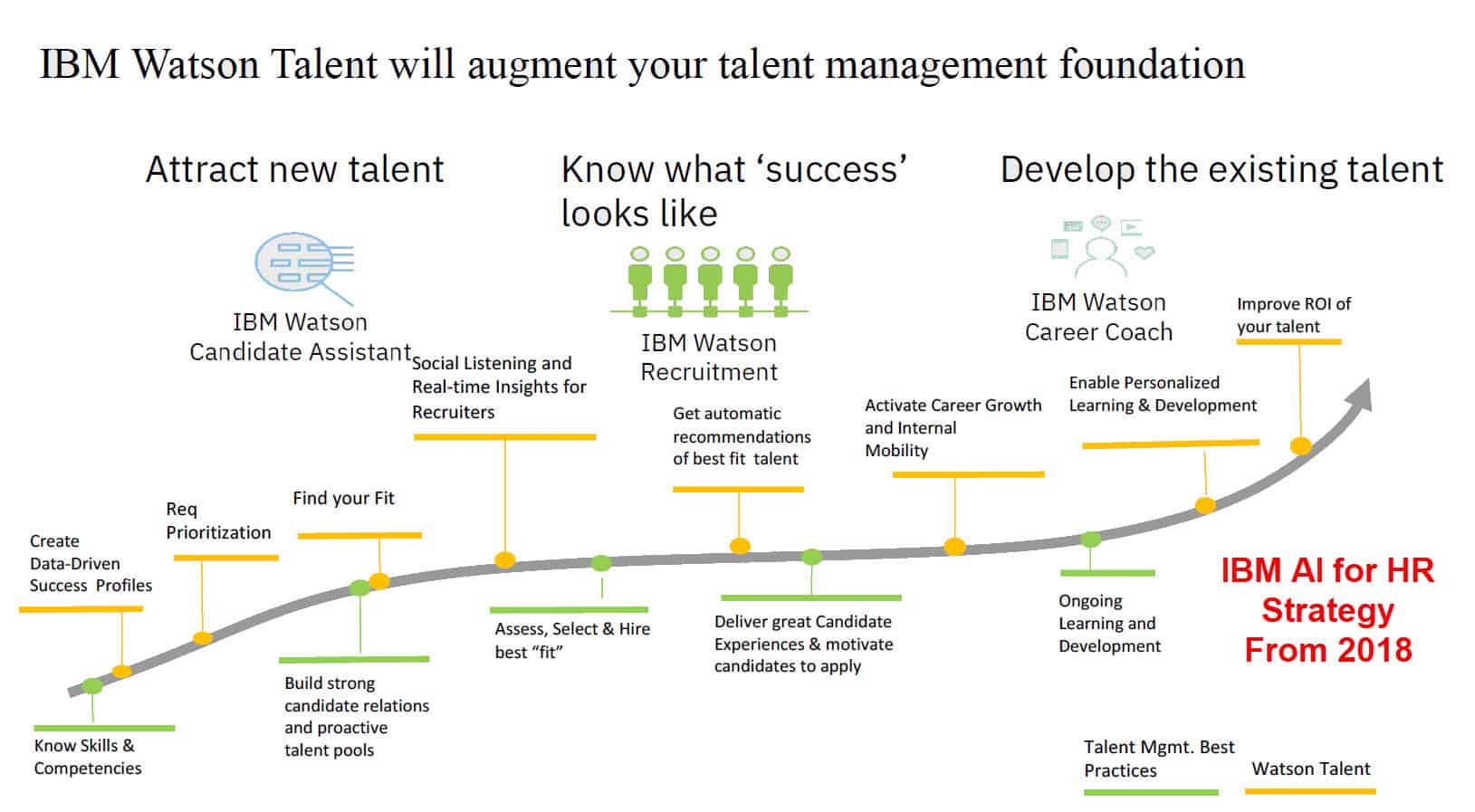
I know IBM’s story well, and I think it explains where all HR teams are going. Many years ago Diane Gherson (prior CHRO) started AI projects to automate recruitment, pay analysis, and performance management. She spoke at our conference eight years ago and shared how IBM’s pay tool (CogniPay was launched in 2018) uses AI to make pay recommendations based on skill. This type of tool, which was years ahead of the “skills-based” strategies we see today, essentially automated many of the performance and pay decisions left to managers.
Since then IBM has gone much further, and in my last conversation with Nickle Lamoureux (current CHRO) she told me the AI agent helps write performance reviews, creates development plans, and coaches managers and senior leaders on a myriad of performance based decisions. I totally believe this because I see Galileo doing these kinds of things for companies every day. (Check out the Mercury release.)
How does this impact the roles and jobs in HR? Well it definitely eliminates many.
In the case of L&D or HR business partners, I believe we could see a 20-30% or more reduction in HR headcount per employee. And that means these individuals may wind up managing the AI platforms, moving into roles as change consultants (which AI still can’t do), or move into areas like org design, learning architect, and data management.
I think this is all a good thing. While we all worry about AI taking our jobs, we have to remember that our real job is not to “do things” but to “add value” and bring complex problem solving skills to our companies. And in this journey to “crawl up the value curve,” we all have to learn to use AI, develop AI solutions, and think more systemically about how our companies go to market.
I recently interviewed a brilliant HR leader (podcast coming) at WPP who explained how he and his team rationalized their job architecture from 65,000 job titles to only 600 by using new AI tools from OpenAI and Reejig (a work intelligence vendor). As you’ll hear in his story, this effort was a combination of data management, business analysis, change management, and leadership. The results of this work, which are still ongoing, is the opportunity for WPP to dramatically change its go to market strategy, innovation, and growth.
That’s the kind of thing we want our HR teams to do.
And as these various agents hit the market (see my latest view of the market below), HR professionals are going to have to train them, implement them, and “manage them” for long term success. This means analyzing the cross-functional data they produce, extend them into better decision-making, and move our thinking from dated concepts like “time to hire” and “course completion rates” to meaningful measures like “time to revenue” or “time to productivity” or “time to customer service excellence.”
See where I’m going? In a time of increasing technology acceleration we have to “lean in” as hard as we can.
Stop thinking about how much money we save on headcount (which is a fleeting benefit, by the way) and focus on value creation. That’s the big benefit of AI: customer service quality, time to market, and innovation.
In many ways these “HR downsizing” stories are really stores of “HR crawling up the value curve,” which is really a good thing. And for HR professionals, it’s a time for personal reinvention.
organizational change
2025年05月16日
organizational change
马斯克的反HR管理模式:从企业到联邦政府Elon Musk’s approach to workforce management, first seen during his Twitter takeover, is now playing out on a national scale. As an advisor to the Trump administration and head of the Department of Government Efficiency (DOGE), Musk is applying his “lean efficiency” philosophy to federal bureaucracy. His tenure at companies like Tesla, SpaceX, and X has been marked by mass layoffs, rigid accountability, and controversial HR policies. While his leadership style prioritizes efficiency and rapid change, it often leads to legal challenges and employee dissatisfaction. Organizations can learn from Musk’s aggressive tactics by balancing accountability with strategic communication and employee well-being.
当一封名为**“十字路口的选择”(A Fork in the Road)**的邮件突然出现在员工的收件箱中,内容警告他们若不回复将被视为自动辞职时,许多人感到不安。这种强硬的管理手段并不是新鲜事,而是埃隆·马斯克(Elon Musk)多年来一贯的管理风格。
早在2022年11月,马斯克收购推特(现X)后,他便裁掉了近一半的员工,并迅速废除远程办公政策,要求所有员工返回办公室,除非获得他的个人批准。随后,他发出了一封标志性的邮件,要求留下来的员工接受“极度硬核”的工作模式,即高强度、长时间的工作节奏。
这次大刀阔斧的改革为外界提供了一个窗口,让人们得以一窥马斯克的管理哲学:极端效率、高度问责、快速决策。这一模式已在他旗下的多家公司——特斯拉(Tesla)、SpaceX 和 Neuralink 等得到了体现,如今,他正试图将其应用到美国联邦政府。作为特朗普政府的顾问及“政府效率部”(DOGE)负责人,马斯克正在推行一系列激进的机构改革,包括裁员、重组和强化绩效考核制度,而这些措施无一不让人想起当初的推特改革。
HR眼中的马斯克模式
尽管马斯克因创新和商业成就备受推崇,但他的管理风格在HR领域却争议不断。过去十年间,特斯拉因工作环境问题、种族歧视指控、加州工厂的安全隐患等多次被起诉。2024年,特斯拉刚刚解决了一起涉及多次陪审团裁决的歧视案件,而SpaceX和Neuralink也因不公平的劳动实践和工作环境问题受到关注。X(推特)更是深陷与前员工的法律纠纷,许多前员工因被裁员后未能获得合法的遣散补偿而成功通过仲裁维权。
更值得关注的是,马斯克的企业文化刻意削弱传统HR机制。2020年,特斯拉曾推出一份被称为“反手册”(Anti-Handbook)的员工手册,明确表示公司不推崇传统的规章制度,认为“政策和规则只是为了设定最低标准,而我们不是那样的公司。”这一理念强调员工的高绩效要求,但也意味着更少的保护和支持。
从企业到联邦政府:HR的挑战与机遇
如今,这一反HR模式正被复制到联邦政府。最明显的例子之一是美国人事管理办公室(OPM)近期向部分政府雇员发出的裁员通知,邮件的标题恰好也是“十字路口的选择”。在政府机构,马斯克正在推行更严苛的绩效管理体系,例如要求员工每周提交五项工作成果,然而,这种方式在高度官僚化的政府机构中难以实施,并已导致部分裁员决策被法院驳回。
专家分析指出,马斯克的模式核心在于高度问责,但缺乏过渡和沟通,这也是其争议所在。“他的管理风格强调立刻执行,而不是渐进式调整,” 谈判专家安德烈斯·拉雷斯(Andres Lares)表示,“但在政府这样的大型机构中,像泰坦尼克号掉头一样,不可能一夜之间完成变革。”
与此同时,HR行业也在思考如何应对这一趋势。一方面,组织可以学习马斯克在提升效率方面的成功经验,打造更具执行力的文化;另一方面,企业需要避免极端化,确保变革过程中员工的信任和稳定性。例如,在远程办公问题上,马斯克持强硬立场,认为“远程办公的员工大多是假装工作”,但HR专家指出,灵活办公模式对于许多员工(如照顾家庭的职场人士)至关重要,过度削减灵活性可能会导致人才流失。
结语:HR该如何应对马斯克模式?
马斯克的HR模式已经不再局限于企业,而是进入了政府机构,并可能对未来的管理模式产生深远影响。对于HR从业者来说,这是一个思考如何平衡效率、问责与员工福祉的机会。HR需要关注的不仅是绩效,还包括组织文化、信任和沟通方式。企业可以借鉴马斯克的高效执行力,但要避免因过度强调效率而破坏员工关系。
毕竟,一个可持续的组织,不能只靠“极端效率”运作。
作者:Ryan Golden

 organizational change
 organizational change
 organizational change
 organizational change
 organizational change


 扫一扫
添加客服
扫一扫
添加客服


