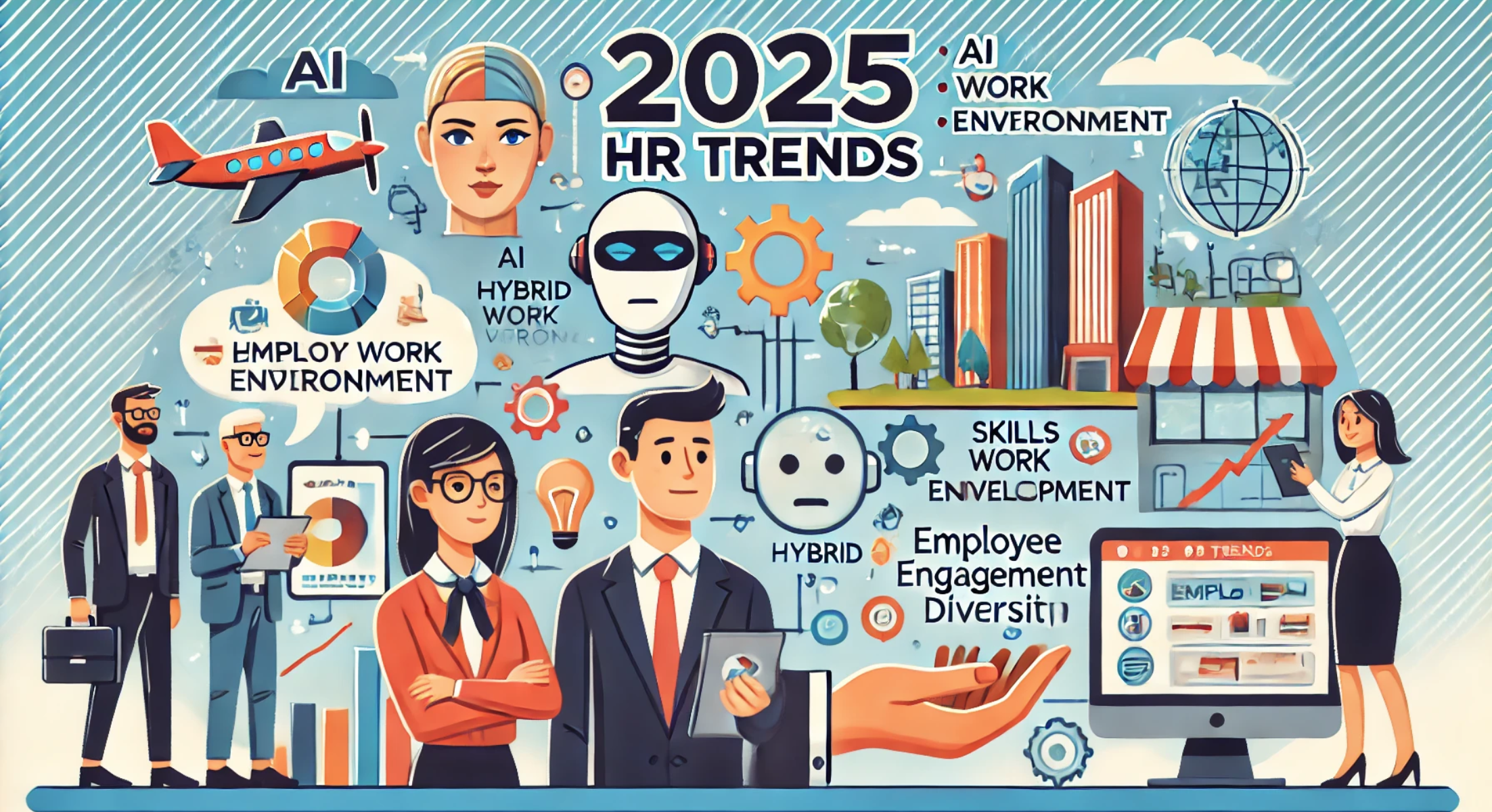
The top 5 HR trends today – and HR's guide to what's nextSAP SuccessFactors 每年都会深入研究全球 HR 趋势,以帮助企业制定更有效的人才战略。2025 年,他们分析了来自 40 家全球权威媒体的 254 项预测,归纳出 5 大核心“元趋势”,展现 HR 在企业中的双重角色:既是变革的“指挥者”,也是政策落地的“引航者”。
1️⃣ 重新连接员工: 由于经济压力、决策争议和信任危机,员工体验恶化,57% 的员工认为如果公司不采取措施,他们的倦怠问题不会改善。HR 需关注心理契约,增强员工信任。
2️⃣ AI 从炒作走向实际价值: AI 进入大规模落地阶段,企业需明确 ROI 并平衡员工和领导者对 AI 价值的不同预期。46% 的员工认为 AI 省下的时间属于自己,而非公司。
3️⃣ 技能转型的平衡策略: 由于 AI 发展迅猛,企业技能鸿沟加剧。除了关注技能,薪酬激励成为推动学习的重要因素,54% 的员工表示,如果公司实施基于技能的薪酬体系,他们会更愿意学习新技能。
4️⃣ DEI&B 的分歧: 企业对多元化、公平性和包容性(DEI&B)态度不一,26% 的员工认为公司对 DEI&B 关注过多,而 33% 认为关注太少。HR 需明确 DEI&B 战略,以促进长期文化变革。
5️⃣ 混合办公的未来: 组织已基本确定办公模式,2025 年将验证其成效。54% 的员工愿意牺牲部分薪酬,以换取更大的工作灵活性。
这些趋势展现了 HR 在塑造未来工作模式中的关键作用,企业需借助创新技术和数据驱动的洞察来优化人力资源管理。
Each year, the HR Research Scientists at SAP SuccessFactors conduct research to understand the top HR and workforce trends facing organizations and share our perspective on what HR teams should consider as they look to help their companies address these trends. This year we aggregated and synthesized data from 40 global and regional reputable business press sources that put forward 254 individual trends and predictions grounded in their own research and data. We then conducted a content analysis of the trends sample to derive the five key themes, or “meta-trends.” While our annual report always includes some pointed commentary and critique about each trend based on our expertise in psychology, new this year is calling upon our own body of original applied research to incorporate datapoints and insights, resulting in a more evidence-based point of view.
This year’s trends are in different stages of maturity and on different trajectories; therefore, the role that HR needs to play to help businesses tackle and capitalize on these trends is different. We’ve organized the trends into two sections aligned to the dual role HR will play in addressing them.
First, HR will need to act as a Conductor, leading the orchestration of a strategy and associated change management across the business to realize the opportunities these trends offer:
Trend #1: Reconnecting the disconnected employee: Contentious decisions, macroeconomic and sociopolitical stressors, and breached trust with leadership has led to employee stress and burnout – and consequently, a crisis of disconnect and counterproductivity. In the year ahead:
Leaders must ruthlessly prioritize fulfilling their end of the “psychological contract” by meeting employees’ basic needs.
People managers will be seen as a lifeline for employees drowning in disconnect.
STAT: 57% of employees feel unless their companies make some serious changes, their burnout will not get better.
Trend #2: Moving from AI hype to AI impact:Organizations are shifting from AI pilot projects to enterprise-wide rollouts, demanding proof of clear value and ROI. In the year ahead:
Organizations will home in on their key value drivers for AI, revealing their true priorities.
The body of research on the ROI of AI will be built this year.
Organizations will find friction between leaders’ and employees’ goals for using AI.
STAT: 46% of employees feel that the time that they save by using AI tools at work belongs to them, not their organization.
Trend #3: Striking a balance to steer skills forward: Organizations continue to face pervasive skills gaps, in part due to rapid AI advancements. A more balanced approach is needed to see tangible progress in skills-based transformations this year. In the year ahead:
“Skills-based” will no longer be the only goal.
Pay will prove itself the missing piece of the upskilling puzzle.
The human vs. technical skill debate will move from or to and.
STAT: 54% of employees would be more motivated to learn new skills if their company instituted skills-based pay.
Second, HR will need to act as a Navigator, leading the organization through precarious waters and circumventing obstacles to put policies into practice for the betterment of all stakeholders:
Trend #4: Divesting or doubling down on diversity, equity, inclusions, and belonging (DEI&B): Some organizations remain committed to DEI&B goals, continuing to ask “How are we going to do this?” Others plan to divest, instead now asking “Are we going to do this?” In the year ahead:
Some will shy away from DEI&B goals, but these approaches will vary.
Taking a stand on DEI&B will change company cultures in the long term, but it’s not clear exactly how.
STAT: 26% of employees say companies focus too much on DEI&B, 41% of employees say companies focus an appropriate amount on DEI&B, and 33% of employees say companies focus too little on DEI&B.
Trend #5: Plugging into or pulling the plug on hybrid work: Now that organizations have determined their position on where their employees will work, it’s time to see if they achieve the outcomes they intended. In the year ahead:
Those businesses choosing the return-to-office path will see whether their bets paid off this year.
Those choosing the hybrid or remote path will take it a step further, integrating autonomy as a core value in other aspects of work design.
STAT: 54% of employees would consider being paid less if they could have more flexibility in where and when they work.
Read the report to see what’s now and what’s next for each trend, along with some fast facts that uplevel the nerdiness of this year’s trends report. We also include a section on how SAP SuccessFactors solutions can help organizations address the 2025 HR trends.
Josh Bersin :SuccessFactors Leapfrogs HCM Capabilities: AI, Skills, Talent Intelligence, And More本周,SuccessFactors 宣布了一系列重大更新,巩固其在人力资本管理(HCM)市场的领先地位。这些新功能包括 AI 驱动的工作推荐、文本分析、绩效评估和全球工资单升级等。SuccessFactors 还推出了开放的技能系统,并与 Lightcast、Degreed 等技能供应商合作,提供更全面的职业发展工具。此外,通过整合 WalkMe,SuccessFactors 改善了用户体验,使其在实施和使用方面更具优势。Dan Beck 的领导下,SuccessFactors 持续推动 HR 技术的创新与发展。
有兴趣进一步了解下
This week SuccessFactors announced a vast array of new features, focused on taking the lead in the red hot HCM war against Workday, Oracle, and others. These capabilities fall into four areas, each of which bring SAP into a leading position in many areas of the global HCM market. (Product details here.)
As I learned about the release I noticed the fingerprints of Dan Beck, the company’s new president and chief product officer. Dan has been at SAP for 11 months and has accelerated the company’s technology roadmap and focus on total solutions.
Let me summarize what’s new.
1. More And More AI Capabilities Built-In
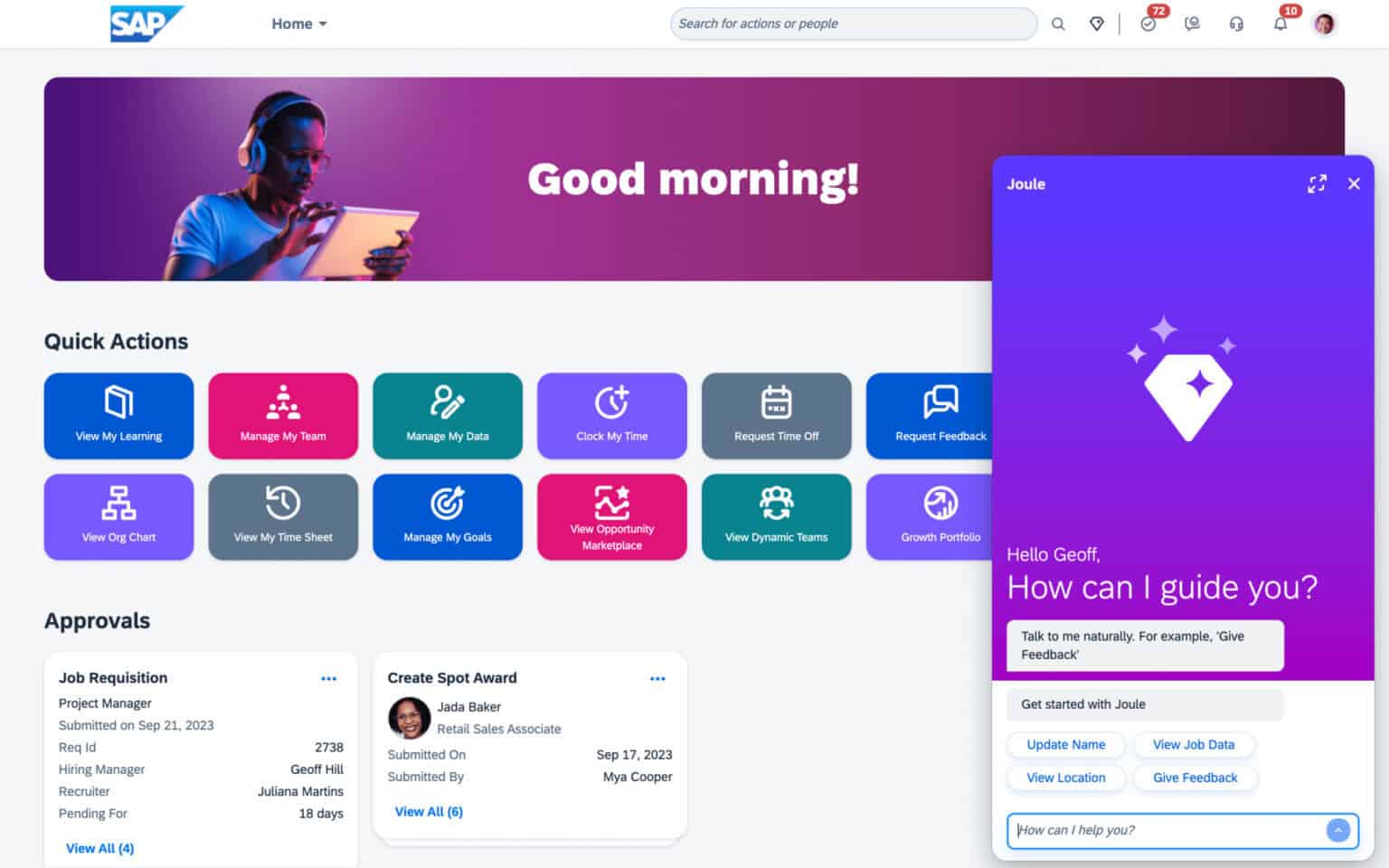
First, of course, is AI. Two years ago SAP announced its “Business AI” strategy, which describes how all SAP business applications are integrated and enhanced with AI. (Workday’s similar strategy Illuminate was launched a few months ago.) In the prior release SuccessFactors described 63 AI use-cases; this week they introduced 30 more. And all are integrated into Joule, SAP’s intelligent Agent.
Each “use-case” is essentially an AI application and many are quite complex: automatically developing job descriptions, analyzing performance reviews, setting and aligning goals, developing onboarding, creating growth plans, and evaluating pay inequities. In other words these AI “features” are really automation workflows that each eliminate hours of work for HR professionals. Since each is also integrated into Joule, you can use them through the conversational interface.
While many HR vendors are adding AI features, I find SAP’s particularly robust because they’re integrated into the entire lifecycle of an employee. SAP’s engineering focus really shows here.
Some of the new features include AI-based job recommendations to job seekers (and internal employees), text analysis and editing for performance reviews, and new mobile use-cases for Joule.
2. Upgrades to Global Payroll
The second set of announcements are a significant update to global payroll. SAP currently has the broadest global payroll solution in the market and now has a new UI, a Payroll Command Center, and a sophisticated AI offering called “Explain Pay Slip.” You will effectively be able to ask Joule “why has my pay changed from last month” and it will dig into all the details and explain the differences. This covers 70% or more of the questions employees ask HR service centers, so this feature has an enormous ROI.
Employee Central, the company’s core HR and payroll module, now has a more integrated view of all benefits and more integrations with Joule, making the 52-country payroll system the broadest in the market.
3. Open Skills System and Launch of Career and Talent Development
The third set of announcements will change the HR Tech market: SAP is formerly opening up its Talent Intelligence Hub to accommodate every skills and skillstech vendor. Providers like Lightcast, Korn Ferry, Techwolf (SAP invested in them), and Degreed can now feed the SuccessFactors skills system and SAP is going to build tools to normalize and harmonize skills.
This brings SAP to parity or beyond Workday Skills Cloud: the skills model is integrated into Opportunity Marketplace, Career and Talent Development (the new version of SuccessFactors learning), and SuccessFactors job architecture, team management, performance management, and recruiting.
The new Career and Talent Development offering also introduces AI-assisted career insights, leveraging skills and aspirations to find relevant jobs and career paths. The system lets managers create assignments, find and onboard internal candidates, and then use Work Zone (onboarding and enablement) to start their new internal position. This level of integration goes beyond tools from Gloat or Eightfold or others for internal talent marketplace.
Several years ago SuccessFactors introduced its comprehensive skills strategy and today it’s coming to fruition.
There are several major implications here. First, vendors like Eightfold, Gloat, Phenom, Beamery, and many others will have to decide how they partner or compete with SAP. Last month I met with both Delta Air Lines and Pepsi, both of which are using SuccessFactors Talent Intelligence hub as their new end-to-end platform. Each company told me that they no longer felt the need to use some of these other third party products.
Second, the SuccessFactors skills model is expansive. In addition to harmonizing and helping companies build technical and leadership models, the system itself has its “whole self” module which includes aspirations, styles, motivations, and preferences. Companies that use this can add subtle human needs to the model.
Other vendors have tried this (Cornerstone and Gloat both ask users to express career and personal work preferences) but SAP, with its enormous customer base, has the potential to leverage this across industries. Imagine an employee in IT who aspires to work in HR, for example – the system would find the HR Tech jobs within the company which leverage their architectural or technical skills.
SuccessFactors also includes a mature system for team-based work, which is missing in these other applications. This release adds AI-assisted 360 reviews, performance templates, and integration with Joule (employees and managers can share performance information through the agent.)
4. Integration of WalkMe into SuccessFactors.
The fourth major announcement is the bundling and integration of WalkMe. Given the vast and complex nature of SuccessFactors, there are many places to read documentation and learn how the system works. This forces customers to build large training programs for users. (All HCM platforms have this issue.)
WalkMe, which was acquired this year for $1.5 Billion, is the leading provider of “digital adoption platforms.” It is essentially an advanced AI system that watches a user’s interaction with a system to coach, train, and automate your work. Initially developed to help users learn how to use systems like SAP or Salesforce, WalkMe advanced into a highly intelligent real-time coach, similar to what we now expect out of an AI agent.
While I don’t know how this will be priced, this gives SuccessFactors an “ease of implementation” advantage. WalkMe is an open platform and does support many HCM applications, but now that it’s integrated and bundled into SAP customers will find SuccessFactors much easier to deploy and use.
(Just for your reference, the SuccessFactors and Workday “how to” manuals include nearly 1,000+ pages each.)
Bottom Line: SuccessFactors Leadership Emerges
SAP’s ambitious, long-term engineering approach to human capital management is clear. I’ve been watching SuccessFactors since it was a small independent company in California, now growing to a vast cloud business with 10,000+ customers and more than 150 million end users.
This release demonstrates how patience, engineering excellence, and relentless focus on customers pays off in enterprise software. Under the leadership of Dan Beck, SuccessFactors now offers industry-leading capabilities in most areas of HCM, giving customers an even deeper offering to consider as HR technology rapidly evolves.
人力资源技术
2024年10月28日
人力资源技术
AI Agents, The New Workforce We’re Not Quite Ready For (Agentic AI)Josh Bersin 刚刚谈到:AI代理人的兴起标志着工作方式的一次革命。这些AI代理人不仅仅是工具,而是未来的团队成员。从开发培训课程到管理招聘过程,AI代理人的能力正被企业系统广泛利用。科技领袖和投资者对此展现出了极大的兴趣和投资。企业需要为这种变革做好准备,包括安全性和管理实践的更新。
我们一起来看下,英文原文附录链接在最后!
AI智能体,新一代劳动力,我们还没有做好准备
智能体正在到来,智能体正在到来。
如果你关注AI技术市场,你就会知道,最近有很多关于“智能体AI”的讨论。换句话说,我们的AI助手开始拥有更多自主能力。不再只是回答问题和写诗,它们现在可以代表我们“做事情”。
这正是长久以来预测的AI下一个大趋势。埃里克·施密特最近谈到了这一点,微软也在讨论,像Mayfield这样的投资者正在投入资金。而这种演变确实将彻底革新我们的系统。
可以这样想:“大语言模型”是我们过去两年一直在学习的内容,它们现在正逐步转变为“大行动模型”。智能体不仅仅会回答问题,它还会为我们做事情。
消费场景是无穷无尽的:为我预订航班,为我买票,向我的朋友发送电子邮件。但在商业领域,这种转变将颠覆并破坏我们的许多企业系统。它还将改变我们工作的方式、管理的方式以及我们对团队的思考方式。
考虑我们与供应商讨论的两个HR用例。
学习与发展(L&D)AI智能体
想象一下,你指示一个L&D AI智能体“为我们的销售人员创建一个15分钟的课程,以教授他们如何定位我们的新产品”。AI智能体将根据你的输入(课程时长、目标受众等),向主题专家发送电子邮件,视频记录他们的评论和专业知识,整合新产品信息,构建课程,并将其发送给L&D负责人进行验证。作为经理,你可以审查课程,并指示智能体收紧信息或添加更多主题,课程将重新创建,然后你可以说“可以上线了”。智能体随后会将课程发布到学习管理系统(LMS)中,向所有销售人员群发电子邮件,并开始监控学习活动。几小时后,智能体会运行分析,并向经理反馈进展情况。
是的,这在今天完全可能。而且很快就会启动。
再来看第二个例子。
招聘AI智能体
人才招聘负责人收到了大量关于高级软件工程师的职位要求。她指示招聘AI智能体开始搜索。智能体询问招聘人员的地点偏好、职位级别选择、薪资范围和技能要求,然后开始工作。智能体扫描LinkedIn和其他招聘工具,查看ATS中的现有候选人,同时也查看所有内部员工的合格技能。智能体随后优化这份名单,创建一个“面试候选人短名单”,并回到招聘负责人那里征求意见。在就地点和薪资范围达成一致后,智能体返回并向这些候选人发送了一封富有吸引力的电子邮件,并附上一个视频面试门户链接,让他们进行面试。面试被录制下来,AI智能体使用面试智能工具来评估和筛选候选人,询问他们的时间安排,并为他们安排现场面试。在此过程中,AI智能体会查看他们的背景,搜索社交媒体,查看他们的各种联系,并可能查看他们的GitHub等平台和其他凭证,然后为每位候选人创建一个档案。
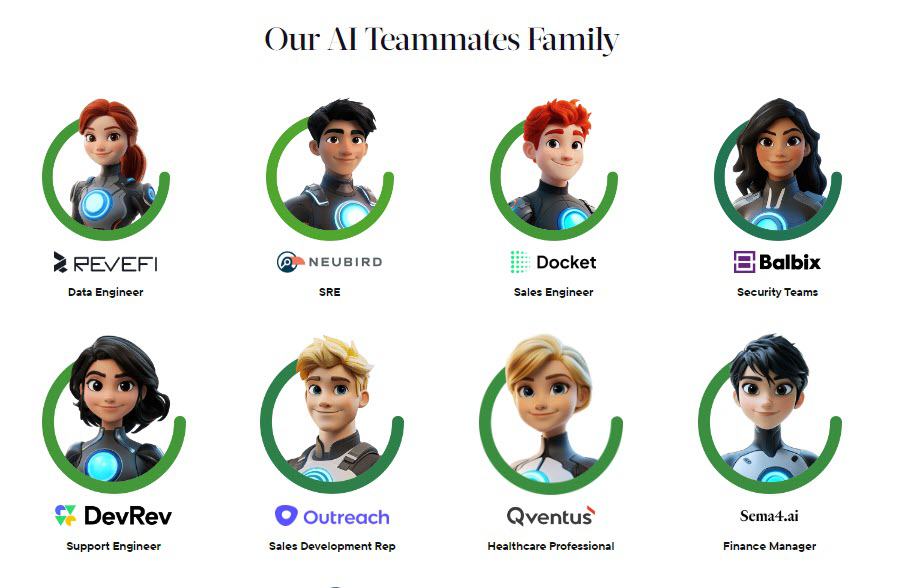
这些智能体很快就会出现,对我们许多人来说,它们看起来和感觉上会像“员工”一样。我们将不得不对它们进行培训、入职和指导。随着它们在各自的角色中“成熟”并成长,我们将它们连接到更多的系统、更多的人和更多的数据上。
Lattice的首席执行官萨拉·富兰克林大约一个月前实际上提出了这个概念,尽管遭到了反对声音,但我认为她是对的。这些智能体实际上将属于组织结构图的一部分。我们的工作将是管理它们,确保它们的安全,并监督它们的安全性。
还有更多内容即将到来
虽然感觉像科幻小说,但这一切正在发生。而且它不仅将改变我们的HR技术堆栈,还将改变整个企业技术格局,也让我们的HR角色变得更加轻松。
原文来自: https://joshbersin.com/2024/09/agentic-ai-ai-agents-the-new-workforce-were-not-quite-ready-for/
Will Chatbots Take Over HR Tech? Paradox Sets The Pace.在快速发展的人力资源技术领域,Paradox.ai 已成为领跑者,其先进的对话式人工智能平台彻底改变了招聘流程。通过利用自然语言处理和人工智能,Paradox.ai 提供了一个全面的解决方案,涵盖了从最初的职位申请到入职的整个招聘过程。该平台不仅简化了筛选和面试安排等繁琐流程,还提升了应聘者的整体体验,显著改善了招聘时间和招聘质量指标。
Paradox.ai 由亚伦-马托斯(Aaron Matos)于 2016 年创立,目前为联合利华、CVS Health 和通用汽车等大客户提供服务,实现了 90% 以上的招聘流程自动化。
Paradox.ai 凭借其强大的集成能力和大幅缩短招聘时间、降低招聘成本的能力,在人力资源技术领域充分体现了对话式人工智能的变革力量。
Chatbots used to be tinker-toys. You type, try to get help, but usually result in “please call support.” Well all this has changed.
Thanks to advanced NLP (natural language processing) and AI (retrieval-augmented generation) chatbots are entire applications. They can answer complex questions, search databases, and invoke transactions on your behalf.
Pretty soon we’ll be able to ask our phones “please find me a flight to Los Angeles next Tuesday morning” and the system will check your location and calendar, look at flights, and book you a seat.
Where is this going in HR? Well the leader in this space is Paradox.ai, a company that pioneered the application of conversational AI in recruiting. And their system “defines the category.”
Let me explain.
Recruiting Is The Perfect Market For Conversational AI
Recruiting is a goldmine for automation. When you post a job, applicants want to ask many predictable things: “How much does it pay?” “What are the hours?” or “What uniform do I need” or “What are the benefits?”
The recruiter, a person devoted to filling positions, has to answer all these questions and more. They have to screen candidates, schedule interviews, check for qualifications, and look at credentials, experience, and more. It’s time-consuming, error-prone, and filled with wasted time. (That’s why talent acquisition teams have many “scheduler” and admins.)
The average “time to hire” is over 45 days and often the process goes on for months. And throughout the experience the job seeker is left wondering “when will they call back” or “what else do I need to know?”
(CEOs cite hiring as the third most time-wasting process in companies, following emails and meetings, estimated at “40% wasted time.”)
Paradox uses Conversational AI to solve this problem. And because this is a “narrow but deep” space, the system does many things we can learn from in all our AI efforts.
Paradox was founded by Aaron Matos in 2016. Aaron’s vision was to transform the candidate experience, revolutionizing the way candidates apply to jobs. Today Paradox has become a complete Conversational AI Recruitment Platform (chat to apply, scheduling, candidate support, ATS, assessments, onboarding, career site, and more), serving clients like Unilever, CVS Health, Pfizer, L’Oreal, Nestle, McDonald’s FedEx, Compass Group, Disney, and General Motors.
The platform automates tasks such as screening for requirements, interview scheduling, reminders, offers, and new hire onboarding. And because it’s so easy to use, it helps companies radically improves time-to-hire and quality of hire. Based on my conversations with clients, Paradox can automate more than 90% of the end-to-end hiring process, saving hiring managers hours every week and increasing candidate conversion by more than 10 times.
But this innovation did not happen overnight. As you know, going to a candidate website and looking for a job is a frustrating process. There are often hundreds of jobs listed, a complex scrolling website and very hard to even determine what job to apply for.
You might argue that the website paradigm for job applications was never really a good idea in the first place. People don’t want to browse for jobs: they want to apply for a job that’s best for them. So the first thing Paradox did was create an easy to use assistant (Olivia) so candidates could ask questions and schedule interviews. And this meant that Paradox had to build integrations with every ATS and personal email and calendar tools out there.
Then, as companies started to use Paradox for scheduling, the company added more. Today Olivia, the chatbot, can integrate with background check vendors, schedule interviews, deliver assessments (Paradox acquired a conversational assessment Traitify designed for this), and function as an ATS … all from a mobile phone. In many ways Paradox can be “the integration platform” for candidates and recruiters, stitching together the messy systems behind the scenes.
This turned into a massive opportunity. Just as the Google Assistant or Siri hopes to be our single contact with the internet, Paradox partners with systems of record like Workday, SAP, and Oracle to bring conversational AI to any company. The company’s revenues have grown 11 times in the last four years, and are now nearly doubling each year.
For customers Paradox has been amazing. As the candidate pipeline speeds up (by an order of magnitude), clients get higher quality candidates with dramatically reduced staff. (Staffing administrators can almost go away.)
Consider high-volume hiring companies. These businesses (McDonald’s, Compass Group, Neighborly, FedEx, Disney) hire service-related workers on a regular basis. Their revenue is dependent on having enough people. With Paradox they can set up a “continuous recruitment process,” one that even hires people the same day they apply.
Paradox has become essential to these companies growth, often paying for itself in less than a year (through reduced hiring staff, reduced spend on job ads, and reduced turnover.)
Today, as Paradox built out its ATS, customers can rely on the platform to integrate front end tool (job portals and candidate support) to back end tools scheduling, ATS, onboarding) most of which are legacy. One of our clients has 27 recruiting tools and they anticipate replacing more than half of them with a platform like Paradox.
What about higher level white collar roles? Paradox works here too. General Motors uses Paradox along with Workday (ATS), (branded Evie) to redesign the process.
Interview Scheduling: Evie automates scheduling of phone screens and interviews between recruiters, candidates, and internal teams. This has reduced the time taken for interview scheduling from an average of five days to 29 minutes.
Candidate Experience: Evie interacts with candidates from the moment they land on GM’s career site until the completion of their interview. Candidates appreciate the immediate communication from Evie after they apply or complete an interview, and enjoy the autonomy to select and change interview times.
Efficiency and Cost Savings: The automation of interview scheduling has led to a major reduction in the cost of external contractors for coordination.
Career Site Interaction: Evie sits on GM’s career site, answering questions from potential candidates about jobs, benefits, and company culture. This interaction enhances the candidate’s experience and provides them with immediate responses to their queries.
Where Is Paradox Going
The company is perfectly positioned to continue its growth as companies look for AI solutions to improve the productivity and effectiveness of recruiting. And demand is high: the 2024 PwC CEO survey found that recruiting was considered the #3 “most bureaucratic process” by CEOs (following email and meetings).
The impact on recruiters? All positive. Clients tell us they can redeploy hiring staff to help recruiters focus on the most important part of their job: talking with candidates.
But there’s a much bigger story. When a job candidate is handled efficiently and effectively the process becomes a brand-builder for the candidate, improving quality of hire. Ambitious job seekers will not put up with (or wait for) a messy, confusing hiring process. So not only is the process faster and more efficient, the quality of hire goes up.
Companies are desperately looking for AI solutions that work. As Paradox has proven, when you focus deeply on the problem, conversational AI can be transformational.
Listen to my conversation with Adam Godson (CEO) and you’ll hear the details. This is where the HR Tech market is going.

 人力资源技术
 人力资源技术
 人力资源技术
 人力资源技术
 人力资源技术
 人力资源技术
 人力资源技术
 人力资源技术



 扫一扫
添加客服
扫一扫
添加客服


